

Unveiling the jail in plain sight
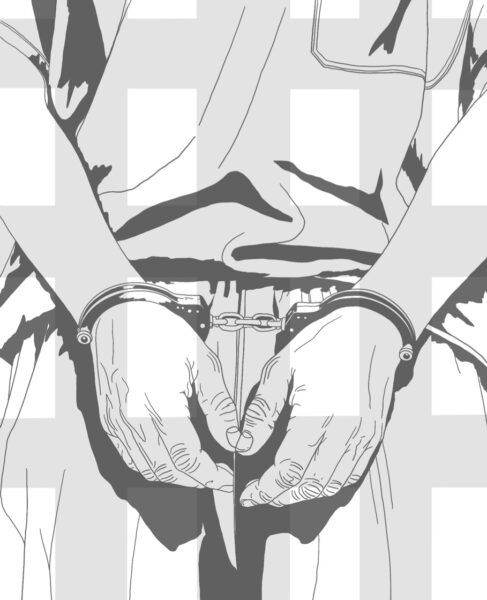
Few public institutions in Kawartha Lakes are larger, more consequential or more expensive than Central East Correctional Centre. There are none we know less about. It sits on Crown land east of Lindsay on Highway 36 — integrated pods, almost windowless, the size of a shopping mall. Most of us drive past it without looking twice. That is not because we are inattentive. The building gives us nothing to look at, and the institution inside gives us nothing more.
CECC is, in every dimension, a public institution. Its land, its building, its budget, its mandate, its staffing, its oversight — all public, all paid for in our name. Nothing about it, at the level of its constitution, is private.

CECC has a rated capacity of 1,184, though like most Ontario jails it has long held more. It has been one of the largest correctional institutions in Ontario since opening in the early 2000s. Its correctional officers number in the hundreds. With medical, administrative, programming and support staff, they make CECC a major regional employer. A city within a city, set back from the highway behind a tree-lined berm.
And yet the community that hosts it has almost no recurring way of knowing what happens inside. Hospitals publish outcomes. School boards hold trustee meetings. Long-term care homes are inspected and the inspections posted online. CECC had a Community Advisory Board that toured the facility and filed an annual report to the minister. Under the Ministry’s terms, that report could be made public only with the minister’s approval. The last CAB report published on the ministry’s own website is from 2016. The province quietly disbanded all 10 provincial CABs in June 2021.
What the Record Shows
Most of what the community knows about CECC, it has learned the long way around -through inquest verdicts, union interviews, Ombudsman tallies and the insistence of families who lost someone inside. Here is the record, pieced together.
The population in Ontario’s provincial jails is, by the province’s own data, heavily concentrated with mental illness.
In 2019–20, 27 per cent of men and 43 per cent of women in provincial custody had an active mental-health alert on file; of inmates placed in segregation, 42 per cent did. Advocacy groups have estimated that roughly four in 10 Ontario prisoners will experience at least one severe mental-health problem during their incarceration. Most enter without community psychiatric care, and most leave having received none inside.
Most inmates at CECC, like most in Ontario’s provincial system, are not sentenced at all. They are held on remand — legally innocent, awaiting trials held elsewhere. In 2021, a local police official stated that only about five per cent of CECC inmates were, at that time, from Kawartha Lakes. No more recent figure has been publicly released.
In 2019, approximately one-quarter of correctional officers at CECC — from a complement of 253 full-time and 170 part-time — were on stress-related leave. More than a hundred CECC employees were on WSIB stress leave at the same time: enough people to nearly fill a local, public-school gymnasium, all from the same building, all unable to go back to work. Those 100-plus employees alone accounted for about 10 per cent of all such leaves across Ontario’s entire corrections system. By October, the facility had been locked down 69 times due to staff shortages.
The pressure has not eased. Across Ontario’s jails, according to OPSEU, provincial spending on temporary agency nurses has climbed from roughly $14 million in 2020-21 to more than $51 million in 2024-25. Registered practical nurses in provincial jails earn several dollars an hour less than their counterparts in Ontario hospitals; psychologists earn markedly less than in forensic hospitals. The nursing shortage the 2022 joint inquest heard about — CECC operating with half the nurses it was authorized to employ — has not been closed by filling the complement. It has been papered over by paying premium rates for
temporary workers the province struggles to retain.
The people inside have noticed. Ontario’s Ombudsman has kept a long file on Central East. The office’s 2024-25 report, released last June, recorded 6,870 complaints and inquiries about Ontario’s correctional facilities in a single year, a 55 per cent increase over the year before. At CECC specifically, 366 inmates submitted a single group complaint about deteriorating living conditions. For several years in the late 2010s, the Ombudsman’s office confirmed that CECC was the single most-complained-about correctional facility in the province.
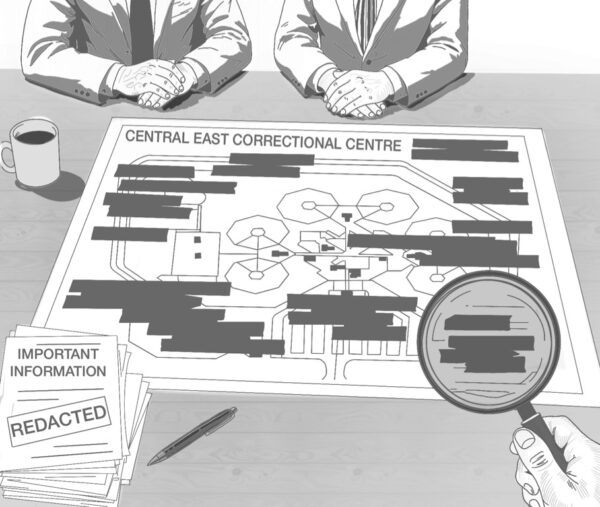
And there are the inquests. Since 2022, five coroner’s inquests have been held or called into deaths at CECC, considering 14 people in total and producing, in the verdicts so far, well over 100 recommendations to the province.
A 2022 joint inquest looked at three men found in their cells after hanging between 2014 and 2019. Arun Kumar Rajendiran, 25, had never been flagged as a suicide risk and had never seen a psychiatrist during his time at the facility. Darrel Tavernier, 42, had a scheduled psychiatrist appointment that never took place. Stephen Kelly, 62, died in the facility and his original healthcare file was missing when staff became aware of his death. Jurors heard that CECC was operating with half its authorized nursing complement. The jury issued 38 recommendations.
A second inquest, held later that year, examined five more deaths at the facility from drug toxicity between 2018 and 2019: Steven Frenette, Daniel Foreman, David Bullen, Jonathan McConnell and Susan Borja.
The 2023 inquest into the death of Abdurahman Hassan is- sued 53 recommendations. Hassan was a Somali refugee with schizophrenia and bipolar disorder, held at CECC for three years under a Canada Border Services Agency detention order. He died at Peterborough Regional Health Centre after a transfer from the facility by way of Lindsay’s Ross Memorial Hospital. The inquest’s first recommendation was that Ontario end the practice of housing immigration detainees in its provincial jails. Two and a half years later, it did.
The December 2023 inquest into Soleiman Faqiri is the one most Kawartha Lakes residents now recognize. Faqiri, a 30-year-old former University of Waterloo engineering student who lived with schizoaffective disorder, died in a segregation cell at CECC on his 11th day in custody. The jury ruled his death a homicide and issued 57 recommendations. The homicide finding goes to manner of death, not criminal guilt. An inquest jury answers five questions: who, when, where, how and by what means. It does not assign blame.
Faqiri’s family asserts that none of the 57 recommendations have been implemented. The family publicly asserted that CECC was responsible for his death. In 2019, they filed a $14.3-million civil suit against the government, the superintendant and, notably, seven individual correctional staff. Among other things, the family alleged there was a physical attack and excessive force by the staff. The suit was settled in 2022 on confidential terms. Settlement carries no admission of liability. The OPP declined to lay charges three times.
A fifth inquest, which began in March 2024, examined the drug-toxicity deaths of four more inmates at CECC between 2020 and 2022: Adam Wood, Stanley Saunders, Thomas Neumann and Abdelaziz Ibrahim. So far, no verdict has been publicly reported. And in July of 2024, the most recent publicly reported death. Andre Taillefer, 58, was found with serious injuries in his cell and died in hospital days later. Two fellow inmates have been charged with first-degree murder. The case is before the courts.
What It Adds Up To
Running a jail is hard. Running one that holds more than 1,000 people, many mentally ill, many in active addiction, many awaiting trials that have not yet begun, is harder still. The staff at CECC work inside a building whose pressures are real and whose resources, the record suggests, have not been matched to them.
This is not a criticism of the people who do that job, play by the rules and discharge their duties humanely under pressures they did not create. This statement reflects on the extent of information provided to the public — who fund this institution and whose standards it is intended to uphold — regarding its operations.
That means is thin. The Ministry’s own Community Advisory Board never published its findings without ministerial approval, stopped publishing them in 2016, and was disbanded in 2021. Nothing has replaced it. There is no independent Ontario prison inspectorate, though Howard Sapers’ 2017 independent review of the provincial system recommended one and the 2023 Faqiri inquest recommended one again. Communications about CECC are centralized in Toronto; there is no local spokesperson. When the superintendent of the institution changed last year, there was no public announcement. The position turned over the way it has here before — quietly, internally and noticed only by those who already knew to look.
The province has been moving, in its way. In 2021, Ontario amended its correctional regulations to prohibit segregation for inmates with serious mental illness. Institutional Security Teams were announced at CECC in 2022, aimed at contraband and trafficking rather than at the mental health and restraint issues raised by the inquests. A multi-phase capital plan will add roughly 6,000 correctional beds across Ontario by 2050 — jailing is on the rise. Whether those measures answer what the inquests recommended is still untested. Many of the recommendations remain, on the public record, unimplemented.
Central East is a public institution in every respect the word carries. It is ours, in every legal and civic sense. And yet almost everything we know about it, we have learned because somebody inside it died, or was struck, or sued, or spoke to a reporter anonymously because they could not speak on the record. The gap between what this institution is and what it tells us about itself is not accidental. It is the settled practice of a provincial architecture that has not been required to do otherwise.
A public institution cannot, in any meaningful civic sense, remain public if the public is not given the ordinary means of knowing it. That is not a partisan point. It is a democratic one. The answers do not require a revolution: an independent Ontario prison inspectorate, as recommended a decade ago and recommended again by the Faqiri inquest; a community oversight body whose reports reach the public without a minister’s permission; a CECC spokesperson the community can actually reach. Some of it once existed, and was dismantled. None of it has been rebuilt.
These questions remain on the community’s desk, where they have lain too long. The building sits in plain sight. What goes on inside it does not. Our jail is ours. The rest is a choice.



I hear your complaint and second it. But while it might look good on paper and help protect the province from liability, I doubt very much that an “independent Ontario prison inspectorate” would make any difference whatsoever to the abuses and neglect you have cited examples of. It has been my observation that a lot of psychotic diagnoses in our correctional institutions are made and relied on to discredit the testimony of victims of systemic injustices. Robert Van Voren collects data about the state and corporate misuse of psychiatry around the world to discredit victims of influential corporations and corrupt state officials. Make no mistake that Canada is no different. The problems human kind has with human rights stem directly from what Joseph Conrad recognized as the heart of darkness that characterizes our species. Oh yes, we cover it up with material distractions to help us turn away from what Leonard Cohen in his spoken word piece, Puppets, calls “all of this” and what Conrad called “the horror, the horror.” Successful recovery from the PTSD shock of realizing this fundamental fact about who we are requires, according to the creator of Dialectic Behavioural Therapy, Marsha M. Linehan, “radical acceptance” of this central fact of our existence. It is only from such acceptance that we can proceed. The abuses of staff and inmates at our correctional facilities, like at all correctional facilities around the world, to greater or lesser degrees, come, as a remand centre superintendent once told me, “from the top”. If you don’t want to lose your position in the determined social hierarchy, you don’t make waves. You “turn away from all of this” and stay forever deluded about what is possible. Thanks for giving a damn. Good luck.