
The quiet economy of favours

Sarah Fournier is the new Creative Director of magazines for The Lindsay Advocate, Kawartha Social, and Play Stay Live. She’s also a Creative Director/Partner at Colour and Code, a marketing, website, and design agency in Lindsay.
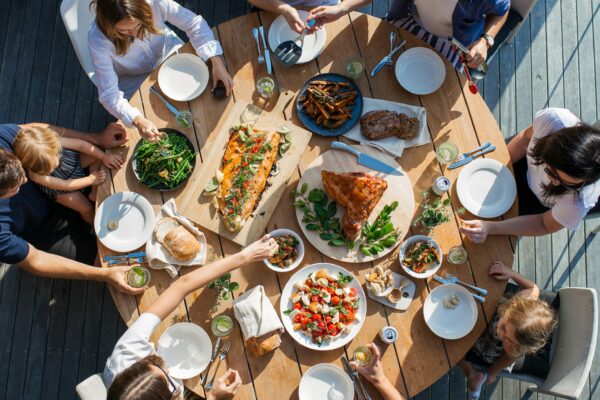
There’s a whole economy most of us rely on that never shows up in our bank accounts.
It runs on shared dinners, borrowed time, and the kind of text you send when you need a hand. It looks like watching someone’s kids for an hour, dropping off a meal, or showing up without being asked. No invoices. No contracts. Just people helping each other.

And lately, I’ve been noticing how much our family depends on it.
We’re lucky to have built a group of friends where dinners happen easily and often. Someone hosts, fridges and freezers are ravaged for dinner contributions, kids play endlessly, and the expectation is to show up as you are. We step in when someone needs support, we share what we have, and we care for each others’ children as if they were our own.
No one’s keeping score. And yet, somehow, it works.
In a world where so much is transactional, this kind of exchange feels different. There’s no invoice, no formal agreement, no guarantee of return. And yet, for many of us, it’s the system that makes everything else possible.
This quiet economy of favour isn’t extra, it’s essential. It’s how families function, how businesses survive, and how communities stay resilient.
And in a time when everything seems to cost more — gas, groceries, childcare, even time itself — its value only grows. These small, everyday exchanges help absorb the pressure in ways formal systems can’t. They fill the gaps. They make things manageable. They remind us that we’re not operating alone.
But this kind of system doesn’t happen automatically. It relies on people staying connected, showing up, and being willing to both give and ask for help. It’s built over time, through small, consistent interactions that don’t always feel significant in the moment, but they are.
As more of life moves online and becomes increasingly introspective, this kind of community mindset becomes invaluable. It’s easy to default to doing everything ourselves. Independence has long been the benchmark, especially for my fellow millennials. But there’s something more sustainable (and enjoyable) about relying on each other.
We often talk about building strong communities in big, abstract ways. But more often than not, it’s built through shared meals, exchanged favours, and the quiet understanding that we’re not doing this whole life thing alone.
It may not look like much on paper, but it’s a system I can’t imagine living without.

What a lovely, positive piece about your personal community. When it all falls together like that, it is the best of all possible worlds. But for those for whom it does not – for those on the move or those who are alone for one reason or another – online social interactions can be invaluable. We can meet people online we’d never meet otherwise, people from other cultures and from other countries. I’ve met and made online “friendships” with interesting people in Jordan, down under, Latin America, Central Europe, the Middle East and across Canada and the United States of America and I’ve kept in touch with some of them for a couple of decades already. I don’t find the experience at all introspective; quite the opposite, in fact. It is a fast changing world and we make our community where we can.