The Generations
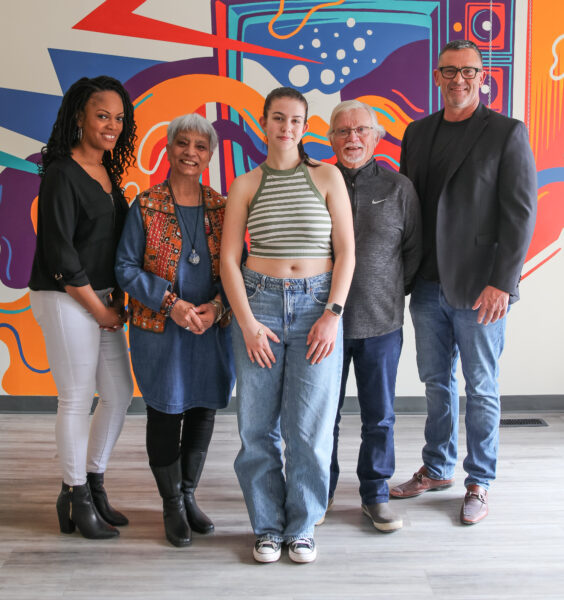
We talked to five different people from five different generations – Silent, Boomers, Gen X, Millennial, and Gen Zed – on managing change, finding connection, and the planning for the future.
They say, ‘If you want to know where you’re going, ask someone who’s already been there.’ But has anyone ever been exactly where we are now? The world keeps changing — faster than ever—and what worked in the past doesn’t always translate to the present. Although the advice offered to younger generations may come from a place of wisdom, it can also feel like a roadmap to a place that no longer exists.
From typewriters to TikTok, we’ve lived through radical shifts in how we work, talk, connect, and understand the world. The story we often hear is one of division—Boomers rolling their eyes at Millennials, Gen Z criticizing how Gen Xers are stuck in the past, everyone quietly ignoring the Silent Generation—the truth, as it turns out, is far more complicated.

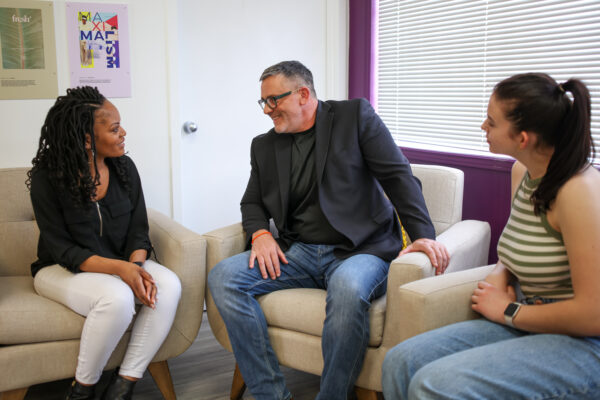
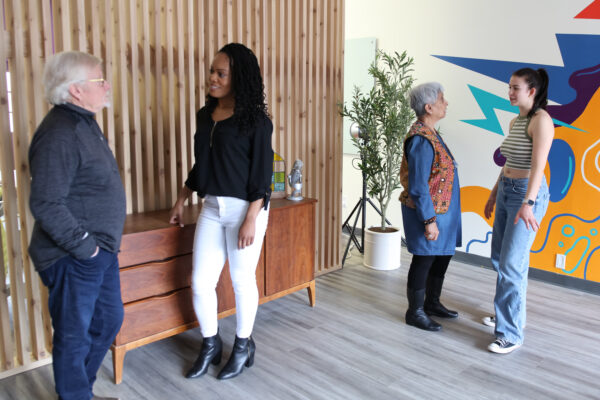
We sat down with five people from different generations in Kawartha Lakes, and what emerged wasn’t a culture war, but a layered story of contradiction, a desire to improve, and a surprising amount of hope for the future.
As an Indian immigrant born in the Silent Generation, Zarina Decambra’s early years as a single child were bathed in silence. “I was raised in a time when girls and women were not to be heard before we were seen. My parents would never ask how my day at school was,” she remembers. “I swore to myself I would not allow my children to be quiet.” She praises her mother’s decision to send her to boarding school—a place she first experienced true connection and community.
Peter Sanderson, a lifelong Lindsay resident and proud Boomer, grew up in a very different environment—one buzzing with play and chatter. “We didn’t have to worry about safety and security the way parents do now. Neighbourhood community was the norm,” Peter recalls fondly. “We were always watching out for younger people.”
Another long-time Lindsay resident, Jason Ward of Generation X, sees his cohort as the critical bridge between Peter’s playful, community-driven world and the digital spaces inhabited by younger generations. “There used to be several taverns in Lindsay where people would go to hang out,” Jason remembers. “Now, playing games online is primarily how kids socialize.”
Representing Gen Z, Sage Stapleton reinforces these beliefs about this generation born into a digital world. “Nothing I do is paper,” she confesses readily, highlighting her complete immersion in online platforms for both social and educational purposes. For Sage, digital tools aren’t replacements for community—they define her community experience.
Somewhere in the middle of these hyper-connected and play-intense upbringings is Sue Allen, a Millennial mother of two actively navigating the intersection between digital and physical. She deeply feels the tension of raising this next generation, known for their early and extensive exposure to technology.
“Technology is an integral part of our life now,” Sue acknowledges. “We’ve inadvertently become reliant on it and don’t have to use our brains as much as we should.” Peter, reflecting on his experience with the seismic shift of technology entering everyday life, admits the results of the tech revolution weren’t all bad. As a young teacher in the early 1980s, he witnessed first-hand how technology could drastically change lives when used as an aide. He compares today’s digital revolution to the historical transition from radio to TV, recognizing smartphones and digital tools as double-edged swords. “It moved us away from play-based interactions to screen-based ones, changing how we communicate and connect,” Peter adds.
Zarina has also witnessed this massive shift in communication styles, amplified by her experiences living in a multi-generational home shared with her two daughters, son-in-law, and granddaughter. As someone who truly feels connected to the “Silent” part of her generation, Zarina admits the energy and openness of her family’s communication can feel overwhelming at times. “The first year was horrible,” she says about the transition of living together. “But the blessings of it are magnified now that we’ve sorted things out.”
While Zarina sometimes struggles with the constant flow of conversation, younger generations thrive on immediacy and openness. Sage argues that the methods older generations criticize as superficial are actually more efficient. “We communicate in a direct, immediate way instead of waiting for a call… or a carrier pigeon,” she laughs. Yet, Sage openly admires older generations’ ease with direct communication—without apps or distractions—and acknowledges the challenges posed by digital dependency. “One thing I admire about older generations is their ability to easily make a phone call.”
This blend of critique and admiration isn’t unique to Sage. In fact, each generation seems to view the others with a mix of curiosity and contradiction. And not surprisingly, many believe their own childhood was the best. Sue wishes younger generations could experience the same freedom and spontaneity without screens Millennials had. “I want Gen Z to know how fun our childhood was,” she insists, “and how fun childhood can be.” Hers was marked by outdoor exploration and offline fun, something she thinks today’s children sorely need.
Peter echoes this sentiment. For his generation, community wasn’t a concept; it was reality shaped by unstructured time spent outdoors. “Kids played just for the sake of play,” he says, emphasizing a freedom he worries has faded. This freedom, Peter believes, fostered lasting friendships and taught kids how to structure their own time.
The ability to roam free, along with significant cultural transformations, united Jason’s generation and defined his childhood. He fondly recalls walking Lindsay’s Kent Street in a leather vest and work boots, blasting Motley Crue and death metal. “My kids are shocked that I ever did that,” he laughs, “but that was cool back then.” Jason passionately describes how Gen X found solidarity through powerful music and movies. “There was a huge creative movement in the 80s, when heavy metal surged, punk went away, and hard rock and roll was on the rise,” he explains. “That music gave us our voice.”
This deep sense of unity older generations experienced might appear to have been lost, but it could have simply shifted locations. Sue points out how digital tools have kept her connected with people she’d otherwise lose touch with. Even Jason acknowledges his kids may be getting just as much out of their virtual connections as he once did in person.
Whichever way you look at it, digital dependence has generated unfair stereotypes. “Millennials are thought of as lazy and not as hard-working because we use technology to work and get things done,” Sue says, “but it’s made us creative problem-solvers.” Having experienced adolescence during the transition from analog to digital, Millennials uniquely bridge these worlds. “We know how to look for answers in the encyclopedia or search Google for information,” Sue explains. “We’re actually incredibly determined to see things through, which is something I think we’ve adapted from older generations.”
Sage also pushes back against generational stereotypes. “They assume that because we use tech, we’ve been dumbed down. It’s unfair to make this generalization,” she says. “They think we’re ‘unproductive’ but not all of us are.” Jason sees it a bit differently. “Boomers taught me that there’s no substitute for hard work,” he asserts. “It’s challenging to get kids to do physical tasks these days, especially when there’s a universe they can escape to online.”
Unsurprisingly, economic shifts underline many of these generational divides. Peter, who grew up in a secure post-war era, recognizes the stark differences in job stability today. “We valued long-term employment and were loyal to our employer,” he says. “It’s easy for us to question why Gen X-ers can’t hold a job, but that’s not a reasonable expectation these days. Opportunities to work in one setting are not nearly as plentiful.” Reflecting further, he acknowledges today’s struggles. “It’s much tougher now, without question. Growing up, we never wanted for anything and weren’t aware of everything globally. Those aren’t givens anymore.”
Jason agrees that times have changed economically and expresses concerns about younger generations’ struggles in building financial independence and maintaining interpersonal skills. “We survived without emotional and financial support from parents,” Jason says. “I often question whether my kids will be able to accumulate as much financial independence as they need.” Sue echoes the importance of learning financial responsibility and actively teaching her children to budget—with the help of banking apps. “I want my kids to be aware of how they spend money, which is hard when we tap for everything these days,” she explains.
These financial concerns are closely tied to generational shifts in parenting. Jason marvels at how the parenting style of his youth—independent, free-range—has given way to more cautious, highly involved approaches. “Public school pick-up shows this whole new way to parent. The streets are lined with parents waiting in their car to pick up kids instead of having them walk home or take the bus,” he says. “Block parents could never survive today. They were just good people that offered a safe place for kids, but today we would be suspicious about why people would want to volunteer as one.”
As a front-row spectator of her granddaughter’s upbringing, Zarina sees today’s parenting as a positive evolution. “I had a deferential relationship with my parents. You suffer quietly, and that’s how it is,” Zarina explains. “My family’s communication is so joyful to watch. The openness they share, I so admire.”
That candidness and emotional presence mark just one part of a broader generational shift. Peter observes another change—this time in how younger people experience leisure and connection. “If there’s one thing other generations can learn from Boomers, it’s dealing with unstructured time,” he says, referring to young people’s dependence on phones for entertainment. As a proud member of the Optimist Club, Peter aims to shift this mindset by leaving a legacy that emphasizes play-based activities and fosters community. He hopes younger generations can learn to balance technology use with genuine social connections.
Sue agrees that mastering this balance is essential. Although she admires younger generations’ rapid adaptability, she emphasizes that kids need to learn to be mindful of what they’re watching and consuming. “With full accessibility to the world, you need to know when to turn it off,” Sue says. Even Sage has considered stepping away from platforms like Snapchat due to their potential harm to genuine relationships. “I think younger generations should avoid social media as long as possible,” Sage advises. “It’s hard to get past the addiction and constant need for stimulation.”
Yet even with these challenges, Peter carries a vision for something better ahead. “I have great hope for the future,” he says. Surprisingly, Sage agrees. She expects her generation will be remembered for its commitment to inclusivity, environmental responsibility, and proactive engagement with global issues. “We may spend a lot of time online, but this makes us deeply connected and informed,” she stresses. “I think we’re actually the most inclusive of others because we were born into knowing things weren’t okay.” Growing up in a world more attuned to inclusion and equality has shaped how her peers think and interact.
Not everyone sees the world through the same lens—but across generations, a sense of mutual respect and hope quietly threads its way through. “I admire everything about the new generations,” Zarina concludes. “They will fight; they will speak up. I have a lot of hope for this world.”
—Sarah Fournier is a Creative Director/Partner at Colour and Code, a marketing, website, and design agency in Lindsay.