The challenges and opportunities for local women at a milestone time of life
Retirement is often described as a finish line, but for some women, it feels more like a threshold. It’s a new life that may include unpaid work and partner caregiving and hopes about how their retirement years would unfold.
Way before there were thoughts of RRSPs or finances, there were ideas about what their golden years would include: a time to exhale, new choices and perhaps more rest. When speaking with some local women, a more complex picture appears — one where anticipation and practicality reside, where new identities are formed and where financial realities come into play.
Statistics Canada reports that in 2025 the median age for women in Canada to retire is 64.5, with public sector workers slightly younger at 63. For self-employed women, the median age is 67.
Dianne Hall bucked the trend as a nurse with extensive experience in neonatal and pediatric care. Hall retired at age 70, describing her job as “the best job in the world,” which explained her decision to work past traditional retirement age.
Her career began at Kingston General Hospital in the neonatal intensive care unit. She described “falling in love with the field,” during her third-year OB placement.
Her career then took her internationally, including specialized training at Oxford in neonatal care. After that there was St. Joe’s in London, ON, then back to England for two different pediatric cardiac positions at two different hospitals. Later, back in Canada, The Hospital for Sick Children beckoned before she landed a position at Stanford University Hospital in California in their neonatal unit.
Hall then nursed at Women’s College Hospital before pursuing her Honours Bachelor of Science in Nursing degree. Following her degree, she taught clinical nursing at Scarborough Centenary Hospital.
The most significant portion of Hall’s career, though, was her 24-plus years as coordinator of the Infant & Child Development Program at BGC Kawarthas. The program served high-risk families, including those with premature babies, difficult deliveries, medical histories, or children born with medical issues or anomalies. She estimats she working with hundreds of families during her tenure at the BGC Kawarthas and thousands throughout her entire calling.
After a whirlwind career, there was a change to being home alone in her retirement, but it didn’t take long to find a new focus. “I was fortunate that I had started volunteering with Habitat for Humanity.” She worked on three Lindsay home builds and volunteered in the ReStore. Hall notes it was something she had been interested in. “I felt so strongly about what they were doing, because again, I was working with families.”
Hall acknowledged having financial concerns but was in a favourable position with her mortgage nearly paid off at retirement. She credited having a good investment advisor and the sale of her house with providing financial security.
As a certified financial planner for 29 years, Leslie Orr is the owner of Sunlife Financial in Fenelon Falls. She recommends building a trusted advisory team spanning tax, legal, and financial planning expertise in retirement plans. She notes the importance of open family discussions about wants and needs regarding future care requirements and developing Plan B strategies for health deterioration. This comprehensive approach addresses both optimistic retirement visions and realistic contingency planning.
Orr notes some women head into retirement, and not all are financially in a suitable position, whether through divorce, low wages, lack of a pension, or stepping away from work to care for children or family.
In these situations, Orr focuses on ground-level financial planning centred on meeting basic needs. For clients without saving opportunities, pensions or habits, she emphasizes understanding daily living obligations and exploring resource-pooling partnerships with friends or family to avoid isolation and financial strain. This may look like sharing accommodations, or if possible, buying an income-producing home where living in part of it and renting out the other part may help.
For Hall, the house sale enabled her to take her dream trip to England, including a cruise on the Queen Mary, which she couldn’t have afforded otherwise. The upkeep of her older home was also a consideration. After the sale a few years ago, she rented an apartment. The move took her back to London, ON, and dear friends she had nursed with at the beginning of her career.
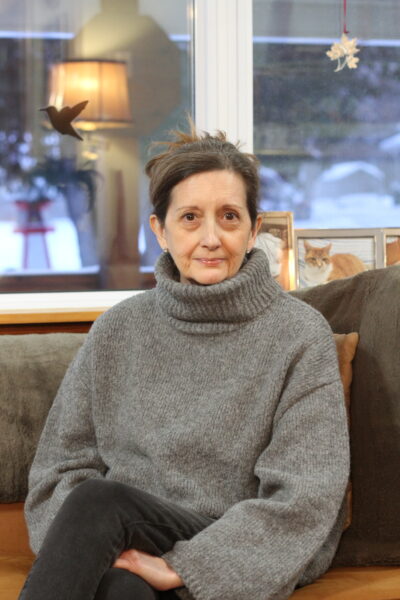
When asked for advice for women approaching retirement, Hall said having something to look forward to beyond daily routines, whether volunteering, joining organizations like her embroidery guild, or pursuing other interests, rather than aimlessly shopping or watching television. “You don’t have to do it every day, but there’s something to look forward to doing.”
June Kanitz spent her summers in the Fenelon Falls area as a child at her family’s cottage and returned to Kawartha Lakes to retire after living and teaching in the Toronto area. Kanitz describes herself as someone who helped students understand the world around them during her 30-year career. She taught history and civics and maintained long-term relationships with former students while also mentoring younger teachers.
The retirement decision came in 2020 when Kavitz was 56 years old, coinciding with her eligibility for early retirement and the onset of the pandemic. The shift to e-learning and uncertainty about provincial pandemic management influenced her decision, stating she didn’t think she could “wait a good 10 years for the cycle to kind of return back” to pre-2019 classroom conditions. Both Kanitz and her husband Justin, retired from the Toronto District School Board, with her husband retiring in 2021 after struggling with e-learning delivery for practical automotive courses.
The couple moved to her elderly mother’s house in Kawartha Lakes in 2020 to care for her, while she was in long-term care. As an only child, this responsibility naturally fell to her.
Regarding retirement’s impact on her life, Kanitz described it as “fantastic” and “night and day,” emphasizing the complete elimination of work-related stress. She noted that teaching was stressful and involved extensive preparation work, often requiring three to five hours on weekends. The freedom to pursue personal interests and spend quality time together has significantly improved their relationship and lifestyle.
The couple purchased a small cottage in New Brunswick in 2022, allowing them to pursue their shared love of outdoor activities and solitude. Kavitz has family in New Brunswick and initially considering retiring there. This additional property provides them with an escape into nature, complementing their already peaceful lifestyle in Kawartha Lakes.
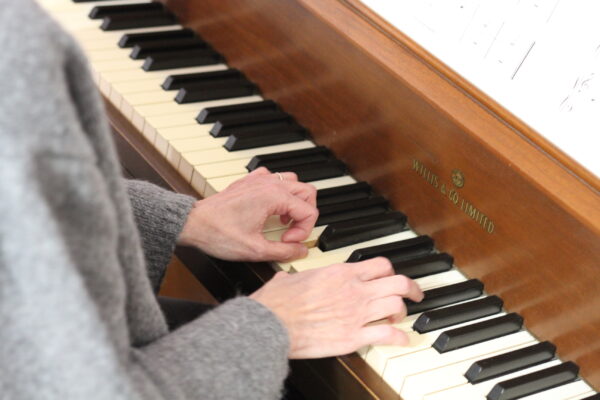
Kavitz has several goals for her retirement, including returning to piano playing — which she had to abandon during her demanding teaching career — and learning guitar. She said it is challenging fitting all her interests into her schedule and finding appropriate learning methods that match her preferences for traditional instruction, rather than AI-assisted learning.
She also wants to become more adept in French, not having used it since Grade 13, given that New Brunswick is officially bilingual.
“The time that I’m spending (there) leaves me kind of puzzled because I can remember some of the vocabulary, but I want to become more proficient.”
Some retirees find their identity changes at home after leaving the workplace. Not so for Kavitz. She thinks it might be a good question for her husband. She feels he’s pretty used to her being very driven and trying to achieve and do lots of things. “I would almost argue for him, I’m driven to a fault, (and) that I need to probably step back and relax a little bit,” in retirement.
She emphasized women considering retirement should not be afraid of the transition, despite it being “probably the biggest change” an individual experiences.
Few people can retire at 30, but Marsha Thomas got an early buy-out and took advantage of the chance to reinvent herself.
Thomas’s career began early at Ontario Hydro, starting the day before her 18th birthday in labour relations, working with management and union relations, grievances, and employee rights under human resources. The employer paid for her to attend university while working as well.
Her first retirement came at age 30 when Ontario Hydro offered an attractive retirement package to employees. Despite not planning to retire so young, Thomas seized this opportunity and spent her 30th birthday in Australia, hiking through the outback and using the time for personal reflection about her life direction.
Following her Australian adventure, Thomas relocated from Toronto to Lindsay, drawn by her childhood connection to Fenelon Falls where her family had a summer home from when she was four years old. She found Fenelon Falls too small but knew Lindsay well enough to make it her new home. In Lindsay, Thomas pursued various government and non-profit positions, including work for the city and community care organizations.
Thomas’s second retirement occurred in her mid-50s, aligning with her original career planning from her Ontario Hydro days when she knew she could retire early because of the pension factor. This timing coincided with her husband’s health issues, creating a natural transition point. “When something like that presents itself, you want to make sure you’re available, right?”
Rather than abrupt retirement, Thomas started her own consulting business, helping organizations with information management and privacy — leveraging her career expertise while maintaining flexibility for care giving responsibilities.
After running her business for several years, Thomas fully retired about eight years ago. Her older husband, retired 20 years prior, making Thomas’s retirement adjustment a newer experience in their household.
Thomas acknowledges her fortunate financial position because of starting work young and accumulating 40 years of employment, enabling extensive retirement planning. She thinks that financial preparation varies significantly based on individual retirement goals, noting that some people prefer working until 70 while others, like herself, prioritize early retirement.
Currently, Thomas has transitioned into a primary caregiving role for her husband, whose health has declined significantly over the past two to three years, essentially becoming her full-time responsibility. While it may not have been in her retirement plan years ago, she says, “I’m crazy about him.”
Thomas’s retirement days includes community engagement and personal fulfilment. She maintains active involvement through volunteering and committee participation, adapting to the caregiving constraints by using technology for Zoom meetings and coordinating home care support to enable her participation in community activities.
She stresses that retirement should not mark the end of personal interests and passions but provide opportunity to pursue previously deferred goals and activities.
“It’s obviously different because I don’t have to wake up and go to work every day.”
*Marsha Thomas does not wish to use her real name to protect her husband’s privacy.