

Ten-year ‘deeply affordable and supportive housing strategy’ given initial approval by council
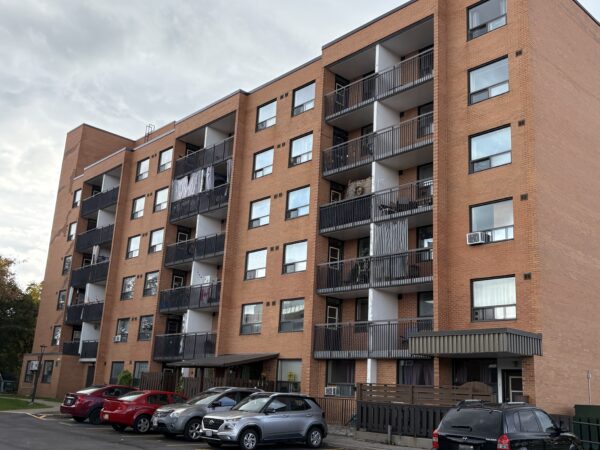
Kawartha Lakes city council has given its initial approval to the 10-Year Deeply Affordable and Supportive Housing Strategy, a report created to tackle one of the city’s most pressing social issues.
The report, prepared by HelpSeeker Technologies, a firm that uses data to address complex social challenges, was endorsed in principle at council’s Oct. 21 meeting.
In June 2024, council adopted a resolution to award HelpSeeker Technologies a contract to develop a housing needs assessment focused on reducing homelessness in Kawartha Lakes for 2027-2036.

The report provides a framework to guide decision-making, prioritize investments and improve co-ordination among city departments, community partners and service providers when developing initiatives to reduce homelessness.
“The strategy will function as a foundational planning tool – establishing strategic priorities and areas of focus that reflect the municipality’s responsibilities as CMSM (consolidated municipal service manager),” the report states.
“These include homelessness prevention, supportive and transitional housing, housing support and community housing oversight.”
Drawing on input from community partners, survey responses and people most at risk of housing instability – including single parents, seniors, people with disabilities and Indigenous Peoples – HelpSeeker identified six priority areas for action, along with goals, objectives and desired outcomes for each.
The six priorities are to expand deeply affordable and supportive housing; prevent homelessness and improve pathways to stability; strengthen community and supportive housing delivery; align internal systems to support delivery; strengthen governance for housing delivery; advocate for senior-level government investment in deeply affordable housing.
Michelle Corley, the city’s human services manager of housing, told council a major highlight of the strategy is that its recommendations are based on information from people with lived experience of housing instability.
“I really want to emphasize that this plan is grounded in local voices and local needs,” Corley said. “It reflects what people in our communities have told us they’re experiencing and what they need to see changed.”
Cheryl Faber, the city’s director of human services, said the strategy aligns with Kawartha Lakes’ four-year plan for 2024–2027.
She added that the strategy also aligns “with the values of our city (and the) mission of working together to deliver the highest standard of municipal service and uphold our commitments towards a sustainable future for all.”
“Council, you’ll need to look through the lens of being fiscally responsible, to be open and transparent, look for means for staff to partner and collaborate, and in the end drive for that service excellence that you want,” Faber said.
Following the presentation, council members shared their thoughts.
Ward 3 Coun. Mike Perry commended the report as “excellent” for identifying specific demographics facing obstacles to accessing affordable housing.
While Mayor Doug Elmslie applauded the report’s contents, he said funding from other levels of government will be essential to make the strategy viable.
“I think the recommendations in the report need to happen, and while we can make all the commitments in the world, unless we get help from senior levels of government, I just don’t see it happening,” he said.
Councillors were urged to press the federal and provincial governments for financial backing.
With the report endorsed in principle, the next step will be for city staff to complete comprehensive financial modelling by the end of the second quarter of 2026. Staff is tasked with testing the affordability of the report’s recommendations relative to outcomes, identifying opportunities for additional funding, and outlining cost forecasts and financial recommendations as part of the 2027 municipal budget.
The current 10-Year Housing and Homelessness Plan (2020–2029) for Kawartha Lakes and Haliburton County will remain in effect through Dec. 31, 2026.


Rest assured, this will be paid for by Municipal Taxpayers.
The City of Kawartha Lakes only knows how to do things one way, start with gold plated consultants, lots of superlative talk from department heads at Council, then mediocre execution and follow through, weak service delivery with inconsistent results, and some really poor outcomes.
Do we really want more housing buildings like 68 Lindsay St N and 111 William St N in Lindsay, and managed by the same team at CKL housing?
Wasting more money that could have been put towards the problem
While it is clear to all that KL needs a plan to address housing insecurity and homelessness, if this is worth doing, it is worth doing well. KL has committed itself and our residents (but not, oddly, City staff) to the principle of respect in government and surely that should extend to how government treats our most vulnerable. I am concerned that assuming the poorest and most vulnerable in our community won’t mind having their housing supervised and under surveillance at all times by their keepers will violate their privacy and other human rights. Poverty is most often the result of criminal victimization and other trauma; assuming the poor can’t do math and therefore need carers to manage their finances, or that they need help deciding what to eat or how to live is simply wrong. Most can look after themselves just fine provided they have the means to do so. For this reason, I object to creating more middle-class jobs to force what looks to me like surveillance management on a growing sector of our community. I agree with the mayor (shocker, I know) that without federal funding, this won’t happen (too bad we spent the money already on the report and recommendations). If the federal government is going to make decisions to address poverty and homelessness in Canada – especially in light of the rapid advance of AI technologies and the associated impact on labour – it would be far better advised to take the decade required to reform welfare in Canada and create federal Milton Friedman-economics styled Basic Income legislation that would both abolish the need for the costly shelter system, food banks and supervised ghettos and empower the poorest among us, with respect for their equality and privacy human rights. If done correctly, as evidenced by the comprehensive report, decades old now but still valid as confirmed by countless subsequent reports, written by Senators Segal and Art Eggleton, a federal basic income administered by reliable CRA software triggered by negative annual income tax claims, would actually save taxpayers $millions every year. It’s the only humane way for Canada to move forward in our rapidly changing world; any efforts to manage the poor by hiring more bureaucrats won’t work IMHO.
How many Thousands are we paying these consultants! WHAT EXACTLY IS DEEPLY SUPPORTED HOUSING! Wouldn’t mind helping disabled people, DEFINITELY refuse to help able bodied people to lazy to work! We worked nights, weekends, Stat holidays to own a home and give our children a good education! Now we (basically) rent our home from Kawartha lakes for $13,000 a year in Taxes! Can’t get our roads repaired properly! No street lights,no sewers,no sidewalks, BUT why not. Let’s spend millions on SUPPORTED housing! Darn I’ll go back to work to pay my taxes! I’m sure the TAX Increase this year will only cost us 5,6,7% if we’re lucky!
It sounds more like burocacy than real actual help , more like another test or survey. You think since 2017 they would have this all pinned down . Just sad !!!