Talking turtles
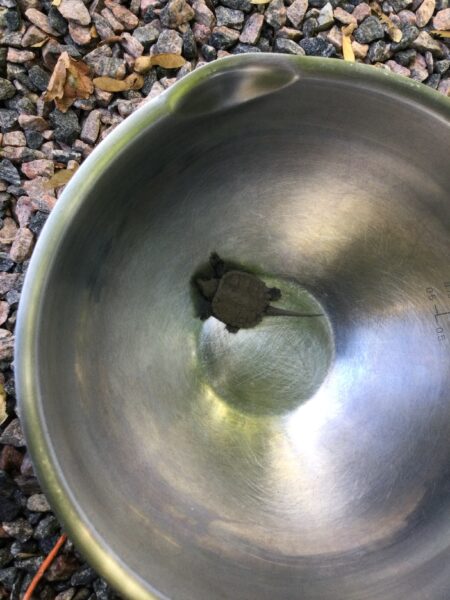
One of the joys of living on a small river is wildlife watching. Each June I’ve been particularly fascinated by snapping turtles that crawl out of the Nonquon River to the shoulder of the cul de sac in front of our house to lay eggs. And I’m frequently distressed at how many egg shells I see within days: the lunch remains of neighbourhood racoons. We all gotta eat, but that much?
Snapping turtles can lay many eggs at a time, but few survive to adulthood. It can take 50-60 years for a female turtle to replace herself. In the wild, predators can be expected. Unfortunately, we have become one of the turtles’ biggest predators.

Threats include habitat loss due to wetland destruction for housing developments or farming. Road kills – it’s not just dead skunks we see in the middle of the road. And there are now growing fears that climate change could have an impact. Many turtle eggs are sexless, with the sex of the offspring determined by the temperature under which the eggs incubate. One study showed temps under 28C produce more males. Temps over 31C produce more females. We know climate change is bringing higher global temperatures. Could that mean a less balanced future for the turtle population?
These issues are of particular concern for conservationists in our neck of the wetlands. Southern Ontario is home to all eight turtle species found in Canada – more than anywhere else in the country. In Kawartha Lakes, we see six of those eight. Unfortunately, most are at some risk of extinction.
In our little corner of the world my family has tried to watch out for any hatchlings – a rare sight indeed. One year we hit a bonanza, with three little ones heading back to the river from whence their mother came. I remember carefully placing one at the river’s edge. A bullfrog immediately jumped out, ready to devour the little thing. I scared it away and baby quickly slithered under the mud. I guess the bullfrog thought it would try to reduce one of its predatory threats when it had the chance. Adult snapping turtles will sometimes eat bullfrogs. In fact, they eat many small creatures and plants, both dead and alive, helping clean up the environment and keeping populations in check.
Some local governments have been stepping up to help protect turtles by adding ecopassages under busy roads frequently crossed by turtles.
May 23 is World Turtle Day. We can shellabrate by helping more of these critters survive.
- Those living near nesting areas could place protectors over turtle nests. The Ontario Turtle Conservation Centre (OTCC) in Peterborough sells and has a great website describing these mesh boxes.
- Consider donating to the centre and/or to groups working to conserve wetlands, like Ducks Unlimited or Ontario Nature.
- Support our Conservation Authorities and their work in protecting wetlands.
- If you see an injured turtle, even if you think it’s dead, immediately call the OTCC at 1-705-741-5000. It might be a female carrying eggs. The centre has 50 first responders and 1,500 turtle taxi drivers who can get that turtle help. They have a veterinarian-run turtle hospital and incubation facilities for eggs. Each year the OTCC releases about 4,000 rehabilitated or newly hatched turtles back into the wild.