Return of the road trip
From classic cars, family trips, and motorcoaches, Canadian travel is timeless – and on the rise
Sometimes the car dashboard is merely a display of personal restriction; the gas gauge or battery level a measure of cost and limitation; the clock an un-relenting field marshal in the battle of modern life.
But somewhere along a road in Kawartha Lakes, where new urban sprawl yields to the open, rolling topography of this far-flung city, the dashboard becomes a tool of freedom and discovery. The clock stops dictating the terms of the day. The numbers still change, but they lose their authority, replaced by an older, gentler metric: the slow exhale of a weary driver, the unbroken line of the horizon and the steady, meditative drone of an engine revving into the weekend.

It is exactly this feeling that has given the road trip a unique, almost sacred space in the Western imagination. From the independence and rebellion of Jack Kerouac’s On the Road, to the vast Canadian identity of The Tragically Hip’s At the Hundredth Meridian, to the modern escapist urgency of Harry Styles’ Keep Driving, being on the road has always been about more than moving between two points. It is an emotional state of being — a deliberate embrace of the vast spaces found in between.
Yet this deeply personal quest is also a quiet economic engine. The romantic mythology of the open road is anchored to a practical reality. Every traveller chasing a sunset is keeping a rural economy alive. The money spent at roadside chip trucks, main street boutiques and community theatres forms a vital lifeline for small-town Ontario. In Kawartha Lakes, the individual’s emotional journey and the community’s economic survival are deeply bound together.
For Bill Kavanagh, the connection between asphalt and emotional clarity is measured in cubic inches and vintage steel.
Kavanagh, the eldest of six children from a blue-collar family, spent years working in Toronto before seeking a community with a small-town atmosphere. He found that home in Lindsay. While he runs his own successful landscaping and construction company, his deep-seated passion for community service is channeled into his work with the Hope Valley Healing and Addiction Centre.
“I’ve never felt more aligned than when I am working in a place like this,” Kavanagh says. “New to Lindsay, I found myself on their doorstep helping out, and I don’t see that changing any time soon.”
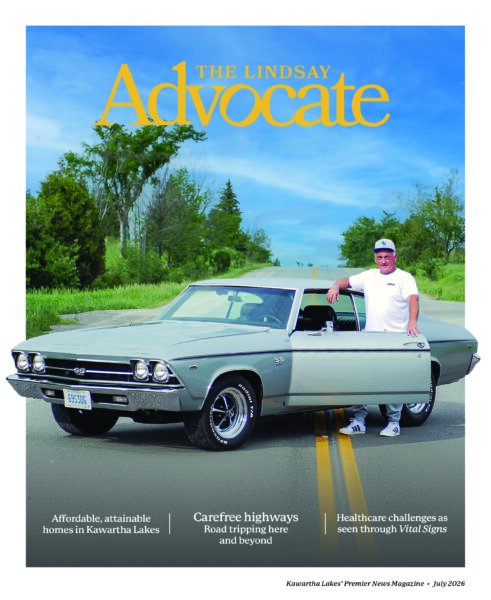
To restore his own energy, Kavanagh turns to his fathom-blue 1969 Chevrolet Chevelle SS, equipped with a 396-cubic-inch engine and a Muncie four-speed manual transmission. His obsession with muscle cars began at age five in 1970, transfixed by a massive, rumbling machine idling at a crosswalk. Decades later, in July 2020, he finally claimed his own piece of automotive history.
“I told my wife I was on my way to buy a Chevelle,” Kavanagh says. “She asked, ‘What about the Corvette? I thought you liked it?’ I replied, ‘The Corvette is eye candy. The Chevelle is for the soul.’”
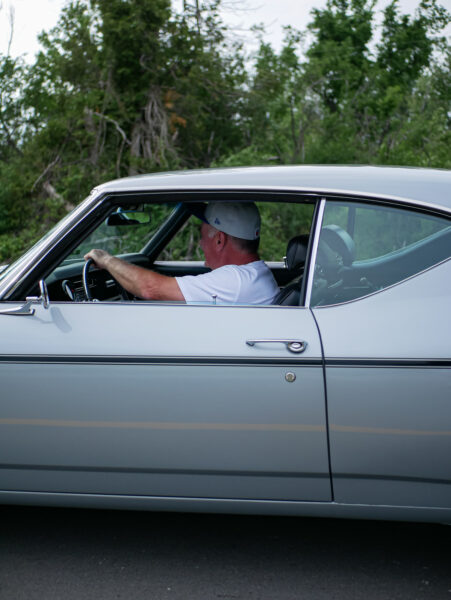
The vintage coupe bridges generations, drawing smiles from children and seniors alike. His licence plate, containing the letters “OG,” was born from a spontaneous encounter when a 10-year-old boy looked at the pristine classic and told his mother the car was “OG”—slang for original gangster, a timeless classic.
When life’s pressures mount, Kavanagh uses the Chevelle for rolling meditation. With the Rolling Stones blasting above the deep eight-cylinder growl, his spontaneous routes track through Buckhorn, Sandy Lake or Algonquin Park. In autumn, he drives through Bethany’s rolling hills. When craving his urban roots and diverse culinary experiences — whether Greek, Chinese, Indian or Middle Eastern — he points the chrome nose toward Toronto to share a meal in Kensington Market.
“It’s how I recharge, let loose, forget or reground myself,” says Kavanagh. “Get in and drive. My therapist is a ‘69 Chevelle SS. Connection over food with family or friends is really what the soul needs — and a Chevelle, of course.”
While Kavanagh finds solace in an eight-cylinder engine, another style of road trip plays out across the region — one defined by family chatter and the necessity of digital detoxification.
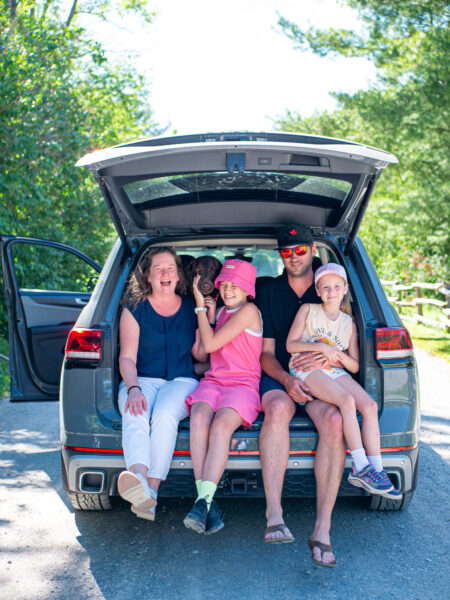
Alison Gaul, a Fenelon Falls resident, views the road trip through the pragmatic lens of modern parenting. Working as a fund and reporting coordinator for Ampere, her days are structured around data. When the weekend arrives, she and her partner, Adam, use the family vehicle to disrupt the do- mestic routine for their two daughters, Avery and Alicia.
“Travel connects our family with lived experiences away from phones and devices,” Gaul says. “By breaking our usual routines, our conversations with family members open up,” she says, allowing them the chance to discuss the highlights and special parts of the day trip in the moment and later.
“At times we include visiting family and friends from overseas to share Canadian culture and landscapes.”
Because long-haul highway expeditions can dissolve into a test of endurance with children, Gaul embraces micro-tourism. The family regularly explores Bobcaygeon, Ken Reid Conservation Area, the Kirkfield Liftlocks and Balsam Lake Provincial Park, with future plans for the Warsaw Caves and Buckhorn. In winter, they fit the vehicle with proper tires and head to Haliburton’s Sir Sam’s for skiing.
The soundtrack is dominated by Taylor Swift pop anthems, sung loudly by Gaul and her daughters, “much to my husband’s chagrin,” she laughs. Regardless of the destination, the culinary anchor remains consistent: a mandatory McDonald’s stop.
Beyond emotional bonding, Gaul notes these short trips are a vital response to economic pressures. Fluctuating fuel costs make long-distance vacations less accessible, keeping travel localized.
“With kids, we find that short-distance travel keeps boredom and crankiness at bay,” says Gaul. “We can quickly jump into the car without excessive planning. It is also a budget-friendly family activity. We want to ensure that our kids explore and learn about different parts of the world, especially those within our community.”
The localized travel embraced by families like Gaul’s fuels the livelihoods of rural entrepreneurs across Kawartha Lakes. James Barrett, artistic producer at Globus Theatre in Bobcaygeon, understands a theatre performance is rarely just a show — it is the destination around which an entire journey is constructed.
“At Globus Theatre, we attract a surprisingly diverse range of road-trippers,” Barrett says. “We welcome day-trippers from across the Kawarthas and Greater Toronto Area, weekend visitors combining theatre with cottage country experiences, and dedicated cultural tourists who will travel several hours to see a specific show.”
Barrett identifies these patrons as “theatre travellers”— deliberate consumers of culture who arrive early to browse Bobcaygeon’s boutique shops, dine at local restaurants and book overnight accommodations. “We also see visitors who follow specific artists, musicians, or productions, much like sports fans or concert-goers will travel for a particular event,” he adds. “Our audiences often discover us through one production and then return repeatedly, making the trip part of an annual tradition.”
“From a local economic perspective, these visitors are especially valuable because they bring new spending into the community,” says Barrett. “Arts and culture are often viewed as amenities, but they can also be powerful tourism drivers.”
To amplify this effect, Globus Theatre partnered with Lindsay’s Flato Academy Theatre and Fenelon Falls’ Grove Theatre to create the Performing Arts Trifecta. These professional venues actively cross-promote, encouraging travellers to build multi-day itineraries around the region’s diverse entertainment offerings.
As airfare prices climb, the proximity of the Kawarthas to the GTA becomes a significant competitive advantage.
“People are often pleasantly surprised by the quality and variety of experiences available within a few hours of home,” Barrett says. “If there’s one thing I’d encourage road-trippers to do, it’s to leave a little room in their itinerary for discovery. Some of the best experiences in Kawartha Lakes are the ones you didn’t plan for.”
That sentiment is shared by Sandra Dzirneklis, a retired Toronto native relocated to Kitchener. Dzirneklis, who maintains a seasonal Muskoka cabin, has turned the regional road trip into a full-time pursuit.
“Ontario is my Disneyland, where I live as a retired child discovering new exciting characters in each new village and town I encounter,” Dzirneklis says.
She routinely drives through the Kawartha Region, making regular stops to attend Globus Theatre productions. Her routes are unhurried, exploring the back roads around Buckhorn or sampling craft beer like Old Dog Brewing.
“There are endless possibilities of new discoveries in Ontario to occupy me for my lifetime,” says Dzirneklis.
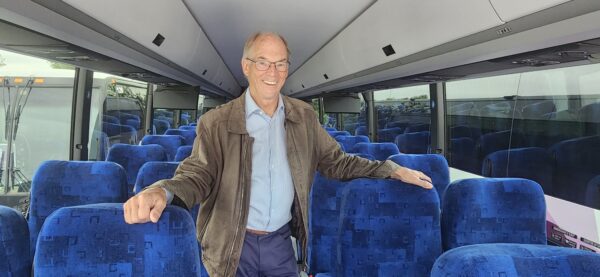
For some, the emotional appeal of the road trip is compromised by the physical stress of driving. Here, Ray DeNure offers a different interpretation of the classic journey.
As the operator of DeNure Tours, a multi-generational family enterprise based in Lindsay, DeNure has spent his career dismantling the notion that vacations must fixate entirely on a final destination.
“Most people think of a destination when they think of travel,” DeNure explains. “Road-tripping is more about the journey, the experience of leaving home without an actual destination in mind.”
The DeNure family’s transportation legacy began in the 1930s. Their touring division was born from a legendary 1966 excursion when his parents, Fred and Dorothy, converted a school bus into a motorhome and took their children on a six-week trip across North America.
“The Lindsay library agreed to not collect our overdue book fines,” DeNure recalls.
Today, DeNure Tours adapts to shifting realities. A strong U.S. dollar and a belligerent U.S. president have cooled Canadian enthusiasm for American road trips, leading to a surge in domestic Canadian travel. But operating guided, packaged trips comes with hurdles.
“The biggest challenge in the package travel industry has consistently remained with the do-it-yourself concept,” DeNure notes. “Regardless of era and technology, people believe they can make their own arrangements and do so at a lower cost.”
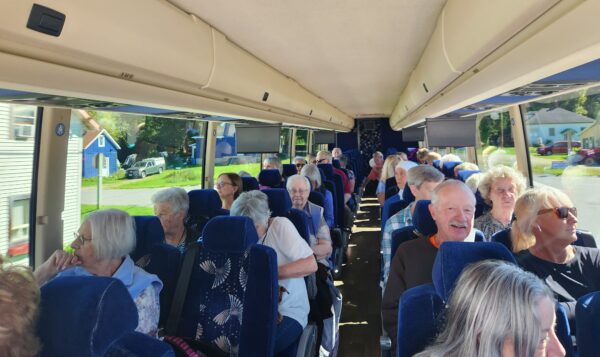
However, by handling the driving and navigation, group motorcoach travel restores the joy of the landscape.
“Our programs allow the road-trippers to actually enjoy the journey, plus they get the one thing they hope for: a sense of companionship and socialization from the other guests,” says DeNure.
From a municipal perspective, this diverse tapestry of travellers represents the lifeblood of the regional economy. Laurie McCarthy, an economic development officer specializing in tourism for Kawartha Lakes, works to translate the emotional impulse of the traveller into sustainable economic growth.
“Tourism is an important economic driver in Kawartha Lakes, generating visitor spending that supports local businesses, accommodations, restaurants, attractions and employment opportunities,” McCarthy says.
To capture the imagination of the driving public, the municipality launched its destination brand, “Kawartha Lakes – Quietly Incredible,” with a targeted marketing campaign aimed squarely at residents within a four-hour radius.
Through the Explore Kawartha Lakes portal, the municipality offers pre-planned scenic drives, cycling networks and an interactive Arts and Heritage Trail designed to tempt travellers off major provincial highways.
“Beyond its economic impact, tourism helps celebrate and showcase the unique culture, heritage, natural landscapes and rural character that make Kawartha Lakes a distinctive destination,” notes McCarthy.
Ultimately, the modern road trip remains a vital balance of commerce and catharsis. For the day-tripper, that once-restrictive dashboard becomes a technical display of freedom and a metaphorical battery charge.
Along the way, these travellers keep the lights on in restaurants, attractions and support industries throughout Kawartha Lakes. It is an economic engine that revs up the community, providing local workers with the livelihood they need to eventually get behind the wheel, hit the open road and repeat the cycle themselves.