

Pay increase for councillors moves ahead over objections from Perry and Ashmore
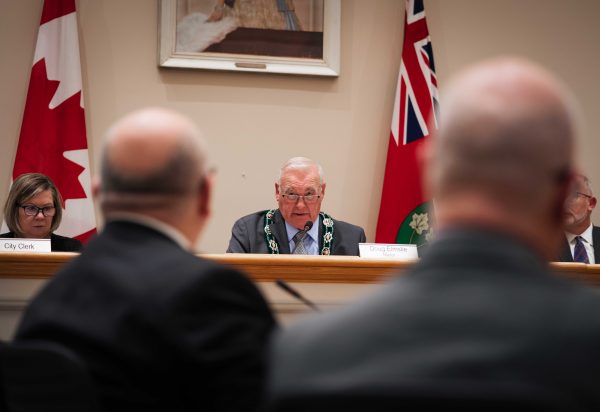
Council approved a three per cent annual pay increase for the next term, along with a significant increase in compensation for the deputy mayor role, in a 7-2 vote at its April 21 regular meeting.
The decision followed debate over the size of the increases, with two councillors arguing they were too high, while others said the adjustments reflect inflation and the growing workload of council members.

The plan outlines three per cent pay increases for council members annually from 2027 to 2030. By the end of the term, the mayor’s salary is projected to reach about $139,700, while councillors would earn just over $60,000.
Currently, Mayor Doug Elmslie earns $124,175 annually, while councillors earn $53,372.
The most significant change applies to the deputy mayor role, where additional compensation will increase to $12,000 annually from roughly $2,500.
Deputy Mayor and Ward 8 Coun. Tracy Richardson currently earns $56,620 annually. Under the proposed plan, total compensation for the role would rise to just over $72,000 by 2030.
During the debate ahead of the vote, some council members supported the increases, saying they are intended to keep salaries in line with inflation and workloads, while reflecting the time commitment required for meetings, committees and constituent work.
However, Ward 3 Coun. Mike Perry and Ward 6 Coun. Ron Ashmore, who voted against the proposal, expressed concerns over the pay raises.
“I would argue that setting a three-per-cent increase locked in automatically isn’t necessarily the responsible management of resources,” Perry told council. “Very, very few – if any – sectors are getting a four-year lock-in of wage increases.”
At the end of each term, council sets compensation for the next council based on recommendations from city staff. Perry and Ashmore argued the decision should instead be left to the next council as a matter of accountability.
“We’re basically making a decision, I think, that the next council should be making,” Ashmore said.
Perry agreed.
“Yes, we’ve done it this way in the past, but that doesn’t mean that we have to do it this time,” he said.
Given current economic pressures, he said the increases are steep.
“We have people right here in Kawartha Lakes struggling with cost of living, with grocery bills, holding off repairs – people aren’t getting three per cent raises here where we live,” Perry said.
Elmslie says the increase reflects the demands of the role and the total cost to citizens per year is approximately 50 cents for the three per cent raise.
He said council members are expected to respond to a high volume of calls and emails from constituents, and that workload has increased in recent years.
“You’re basically on call 24 hours a day, seven days a week,” Elmslie told councillors. “The amount of work that council has absorbed over the term of this council and the last council is much greater than it ever was.”
If members of the next council feel the increases are too generous, they can make amendments, Elmslie added.
Ward 4 Coun. Dan Joyce, who voted in support of the proposal, said rising inflation means salaries for members of the next council need to keep pace.
“This is not a salary increase – this is just keeping pace,” he said.


They deserve it.All hard at work in the cummity.They do lots respect to them all.
I was paying servers 8 dollars and hour in 1988. Today they probably make 18 to 20. I made about 6000 on Lindsay council. Now I realize what a heavy load council niw has with the crazy amalgamation, but ten times as much?
Better Pay for Better Governance, or Just a Larger Bill?
The theory behind the recent Council pay increase is sound: paying public officials well should, in theory, attract a higher caliber of experience. By setting a more competitive salary, we remove a significant “barrier to entry” for high-skilled professionals who currently cannot justify the financial loss of leaving the private sector for public service.
Competitive compensation encourages professional diversification. It ensures that the role of councillor isn’t restricted to retirees or the independently wealthy, but is open to those with legal, financial, or project management expertise. Furthermore, it acknowledges the modern reality of the job—a 24/7 commitment to responsiveness and accountability. By accepting these raises, the next council is essentially agreeing to a standard of performance that justifies the $12-per-year cost to residents.
However, only time will tell if this investment pays off. Will the next Council actually consist of individuals with experience commensurate with this higher compensation? Or will we see more of the same: the rubber-stamping of staff recommendations and an inappropriate focus on matters of Provincial and Federal jurisdiction for which we already have representatives?
I predict that nothing will change except the size of the pay packets. The fundamental challenge of the City of Kawartha Lakes is not just the people in the seats, but the municipality’s rural-urban structure.
With a council weighted toward rural representation, we see a “marriage” where urban centers like Lindsay, Fenelon Falls, and Bobcaygeon face significant tax outflows to support the vast road, water, sewer, and fire needs of a massive rural geography. Urban residents are paying more than they would if they were separate—much like how the City of Peterborough remains independent from Peterborough County.
Until we address these structural inequities that were created with amalgamation, a higher salary for council may just be a premium price for a broken system.
I am not convinced that there are inequities where urban centres like Lindsay, Fenelon Falls and Bobcaygeon face tax outflows to support the rural areas other than the rural areas (which i consider Fenelon Falls and Bobcaygeon to be a part of as they are villages unlike Lindsay) have a larger Council represention given total numbers but several Councillors are ineffective, but not all. I would like to see real numbers – tax revenue from Lindsay vs the rural areas and budget alloctions to Lindsay vs rural. If inequities can be proven, possibly Lindsay might may want to separate and follow the same model as Peterborough and based on my discussions with rural residents they would be happy to see Lindsay go
1. Water and Sewer Rate Subsidies
The current water and sewer rate structure is a textbook example of high-density urban areas—specifically Lindsay, Fenelon Falls, and Bobcaygeon—subsidizing smaller rural systems.
The Watson Report: An economic analysis by Watson & Associates calculated the specific subsidy amounts required for each system.
The Outcome: Council opted for a “harmonized” or common pricing model. This means residents in urban hubs pay rates significantly higher than the actual cost of their local service, with the surplus “shunted” to cover the higher operational costs of smaller rural systems.
2. Fire Service Capital Costs
The distribution of the Fire Capital budget reveals a similar imbalance in how Lindsay’s tax contributions are utilized.
Funding vs. Service: Lindsay generates approximately 25% of the total Fire Capital budget, yet the community is served by only two of the municipality’s 18 fire stations.
Effectively, Lindsay taxpayers are footing the bill for one-quarter of all fire truck purchases across the entire 18-station network, far exceeding the investment returned to their local stations.
3. Road Network Maintenance
Road infrastructure shows perhaps the most significant gap between tax contribution and local asset density.
The Ratio: Lindsay accounts for roughly 25% of the CKL tax base but contains only 300 km of roadways.
With approximately 2,700 km of roads across the entire City of Kawartha Lakes, Lindsay represents only 11% of the total road network.
The Result: A disproportionate share of urban tax revenue is diverted away from local streets to maintain the vast rural road system.
In all three critical infrastructure categories—water, fire protection, and transportation—the urban centers (led by Lindsay) act as the financial engine for the municipality. While these areas provide a quarter of the funding, they receive a much smaller fraction of the direct infrastructure investment, resulting in a continuous transfer of wealth from urban taxpayers to rural operations.
I believe that this council (or future ones) should NOT be locking in increases more than one year out.
Pay increases for anyone, including council, should be on performance.
The public should be consulted on their over all performance.
I live in Ward 2 and I personally feel the overall performance of our current councillor is VERY POOR.
The current councillor does not, in my opinion, represents the majority of the Ward, but only one, well populated, section.
They don’t work 24/7. Where r the pensioners getting their increase to support this? They can’t afford anymore. Elsmire is out of control. Nobody deserves that kind of increase. We worked all our live, now we get potentially zero for what we did, but you want that too
If the mayor and councillors are “basically on call 24 hours a day, seven days a week,” and spending so much time on email that they need a pay raise, as Mayor Elmslie claims, then they are not making good use of available AI technology resources. I understand though that some councillors have seen their CPP and Canada pension entitlements reduced when they joined Council and so will, no doubt, appreciate the raise. Council pay is really a bit of a bargain but it’s the timing and the optics that suck, to quote Howard Lutnick. When residents can’t afford groceries because they are on fixed incomes, hearing councillors complain that the increase isn’t really an increase, but just “keeping pace” is an offence. I think councillors should thank the constituents they serve and try to get on board to find ways to better serve the community. Kudos to Councillors Perry and Ashmore for voting no.