New dispatch system reduces ambulance shortages
Although Kawartha Lakes Paramedic Service saw a spike in emergency calls in 2025, a new state-of-the-art dispatch system helped drastically reduce “Code Zero” ambulance shortages and cut the amount paid to neighbouring towns for backup assistance by 66 per cent, according to a report presented to council March 10.
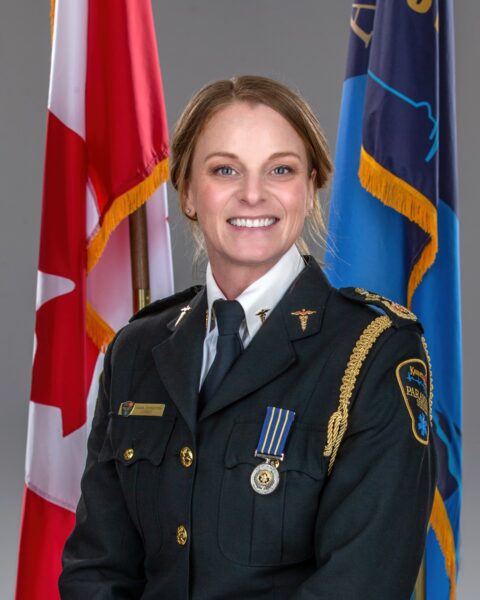
In March 2025, the paramedic service implemented the Medical Priority Dispatch System (MPDS), which allows dispatchers to collect more detailed information from callers and improve how calls are triaged, paramedic Chief Sara Johnston told council at the committee of the whole meeting.

According to the report, the new system helped reduce Code Zero incidents by 91 per cent since 2023. A Code Zero occurs when all local ambulances are already assigned to calls, leaving no resources immediately available for new emergencies. These situations often trigger “cross-border” responses, requiring ambulances from neighbouring municipalities to travel into Kawartha Lakes to handle the overflow.
The system has also reduced the number of calls classified as emergent, while lower-acuity calls are now prioritized more efficiently. The result has been a significant drop in cross-border response costs, with the city paying $35,858 to Haliburton for backup responses in 2025, down from $105,935 in 2024.
“I think this is a real positive story,” Johnston told council. “Up until last year, (ambulance Code Zeros were) trending up, so (this is) really positive and speaks to the service and council’s commitment to make sure that our resources meet or exceed the demand for service.”
The report also indicated that people in Kawartha Lakes rely on 9-1-1 more than the Ontario average, but this is likely due to a combination of the city having an aging population and lack of family doctors and other first-point-of-contact resources, Johnston told council. More rural addresses in the city compared to urban could be another factor, with only one hospital located in Lindsay.
Early performance data also supports further exploration of alternative deployment strategies to ensure the system remains responsive as demand evolves. These may include expanded use of community paramedicine and other response options, such as single-paramedic response units or clinically appropriate treat-and-release models that do not require hospital transport.
“The Community Paramedicine Program is now permanently funded and well positioned for program review,” the report said.
Looking ahead, there are no plans to add new ambulances in 2026, the report said. Instead, the paramedic service is looking at new ways to help people, such as “treat-and-release” programs where patients’ medical needs are met without requiring a hospital transfer, and possibly adding a new 12-hour ambulance shift in 2027.
Following the presentation, Deputy Mayor and Ward 8 Coun. Tracy Richardson commended the paramedic service for its work and for the improved metrics seen since the implementation of MPDS.
“There is a lot of good news in (the report), and it really shows the impact of the MPDS system that you have implemented over the last year which is pretty incredible,” Richardson told Johnston.