
Hope and recovery after the ticking of a cancer clock

Most people are familiar with the concept of a woman’s biological clock. This term is often used to describe the feeling of time racing towards the end of a chapter in one’s life. I have recently identified another biological clock that, for me, heralds time racing towards the ultimate end. I call it the cancer clock.
I didn’t notice at the time, but I imagine my clock arrived while I was sitting alone in my living room, listening to a doctor explain to me over the phone my test results and her diagnosis. I think I first started hearing it tick during my initial appointment with the radiologist when he used that most feared of phrases, “We’re going to try and buy you time.” When my treatment ended as successfully as any cancer treatment could hope to end, it left a shadow of uncertainty that most survivors are familiar with. Suddenly, that clock started ticking like an antique watch that was wound too tight.

The constant tick of my cancer clock is both reminder and motivation. I consider my cancer a wake-up call. I’ve been blessed with a second chance at living, and I believe there must be something I’m meant to do with it. I don’t want to have regrets if the cancer ever returns.
While trying to understand a new relationship with time that leaves me feeling like life is moving in fast-forward, I’m constantly bumping up against what normal looks like for my family and friends. I’m learning that my driving need to make deeper connections with loved ones can result in a disconnect, because they can’t hear the ticking of my clock.
When it comes to post-treatment recovery, I think Her Royal Highness Catherine, the Princess of Wales said it best, as reported by Simon Perry in People magazine. During a visit to an Essex hospital in July 2025, she said, “You put on a sort of brave face, stoicism through treatment. Treatment’s done, then it’s like, ‘I can crack on, get back to normal,’ but actually the phase afterward is really, really difficult.”
She went on to say that, “You have to find your new normal and that takes time…and it’s a roller coaster, it’s not one smooth plane which you expect it to be.” When someone in the public eye shares relatable life struggles, it can help open space for more honest conversations.
Those honest conversations can happen right here in Kawartha Lakes. For me, sitting down to talk about cancer with survivor Jack Hollister of Lindsay was like getting a gentle kick in the butt. Hollister may be uncomfortable with his real name appearing in print (this is a pseudonym) but his outlook on life is nothing short of inspirational.
And it all comes down to the old premise that attitude is everything. His attitude seems to be rooted in part in his gratitude. Hollister pointed out to me how much we both should appreciate the time and place we live in as well as the medical knowledge and teams that allow us to still be here.
“At another time I wouldn’t have survived,” he said. “In another place in the world the medical care might not have been there, or I might not have been able to afford it.”
For Hollister, it’s equal parts attitude adjustment and lifestyle change. “You can get angry and frustrated, but that only leads you to feeling sorry for yourself.”
To illustrate his point on the need for a positive attitude, Hollister challenged me to sit in a social group and start talking about cancer, then watch how fast the topic can break up the group. “When friends and family are not able to deal with the emotions you’re handling, they will distance themselves,” he explains. An understandable yet painful reality that leaves nowhere to lay blame. Perhaps this is why he hesitates to be identified by his cancer journey.
“I think a support group is important. Someplace to connect with people who can understand what you’re going through and share their experiences,” says Hollister, but he admits he didn’t follow his own advice.
Everyone’s journey is different. Personally, I’ve found support and understanding in an online community called Cancer Connection, managed by the Canadian Cancer Society.
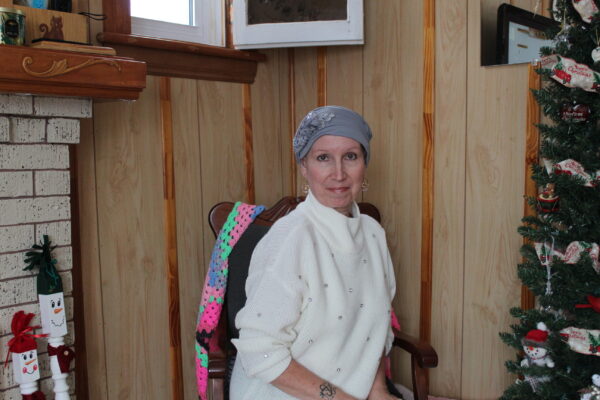
Looking forward, seemingly without the demanding tick of a cancer clock, Hollister is investing time in his children and grandchildren and sharing experiences he remembers from his own childhood. While he confesses to becoming a little sentimental, he suspects that it has as much to do with growing older as it does with cancer.
“I want to hold myself to a standard that will leave a legacy for my family and friends. I want to be remembered as a good man.”
Faith Cross of Fenelon Falls also appreciates being in a time and place where so much knowledge about the treatment of cancer is available to us.
Cross credits God and the church with holding her strong and says she was already familiar with trusting her faith before her diagnosis.
Cancer was different. She defines it as a walk of hope where she had to believe she could make it through to the other side. While Cross hasn’t shared her story extensively, she wants to ensure that, above all, her family knows that cancer is a journey of hope.
“We don’t hear enough stories of hope out there when it comes to cancer,” says Cross.
Maybe, instead of ticking off the minutes in a race towards an ending, my own cancer clock is just measuring time on my journey to find hope and a new beginning.
The true voice of hope may speak in quiet whispers, but both Cross and I found breadcrumbs to lead us on. We found them in the words of a book given as a gift, in the lyrics of a song heard too frequently to be coincidence and we both found words of hope emblazoned on coffee mugs.
One of my most precious messages of hope came from someone telling me they saw me coming through my cancer like the Princess of Wales. In that moment, the ticking of my clock was silenced, and I felt like a working-class phoenix about to rise from the ashes of fear and disease.
Maybe some of the most comforting words of hope for anyone living with a cancer clock come from Sarah Marquette, a registered psychotherapist with Guiding Compass Psychotherapy and Wellness in Port Perry. “From my perspective, cancer survivorship is often one of the most misunderstood phases of the journey. It is after that final treatment, when things begin to quiet, that many survivors find there is finally space to pause and reflect on what they have just been through. This is often when the emotional impact begins to surface.”
Through her work with numerous cancer survivors, Marquette has seen symptoms including new and increased anxiety, and thoughts focusing on “what-ifs.” Not surprisingly, she has witnessed clients struggle with interpreting normal sensations in their bodies as something serious, or feeling a heightened fear around medical tests and appointments. She explains that some may find it harder to feel fully present and at ease, experience difficulty in settling down at night or in sleeping.
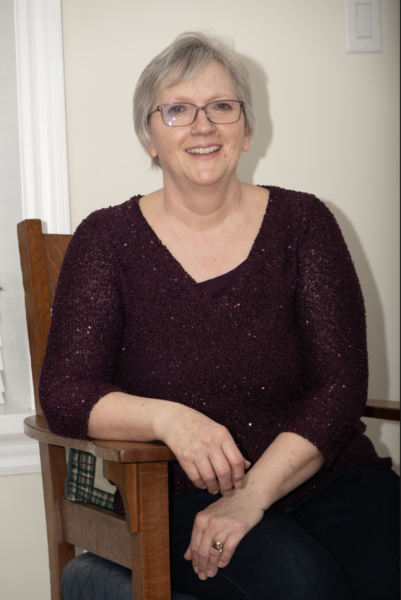
Alongside this, Marquette says she often sees a heightened awareness of time, shifts in priorities, and a deep desire for meaning and connection. What a relief to know I’m not the only one carrying around a ticking cancer clock in my head.
Marquette goes on to say that there can be grief for who someone was before cancer, and a sense of disconnection from others who have not lived this experience.
“I want to be very clear that all of this is normal,” says Marquette. “It is okay not to be okay in this chapter. Survivorship is not about returning to your old life, but learning how to live in a new one.”
Marquette gently encourages people whose ongoing feelings of anxiety become persistent, overwhelming or interfere with daily life to reach out. She explains that withdrawing from relationships, or feelings of being stuck or hopeless are all signs that additional support could be helpful.
“Seeking support is not a failure. It is a continuation of care. Just as you allowed your body to receive treatment, you are allowed to support your emotional healing as well,” says Marquette.
I spent months envisioning the end of treatment as the goal, only to find the finish line had moved.
There was a sense of relief in ringing the bell after the last radiation treatment, but the feelings of celebration didn’t last. There’s still more healing to do and this time it’s without a medical team at my side to guide me. It’s daunting to try and build a new life post cancer, but the ticking of my cancer clock pushes me forward. The finish line may be moving, but so am I.



It is very brave of you to share your experience with this very difficult topic, Lisa. Thank you.
I offer a big Thank you to the editors at the Lindsay Advocate for allowing me to explore this personal topic!
Thank you Lisa for sharing your journey. It’s a topic that needs more open discussions. I’m so glad you included the emotions that follow post cancer treatment. It’s not a topic that is often talked about. It’s important that survivors know that it can be difficult to move on after the final treatment. Family and friends may assume you are “just fine now”. They expect to see the old you. Emotionally it might be finally hitting you that you have just come through a war. You pray to God the enemy is dead, but is it really? Your support team of Drs and nurses have moved on to the next patient.That can be terrifying . I think it’s very important that cancer pts have someone like Marquette to help them navigate this
part of the journey if they are having a difficult time moving forward.
Great article Lisa!