

Councillors’ key priorities for those seeking re-election
Housing and health dovetail with provincial and national priorities
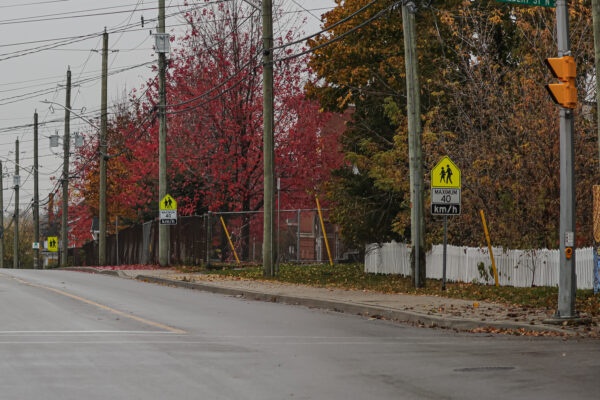
Infrastructure, affordability and healthcare are emerging as key issues ahead of this fall’s municipal election, according to several incumbent councillors seeking another term.
Councillors who responded to questions from Kawartha Lakes Weekly highlighted a range of pressures facing Kawartha Lakes, including aging road infrastructure, rising property taxes and growing demand for housing and healthcare services.

Ward 5 Coun. Mark Doble, who officially announced his re-election bid May 16, pointed to economic development, improving infrastructure and physician recruitment as top priorities.
Ward 4 Coun. Dan Joyce cited road repairs and property tax pressures as key issues, while Ward 2 Coun. Pat Warren identified emergency preparedness and affordable housing as major concerns.
Coun. Mike Perry said the issues he hears most about in Ward 3 are those related to roads – particularly repairs and speeding. He said he would like to see these issues addressed by the next council, as well as a focus on responsible growth management for the city.
Doble emphasized that the city needs to attract more commercial and industrial development in order to ease pressure on the municipal tax base and support long-term growth.
“These are the factors that draw people to set up shop, put down roots, establish professional practice,” he said. “Councillors should think of themselves as de facto economic development officers.”
Doble also emphasized the need for physician recruitment. He characterized the doctor shortage as “a crisis” and said the next council needs to focus on addressing this.
“With existing physicians about to retire and an expanding residential population, it is incumbent upon council to do whatever is necessary to attract more medical professionals to our city,” he said.
Joyce, meanwhile, pointed to continued strain on infrastructure funding and rising costs for road maintenance as key issues.
He noted that while the city is “catching up on road maintenance” through the capital levy, progress has been slow given the number of roads still in need of repair. Joyce added that a rising raw materials price index, driven by geopolitical conflict, has added further pressure to infrastructure projects.
Joyce also pointed to continued pressure on property taxes as a key issue, noting that increases in recent years have been driven in part by rising costs for policing and infrastructure spending that must be passed directly onto property owners.
He said the combination of those pressures has resulted in higher-than-usual tax increases in recent budget cycles, adding that residents are seeking relief in future years while the municipality balances service levels and financial sustainability.
Adding pressure to recent budgets were the 2025 ice storm, two forest fires and larger-than-normal snow accumulation, Joyce said.
“The good news is the many preceding years of financial best practices meant the reserves were there to pay for the multiple crises, without having to do a special tax levy to pay the bills,” he said.
Ward 2 Coun. Pat Warren said two of the most important issues she sees for the next council are emergency preparedness and affordable housing.
In recent years, Kawartha Lakes has had to deal with the fallout from extreme environmental events, including ice storms and wildfires, and Warren said the city needs to be better prepared to protect residents during emergencies.
“I would like to see emergency shelter and response plans strengthened across all our communities so people have safe, reliable places to turn during severe weather or other disasters,” Warren said. “Preparation and resilience are essential for our future.”
Warren also identified affordable housing as a key issue heading into the election, particularly for young families, seniors and first-time homebuyers.
“We need a mix of housing options that includes starter homes and affordable apartments to build a healthy and sustainable community,” she said.
Perry emphasized the need for improved road repairs and work to reduce speeding to enhance overall community safety.
He added that another issue he wants to see addressed is the need for responsible management as the city continues to grow in order to maintain “the small-town feel” Kawartha Lakes enjoys.
“I think when we get these things right, we’re on the right track working together,” he said.
As first reported by Kawartha Lakes Weekly, Ward 8 Coun. Tracy Richardson, who also serves as deputy mayor, is not seeking re-election in order to spend more time focusing on her family. However, she emphasized that improving health-care access and infrastructure planning were among the issues she sees as most crucial for the next council and the municipality’s long-term future.
“As the next council is formed, I would encourage those putting their names forward to continue advancing key priorities for the City of Kawartha Lakes,” she said.
Municipal elections across Ontario will be held Oct. 26.



The Incumbent Bubble, Different Agendas, and the Road Reality We Aren’t Facing
The article offers a tidy preview of the upcoming municipal election, but it suffers from a glaring blind spot: it reads like a taxpayer-funded campaign brochure for the status quo. By interviewing only sitting politicians, you’ve given the incumbents a free pass to frame the narrative. With nominations now officially open and fresh challengers stepping forward, voters deserve to hear from the people who want to change the system, not just those desperate to stay in it.
Even looking strictly at the incumbents interviewed, it is telling how fractured their priorities are. Why do councillors sitting at the very same table have such wildly different agendas? Because they aren’t pulling in the same direction. What Ward 5 sees as an economic development issue, Ward 2 sees as an affordable housing crisis, and Wards 3 and 4 see as a budget-eating infrastructure pothole. This isn’t just “diverse perspectives”—it’s a symptom of a council that lacks a cohesive, long-term vision for the municipality as a whole, leaving each councillor to scramble for crumbs to satisfy their specific ward before October.
Nowhere is this fragmentation more obvious than in the elephant in the room: the rural-urban divide.
Kawartha Lakes is a massive, geographically fragmented municipality. We have a primarily rural tax base trying to support a staggering, unsustainable number of road kilometers with too few taxpayers per kilometer. The prior 16 lower-tier municipalities of Victoria County were struggling financially. Twenty-five years after amalgamation, the combined mega-city has more overhead, more pickup trucks than I can count, and very few long-term residents believe the amalgamated city has delivered on the promises it set out to do.
To permanently bridge this deep rural-urban divide, the next council needs to explore a fair, structural solution: Area Rating for our roads. We should draw a clear line based on infrastructure reality. Addresses served by municipal water and fire hydrants would be designated as Urban Areas and grouped into a singular Area Rating on their tax bills to fund their specific road networks. Everyone else—the vast swathes of the municipality without water and hydrants—would pay a distinctly separate Rural Area rate for rural road maintenance. This would immediately inject transparency into our municipal finances, ending the toxic, ongoing cycle where both urban and rural residents firmly believe they are subsidizing the other.
Councillor Joyce can blame geopolitical conflicts and the “raw materials price index” all he wants, but the math simply doesn’t work. We are paying millions to maintain low-traffic, isolated road segments that place an undue strain on our municipal budget just to service a handful of properties.
If the next council actually wants to tackle the property tax pressures they all claim to worry about, they need to stop pretending we can pave our way out of this. It’s time for a hard, taboo-shattering conversation about rationalizing our infrastructure. We need to look seriously at closing or decommissioning very low-traffic road segments that cost more to maintain than they generate in economic value.
The incumbents have had four years to look at the data and make these tough choices, and instead, they are offering us the same old platitudes about “catching up” on maintenance. Let’s hope the new challengers entering the race have the political courage to speak the truth about our budget realities.