

Council pay raise the right thing to do

Roderick Benns is the publisher of The Advocate. An award-winning author and journalist who grew up in Lindsay, he has written several books including Basic Income: How a Canadian Movement Could Change the World.
After Louis St. Laurent became its first occupant, every Canadian prime minister has resided at 24 Sussex Drive. That is, until Justin Trudeau signalled it wasn’t fit to live in.
For 64 years it served as the official residence of our head of government. As the historic residence aged, successive leaders, Liberal and Conservative, were reluctant to undertake necessary repairs for fear of being perceived as misusing public funds.

The building is now costing us far more to fix properly than keeping it liveable ever would have.
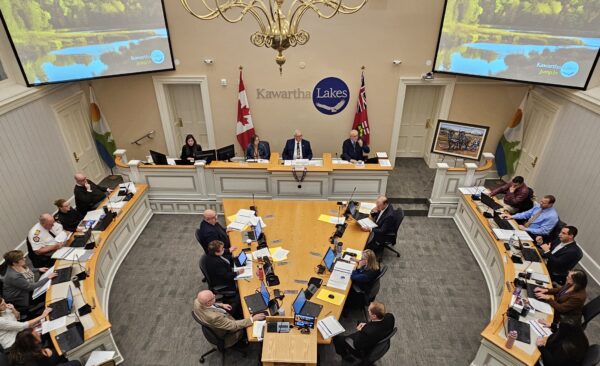
Kicking the can down the road for someone else to deal with is not typically how to run things, no matter the level of government. So, when Kawartha Lakes City Council opted to give councillors a three per cent annual increase from 2027 to 2030, it was the right thing to do. What was the alternative? To freeze pay increases until the wage becomes unattractive for potential new councillors in five or 10 years from now?
There are moments when leadership must make choices that feel uncomfortable in the short term but sensible in the long term. Approving a structured pay adjustment for the next council is one of those moments.
Under the plan the mayor’s salary would rise to about $139,700 by the end of the term while councillors would earn just over $60,000. Current figures show the mayor at $124,175 and councillors at $53,372. The busy deputy mayor’s additional compensation would increase to $12,000 annually from roughly $2,500, bringing total compensation for that role to just over $72,000 by 2030. These are not arbitrary numbers. They are calibrated to keep pace with inflation and to reflect the expanded responsibilities councillors now shoulder.
Raising pay for public office is often framed as tone-deaf when people are tightening household belts. That critique is understandable, but also incomplete. Municipal councillors are on call in ways most jobs are not. They respond to crises, constituent emergencies, committee obligations, and a constant stream of correspondence.
Remember when previous councils held property tax increases to untenable low levels for several years? The last two councils have had to implement larger increases to catch up on infrastructure and service pressures. More kicking the can down the road, and yet the piper still gets paid.
There is also a practical ethics case. When councillors are underpaid, the temptation to accept outside work that creates conflicts of interest grows. Fair compensation reduces that pressure and helps preserve public trust. Not to mention fair compensation can attract candidates of a higher calibre.
This debate matters because it forces us to weigh short-term optics against long-term civic health.
I’m not sure where the next prime minister will be living, but I hope it’s somewhere that reflects positively on a G7 nation. And I don’t know what our next council will look like, or who will run for office. But I hope they are fairly compensated for representing our civic interests.


I appreciated the thoughtful intent behind your editorial on councillor compensation. The broader point—that postponing necessary investments can create “deferred maintenance” costs for a community—is a fair one. The example of 24 Sussex Drive aptly illustrates how political reluctance to spend today can leave future taxpayers with a much larger bill tomorrow.
You are also correct to highlight the increasingly hostile environment elected officials face. Councillor Tracy Richardson’s accounts of harassment and threats are deeply troubling; respectful disagreement is a pillar of democracy, but intimidation is an assault on it.
For these reasons, a discussion about compensation is entirely appropriate. However, the editorial overreaches by moving from these reasonable observations to conclusions that would benefit from stronger supporting evidence.
The Analogy Gap
The comparison between a deteriorating building and councillor salaries is persuasive rhetoric, but flawed analysis. Buildings physically decay due to the laws of physics. Compensation levels, conversely, are policy choices tied to public priorities, accountability, and the nature of civic service. Public service has traditionally involved a balance between fair compensation and civic duty, and compensation debates are not directly comparable to physical infrastructure failure.
The “Calibre” Assumption
The editorial argues that higher pay attracts “higher calibre” candidates and reduces conflicts of interest. These are interesting hypotheses, but they are presented as established facts without supporting data. Does a higher salary guarantee better governance, or does it simply change the demographic of who applies?
The Need for Benchmarking
To build genuine public confidence, this conversation requires transparency rather than broad analogies. Residents deserve to see concrete data:
• Peer Comparison: How do Kawartha Lakes salaries compare to similar municipalities like Peterborough, Belleville, or North Bay?
• Inflation: Have salaries actually fallen behind the Consumer Price Index over the last decade?
• Recruitment: Is there a measurable decline in the number or quality of candidates seeking office?
• Workload: Has the role demonstrably expanded in measurable ways over time?
Such comparisons may well support the increases being proposed — but residents deserve to see that case made transparently.
The Bottom Line
Public skepticism toward political pay raises is not merely a matter of “optics” — it is a legitimate form of democratic accountability. Many residents are currently managing rising costs without the benefit of guaranteed annual increases.
None of this means councillors should never receive raises. It simply means the case should be made with transparent evidence and objective benchmarks that residents can evaluate for themselves. Transparency, rather than persuasive framing alone, is the best way to build lasting public trust.