
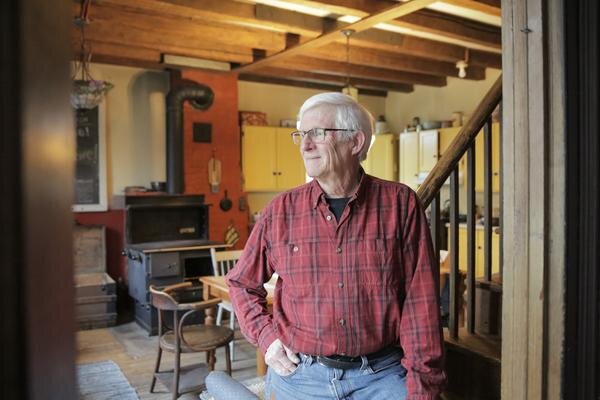
Some people find God in Sunday school. And most can trace their faith to family influence in some way.
Brian Walsh found God on Yonge Street when he was 16. Raised by a single mother, he had certainly not come from a religious family. In the late 1960s Walsh was on Yonge Street, not looking for drugs, sex and rock and roll, “just sex and rock and roll.”
“I wasn't interested in the drugs,” the pastor emphasizes over pints and turkey croissants at Bistro 93 in downtown Lindsay.
Hmm. The pastor and the pints. I start writing possible headlines.
“What I was really looking for was a cultural vitality that somehow I thought might be connected to Yonge Street and Yorkville, and which I didn’t find living in North York.”
Walsh wasn’t an overly troubled teen. His aspiration at that point in life was to become a salesman for a multinational corporation and have a sports car.
But Jesus saved him from any future Ferrari as he came to embrace a Toronto inner-city mission to the poorest of the poor. Yet he didn’t start burning his rock and roll albums. In fact, “I started listening more to rock and roll and grew my hair long and started writing poetry. I became countercultural through my conversion.”
The pastor wants to acknowledge it's not as if he did a comparative religion course as a young man, trying to figure out where to find the answers he sought. Instead, he “met a certain community and that community embodied a vision and a sense of home that was incredibly appealing to me.”
It wasn't until months later he felt he had to level with them.
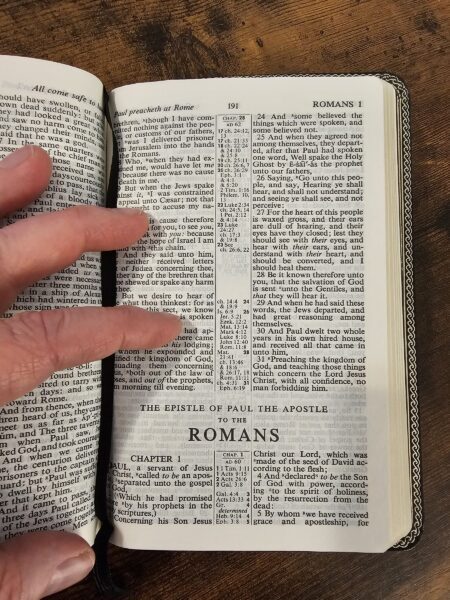
“I told them, look, I'm not a Christian.” They weren’t worried by his confession. They simply befriended Walsh, until one night somebody gave him a little booklet called The Good News According to John. (Written in plain language, it was simply the Gospel of John.)
“I picked up some Chinese food on the way home that night and sat and read it. It was the longest piece of literature I had read in my life, up until that point.”
Once he began going to church though, Walsh couldn't see what the connection was between the Jesus he met amongst the poorest of the poor on Yonge Street and the Jesus embodied in church life.
It wasn’t until many years later that he realized his search for everything to make sense was really about a search for home.
“This is the theme that runs throughout my life and throughout my writings,” says Walsh, who is a prolific author with 15 books under his belt. “The heart of the thing is home. I came from a broken one. I did not have a profound experience of home.”
So when he met a community of Christians in the midst of an inner-city mission, this became his story and shaped his identity.
His mother didn’t really get it. While his grandma was more Christian, his mom was “a little worried I was going overboard with the whole thing.”
“And yet she recognized that all of a sudden I had a real purpose in my life. It wasn't a purpose she could understand. I don't think she ever did understand it,” right up until the day she died, Walsh said.
While he thinks back to that Gospel of John booklet, he admits the figure of Jesus was “incredibly appealing and attractive to me.”
I point out that, had Walsh been born in northern India, he may have been compelled by the story of Krishna and not Christ. That perhaps he would have found the Hindu divinity of Brahma, Vishnu, and Shiva compelling. I also push him on whether devotees of other religions can expect to find salvation if they haven’t discovered Christ yet live their lives with similar moral principles.
But Walsh has a more liberal – and perhaps realistic – view of such things. He says he does believe much depends on the type of life someone leads. And more to the point, “I just don't know.”
In our back and forth I note that the earth’s oldest recorded story is The Epic of Gilgamesh, from ancient Mesopotamia. The flood myth in this story closely parallels the biblical story of Noah, featuring a divine warning, a massive boat, and the preservation of life.
In the Gilgamesh story, the god Ea warns Utnapishtim of the coming flood and instructs him to build a boat to save lives. The boat is described as having equal dimensions in length and width, and Utnapishtim fills it with animals, craftsmen, and his family – and this story predates Genesis by centuries.
I ask Walsh how he reconciles these facts when he settles on Christianity.
“That there would be certain kinds of echoes shouldn't be surprising,” he says. Indigenous stories often have a flood narrative as well, which also predate Christianity, he points out.
“Humans have to make some sense out of their world and how their world got screwed up, so certain parallels wouldn't be surprising.”
But Walsh maintains the biblical story of creation is fundamentally unique, because it's a “good creation.” He points out that in most mythologies and religions, the beginning of the world is always a war between the gods and is inevitably about conflict.
When it comes to parsing Christianity, though, nothing is more important to Walsh than what he believes is covered profoundly in the Book of James, in The New Testament.
He calls this a “very radical book,” and notes this verse: “Pure and undefiled religion is this – to care for the orphan and widow in their distress and to keep oneself unspoiled from the world.”
This action‑oriented definition of religion, with an emphasis on social responsibility and visible ethical behaviour as the mark of true faith, is what Walsh sees as “pure religion.”
“To care for the orphan and widow in distress…which basically means all the most vulnerable, who do not have social support…if you're not caring for them what you believe is quite secondary.”
This perhaps explains why Walsh would eventually become not only a theologian and author, but also an activist and farmer. He served for almost 25 years as a Christian Reformed campus minister to the University of Toronto. Locally, he is in his fifth year on the board of A Place Called Home, the area’s local homeless shelter.
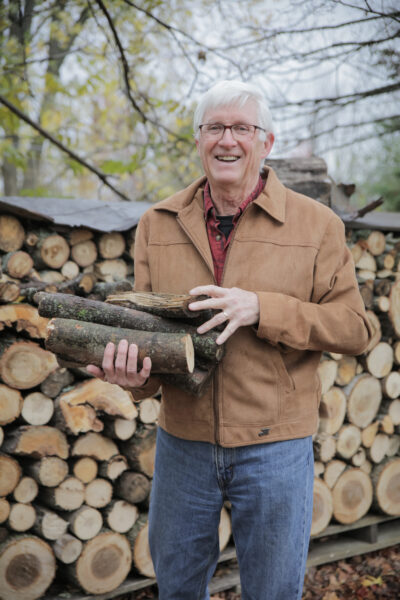
Now retired from the church, Walsh lives at Russet House Farm with his wife, Sylvia Keesmaat, on an off-grid permaculture farm in the Cameron area. His PhD is in theology and culture from McGill. Keesmaat’s PhD is in New Testament studies from Oxford. (And if you ever visit their farm, with its near-kilometre-long driveway, you might assume they have at least a Masters in Snowplowing.)
He describes their work at the interface “of what I would call biblical theology and cultural reality.”
And the reality today, as he watches Donald Trump cloak himself in aspects of Christianity while enriching his friends and destabilizing the world order, is the wedding of Christian faith to the idea of empire.
“What we're seeing in the church, especially in the right wing, white Christian nationalist church today is not new, I'm sad to say. We've seen this…since Constantine. The radical character and aspects of Jesus manage to get domesticated and tamed once the church is in bed with empire.”
He and Keesmaat, he says, read the New Testament as a “counter-imperial” body of literature.
Walsh says it’s always important to look at the motivation and drive when it comes to widespread movements.
“The question isn't just what are the socio-economic or political structures? It’s what’s the spirit that drives them?”
He uses an example he knows is close to my heart.
“So the spirit that drives something like basic income…it’s an idea rooted in good analysis. We all know the research and if we were only going by the research, we would have such a program.”
But since we don’t, he says, we know it is not a spirit of equity driving society but rather the greed of capitalism.
Walsh says his board work for A Place Called Home gives him ample opportunity to reflect on social issues, including homelessness. He remembers when the new building was constructed as a purpose-built facility. In other words, the idea of homelessness has now become entrenched in society – much like the proliferation of food banks – instead of the high hopes that animated its reluctant opening back in 1995.
“I remember saying to board colleagues, wouldn’t it be great when this structure will no longer be needed for a homeless shelter, but it'd be a great hospice. It brings tears to my eyes just thinking of such a thing because no, we will never see that.”
I ask him if this is pessimistic on his part, but he says it’s “a discernment to the spirits of the time.”
“There's a constancy which we could define as empire, which we can define as self interest, which we can define as sin. Homelessness should be a profound affront to our deepest understanding of what is right and good,” and yet we allow it, he says.
Our server checks in for coffee and tea suggestions; Walsh orders an espresso, and I choose green tea.
If the search for home was a defining part of Walsh’s search for identity, I want to know more about the home he and Keesmaat keep today. Anything called an off-grid farm is a curiosity for this scribe, who admittedly enjoys the basic creature comforts of modern life.
Walsh admits it’s something that “takes up a lot of time” in the two decades they’ve lived there.
So what does off-grid mean in this case?
First, there is no electricity coming into the property off the grid at all (and there never was to this farmhouse, even before their time living there.) When the ice storm happened this spring, none of it affected Walsh and Keesmaat, who have never received a hydro bill at the farm.
They are totally dependent upon solar with a backup generator. But the solar energy system is working so well at this point that for the last three years “I turn the generator on, just to make sure it still works.”
They replaced their closed cell solar batteries three years ago, as this is especially needed over the long, grey Ontario winters. These battery types don’t need any manual calibration so are generally preferred.
Although they have a commercial farming license, the kind of farming they mostly do is subsistence.
“We're farming mostly for our own household and for hospitality – and hospitality is pretty central to what we do,” Walsh says, noting they regularly have student groups, families and folks who just need some time out of the city visiting their farm.
Some local people may remember their heirloom tomato seedling business they ran at the farm for several years, but they eventually sold it. Walsh brings in beef cattle in the spring and he'll pasture cows for other farmers sometimes, while also doing rotational grazing – meaning the cows move every day.
They eventually have the meat slaughtered and they sell it in quarters and keep what they need for themselves. While the farm is 50 acres, about 35 is just bush, leaving the rest for agricultural needs.
He admits that life on the farm “is pretty intense.”
“It takes up a lot of our time. Winter really is a survival time,” as he references his insanely long driveway again. The lane is cleared by Walsh driving a 1959 Massey Ferguson with a snowblower attached, in reverse.
It’s at this point when I ask the obvious. “Why choose to live this way?”
Walsh says it’s a “matter of taking seriously our faith and our belief in creation and our responsibility to care for creation.”
They want to leave a minimal footprint but also practice permaculture, which is a holistic design philosophy that is basically nature mimicry. It’s a way of living and growing food that works with nature instead of against it. For instance, instead of using chemicals, permaculture focuses on more sustainable choices, like planting different crops together so they help each other grow and collecting rainwater and compost.
“We don’t want to live on this land in a way that depletes it. We want to regenerate it,” says Walsh.
From their farm, Walsh and Keesmaat continue to work in various ways. They have an online teaching site called Bible Remixed, where they teach four or five courses a year. People from across Canada, the United States, Mexico, England, South Korea and other places are enrolled. They give lectures and travel. (Keesmaat is a scholar, a writer and a well sought after speaker.) And Walsh shows no signs of slowing down on book writing, either.
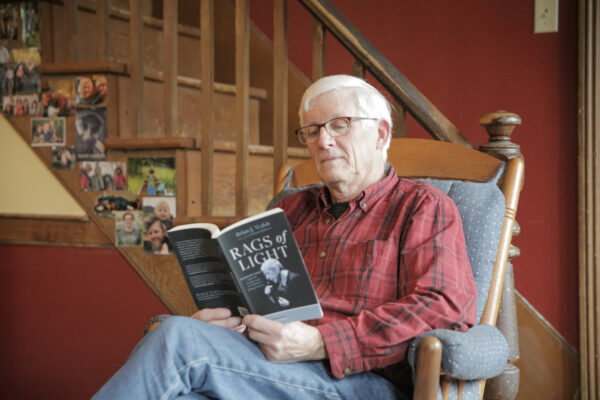
One of Walsh’s most recent books was Rags of Light: Leonard Cohen and the Landscape of Biblical Imagination. As a huge Cohen fan, I was happy to read it and was impressed with his in-depth analysis of the Montreal icon’s lyrics.
Touching on this leads me to my desert island query, knowing Walsh is a huge music fan.
What three songs would definitely make your list if you had to be marooned with a limited amount of music? This question likely needed a second pint, but we somehow make do with tea and coffee.
I help him out by going first: Pacing the Cage by Bruce Cockburn, One by U2, and The Future by Leonard Cohen.
He agrees with me on the Cockburn song. Then he adds My City of Ruins, by Bruce Springsteen and If It Be Your Will, by Leonard Cohen.
It occurs to me we’ve both chosen music that mostly dances around the possibility of loss, rebuilding, and inequality, among other themes.
I ask him what we’re supposed to be doing to fix all the inequities of the world, fully expecting a social policy answer.
But Walsh turns to where we began.
“Jesus said ‘the poor will always be with you.’ We will always have structures of society that will create poverty.”
That’s a frustrating thought to me. Then what are any of us doing? Why bother? Why fight the fight?
“Because it's the right thing to do,” Walsh said. “Because love demands it of us.”


2 Comments