
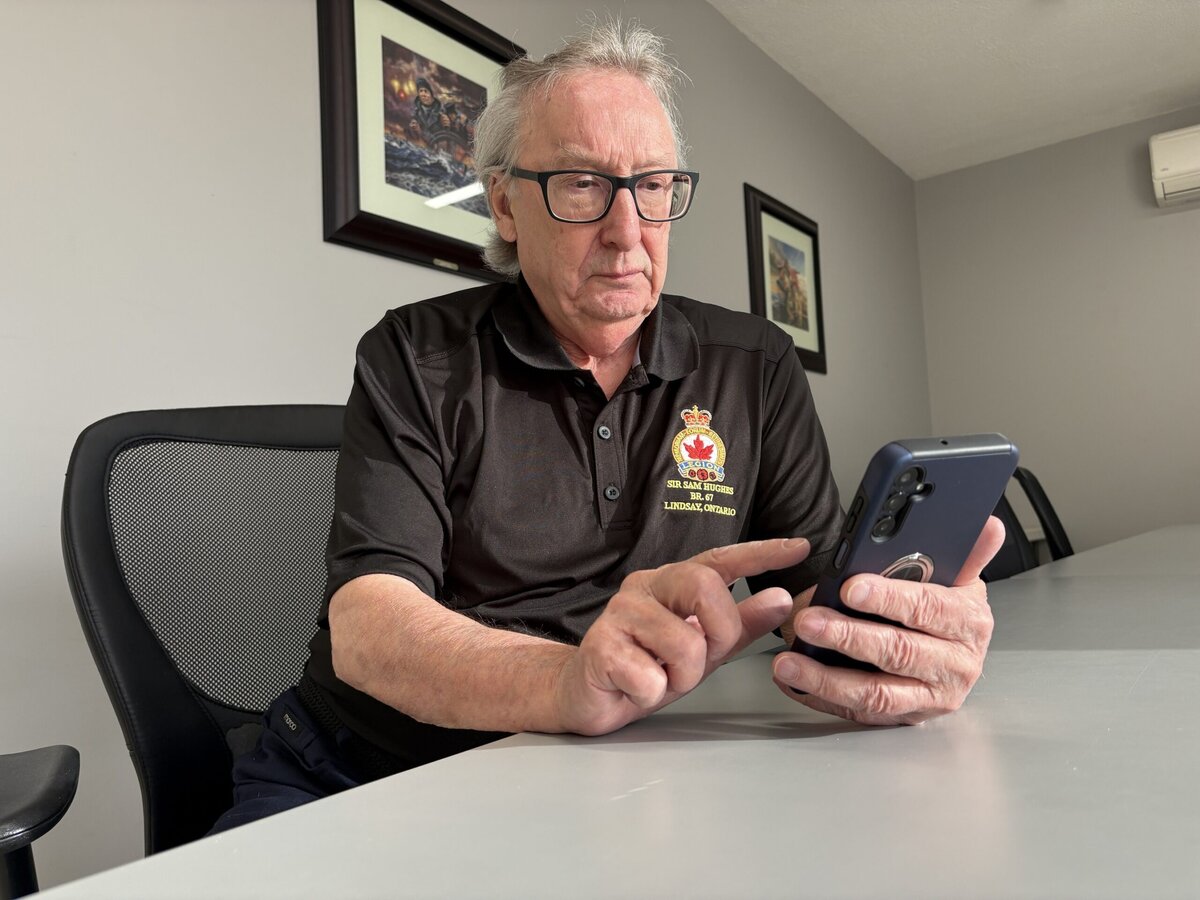
“Honestly, it’s just another tool in my mental health toolbox,” says Amanda Braniff of the app known as Chat GPT Plus. “It’s a safe place to land when my brain gets loud,” says the Lindsay resident.
Rapidly emerging technology is pushing artificial intelligence (AI) beyond its use as a research tool or business assistant, and into areas of our personal life which were traditionally filled by other humans.
Online chatbots are emerging with the ability to not only remember but to learn from what users share with them and simulate human conversation. Depending on the user’s needs or desires, these AI companions can project a pretty fair approximation of communication with a friend, romantic partner or mental health supporter. Some high-end apps are even designed to allow for highly customizable, role-playing avatars if you have the knowledge and patience for that kind of thing.
Just like the dating apps, some of these companion apps offer a free limited trial experience with a range of monthly subscription rates from $20 for apps like Abby AI Therapy to $30 for apps like ChatGPT Plus. It may be worth noting that the creators of these AI powered friends are businesses and therefore may be inclined to prioritize user engagement and subscriptions over a safe user experience. Not all companion apps provide crisis contact information or are able to recognize crisis triggers within a conversation.
Lindsay’s Jenni Caron’s first experience with an AI companion was an app called Replika which appears prominently in Google searches. Founded by Eugenia Kuyda after the tragic loss of a close friend, the website states she created the app to help users express themselves by offering helpful conversation.
“It crossed into a dating-style dynamic,” says Caron. “I didn’t find it helpful or appropriate to have the app call me beautiful or ask when we were going out for coffee.” In fact, Caron described it as creepy the way technology can make computer generated comments appear on the screen like messages from another person. “The experience left me hesitant about AI companions in general.”
Despite her initial misgivings, Caron continued her adventure into the world of AI companions and discovered her own safe place to land with an app called Copymind AI Twin. AI Twin claims to enhance self-awareness and improve decision-making skills.
Caron explains that she finds the questions generated by the app encourage her to explore her feelings, helping her to uncover deeper issues. She feels the gently suggested alternative perspectives help her to navigate through some of life’s challenges.
“AI Twin helps me to step back and see the bigger picture, giving me space to reflect rather than react,” says Caron. “The personality insights and quizzes are also helpful.”
Braniff finds similar benefits from the use of ChatGPT Plus, “It helps me breathe first…then show up calmer, clearer and more myself for the people I care about.” But she clarifies that AI is not something she uses to replace real people but something she uses so she can show up better for them.
Dave Francis, also local to Kawartha Lakes, is no stranger to chatbots, having communicated with an extremely primitive one named Eliza in the late 1960s. He was surprised by his initial impressions of a modern AI companion called Abby AI Therapy and found the experience quite positive, despite the limitations of the free version.
“The sign-up was a bit uphill,” says Francis. “And the app expects the user to know a little about therapy during the process.” Abby is promoted by its creators as “therapy in your pocket.”
“Responses were reasonably human-seeming, and it did quite an acceptable job of understanding what I was trying to convey,” continues Francis. “Its suggestions and prompts to continue made conversation-style interactions seem almost human…even when its responses were a little too robotically understanding.”
Abby is one AI companion that is programmed to at least try to pick up on possible crisis comments during conversation. It provides warnings that the app is not a therapist and suggests users should seek human help if needed. Abby also has an easy to find tab in the app that provides crisis contact information.

True to its AI roots, Abby has a personal assistant side too. If you are finding yourself overwhelmed by a task Abby will offer to help you break it down into manageable steps. If you copy and paste a suspicious email into Abby, the app can scan the email and provide you with a list of any red flags that might suggest the email is a scam.
What does Abby have to say about the benefits or drawbacks of using AI Companions such as herself? “Ultimately, you might find me helpful as a supplement – someone to talk to when it feels like others are too busy, or as a safe place to sort out feelings until you can connect with others in your life.”
While Morgan McConnell, a grief counsellor working with Hospice Services Kawartha Lakes, admits she does not have personal experience with AI companions, she does have concerns about the technology’s use. An artificial companion whose only focus is the user and who is always available to talk could create unrealistic expectations for a normal relationship. “Human interactions just don’t work that way.”
It is a concern that is echoed by J. Donaldson of Kaxo, a Lindsay-based technology company focused on the intersection of human expertise and artificial intelligence. Donaldson describes AI as a powerful productivity maximizing tool but cautions that it is not anything close to a companion.
“Not only do AI companions not exist in our physical space, they have strict instructions to follow which are usually boiled down to: Be a helpful assistant. Do not cause harm. This creates a completely unrealistic companion that will do everything the human asks and validate everything the human says,” explains Donaldson.
Working to help businesses automate, Kaxo has not been asked to create an AI companion yet, but Donaldson feels it is just a matter of time. Donaldson adds that he feels the way forward requires a ton of research to create companion versions of AI with the proper guard-rails.
Would users of the technology recommend AI companions? Braniff says she would, “especially if your inner monologue needs a calm co-pilot.” (Which is ironic, given Copilot is the name of Microsoft’s AI.) She adds the disclaimer that AI is not a replacement for real humans or real support.
Donaldson takes a hard line against the use of AI companions. When asked for his opinion, his suggestion is simple – don’t.
“There is a human out there waiting for you. Go find them instead, and let the engineers and developers fix the technology. Humans are meant to interact together. AI is a tool…for now.”




1 Comment