
High speed rail project between could spur local benefits
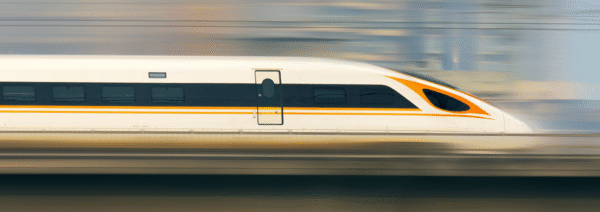
Kawartha Lakes council wants Alto, the Crown corporation building a high-speed rail line between Toronto and Quebec City, to ensure the project supports the needs of this city’s residents.
During council’s Nov. 4 committee of the whole meeting, Alexis Doyle, Alto’s manager of community relations for Ontario, presented an overview of the project that will bring high-speed rail to Canada’s most populated corridor. After Doyle’s presentation, council members pressed her on how the project would benefit Kawartha Lakes.
In her presentation to council, Doyle said Alto will be creating a community benefits plan outlining how the rail line will support not just communities with stations but also surrounding areas.

Ward 8 Coun. Tracy Richardson asked Doyle what that plan would look like.
“It’s still in the early stages; we’re just working toward that framework piece and then that plan will develop over the coming years, but it will be focused primarily on the employment and procurement opportunities for local businesses throughout the corridor,” Doyle said.
“We will also be engaging with communities to help us define what could be in scope with their support.”
Ward 3 Coun. Mike Perry noted that transportation is “a real issue” in Kawartha Lakes and asked that Alto consider a shuttle service to bring residents to the nearest station, which will be in Peterborough.
“Many of our local residents throughout Kawartha Lakes have to travel to Toronto for medical appointments, in addition to, say, business trips,” he said.
Mayor Doug Elmslie, who represents Kawartha Lakes on the Eastern Ontario Wardens’ Caucus (EOWC), also weighed in, saying he had to put on his EOWC “hat” for a moment.
“Between Peterborough and Ottawa is a large swath of eastern Ontario, and certainly, from their point of view, they would like to see at least one stop somewhere in the middle, and I would be remiss if I didn’t bring that up,” he said.
Doyle noted that Alto has received a letter from EOWC about this concern.
Although the exact alignment of the rail line will not be finalized until the new year, Alto is consulting with elected officials in eastern Ontario municipalities ahead of community engagement, which is set to begin in January.
Once complete, the network is expected to have 20 to 30 daily trains running between Toronto and Quebec City, with stops in Peterborough, Ottawa, Montreal, Laval and Trois-Rivières.
In February, then-prime minister Justin Trudeau announced plans to build an approximately 1,000-kilometre electric high-speed rail network between Toronto and Quebec City. According to the federal government, this corridor is home to about 18 million people, representing approximately 40 per cent of Canada’s GDP.
With speeds expected to exceed 300 km/h, the trains are projected to reduce travel times by half. A trip from Peterborough to Toronto, for instance, is expected to take about 40 minutes, Doyle told council.
A statement from the prime minister’s office on Feb. 19 explained the goal of the high-speed rail project.
“By connecting economic hubs at rapid speed, businesses will have more markets to sell to and workers will have more job opportunities,” the statement said.
“Electrified, high-speed rail will also help Canada reduce its emissions and meet its climate targets. By giving travellers an efficient and reliable option to get around, we will save Canadians time when they travel, boost tourism, connect communities, and spur affordable housing development across the region.”
The statement said the rail line is expected to boost Canada’s GDP by as much as $35 billion yearly and create more than 51,000 jobs during construction.
The total cost of the project is estimated by Alto CEO Martin Imbleau to be between $60 billion and $90 billion.
In September, the federal government said it wants construction on the network to begin within the next four years.



The Alto High Speed Electric Train system will need a Maintenance Depot to service and clean train engines and cars.
Kawartha Lakes Economic Deveopment could start now in courting Alto to locate that train maintenance facility in Kawartha Lakes. A train maintetance facility requires acres/hectares of land near the railway and with highway access. This could create a few hundred valuable and permanent jobs in skilled trades.
While there wont be an Alto Station to board the train in Kawartha Lakes, it is important to ensure that the right of way or trackage that Alto will build is also available for shared use by Regional Rail systems like Metrolinx Go Trains. There should be ample space between Alto Trains for regional commuter trains. Like the existing Go Lakeshore trains, rail sidings at regional train station stops allow express/high speed trains to pass regional trains.
The Province, Durham Region, Kawartha Lakes and Peterborough need to pressure Alto to ensure that Alto rail trackage is available for use by Metrolinx Go Trains. Dual use railway infrastructure would bring Go Train service to Northern Durham Region, Kawartha Lakes and Peterborough with Go Trains stops at locations Alto does not service.
The above article is for High Speed Rail Project is definitely a benefit.
In the meantime consideration needs to be given for transportation from Lindsay to Oshawa GO Station. This has been an ongoing issue for many years as people may want to visit family, Dr.’s, appointments, Blue Jay, Raptor Games, Theatre events etc. in Toronto.
Grace Elliott