

Tracy Richardson won’t seek re-election, citing harassment to self, family
Ward 8 councillor was widely expected to run for mayor
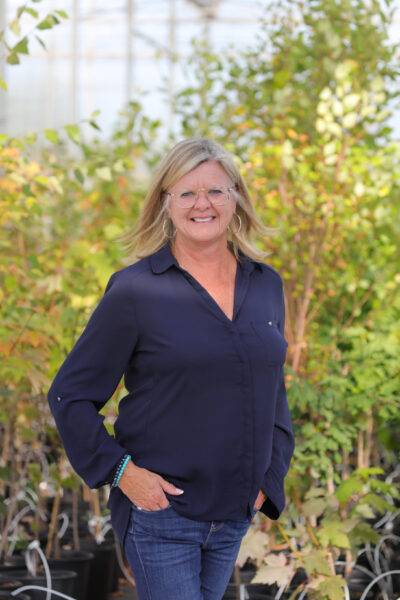
Coun. Tracy Richardson – who serves now as deputy mayor of Kawartha Lakes – has formally announced she will not run for re-election in the upcoming municipal election.
Widely perceived as a mayoral frontrunner had she decided to put her name on the ballot, Richardson, 59, instead told committee of the whole that she no longer feels safe in her role.

“Over time, the environment has become increasingly marked by incivility; being yelled at, unfairly blamed, and subjected to ongoing harassment, online abuse, social media trolling and personal threats,” Richardson told council.
“As a woman in this role, those experiences have too often been sharpened by bias, scrutiny, and unequal expectations,” she said, trying to contain her emotions.
The Pontypool-area councillor, who represents Ward 8, said what is especially concerning is that this behaviour “has not remained confined to public meetings or online spaces.”
“Repeated, uninvited visits to my home and my family’s business have crossed a clear boundary, raising legitimate concerns about safety and the wellbeing of those closest to me.”
The councillor told Kawartha Lakes Weekly that trash has been left on her home’s doorstep after rules were changed related to recyling. Another person called and said, ‘I’ll phone you every f**king day until you deal with this (issue),’ and she has received threats over a road not getting plowed in time after bad weather.
“There is no respect for personal space,” she said.
In her remarks to council, Richardson said she appreciates that public service “will always involve scrutiny and criticism – that is part of the responsibility.”
“But when conduct crosses into intimidation and personal intrusion, it takes a real toll. These realities have weighed heavily on me and have been a significant factor in my decision to step away from municipal politics.”
Richardson said she cannot, in good conscience, “continue at the expense of my family’s privacy, safety, and my own wellbeing.”
The councillor says that by speaking openly, she hopes to encourage more respectful engagement with elected officials.
“We can do better by choosing civility, demonstrating mutual respect, and recognizing that those in public office are individuals with families, just like everyone else.”
She said she hopes residents will vote thoughtfully in the next election.
“Support individuals who demonstrate a genuine commitment to Kawartha Lakes, those who will work diligently on your behalf, lead with integrity, and prioritize the community’s best interests. Choose leaders grounded in honesty and accountability, not just promises. Take the time to do your homework.”
So far, the only declared mayoral candidate is Ward 6 Coun. Ron Ashmore.
Richardson says the next chapter of her life is about “stepping back, prioritizing my family, restoring balance in my life, and spending more time with my grandchildren.”
Coun. Charlie McDonald told Kawartha Lakes Weekly that Richadson could have been “a fantastic mayor” had she declared and won the next election.
“It’s unbelievable, how she has been threatened and harassed. She might be in a grocery store with her granddaughter and people will come up and start screaming at her. That never happens to me.”
McDonald said this is a “sad story.”
“I’m appalled by this,” noting women are bearing the brunt of bad behaviour by voters.
Many Canadian women in politics — federally, provincially, and municipally — have publicly said that harassment and intimidation made them consider leaving politics or decide not to run again.
Pam Damoff, a former Liberal MP for Oakville North–Burlington announced she would leave federal politics and explicitly linked her decision to the growing threats and harassment directed at women in public life.
Catherine McKenna, a former federal environment minister, left federal politics in 2021 after years of intense harassment, including violent online threats, misogynistic slurs, threats against her children, and men showing up at her home.
Marianne Meed Ward, the current mayor of Burlington, has spoken extensively about death threats, threats of physical harm, and online abuse. In an interview with Equal Voice, she said she was told she should be “hanging from the rafters at city hall,” received threats of being set on fire, and was advised not to attend public meetings due to safety risks. While she has not stepped down, she has said the environment is so unsafe that women may feel forced out of politics — and she has publicly acknowledged fearing for her own safety to the point of altering her behaviour.
Closer to home, Peterborough’s former mayor, Diane Therrien, has publicly said that harassment and abuse were major reasons she did not run again. Therrien has stated in interviews that the level of harassment and toxicity was a major factor in her decision not to seek re‑election in 2022.



I am sad to hear Tracy Richardson is leaving politics. She worked hard and did her best for municipal politics and our community. I can relate to being the target of violence and harassment, not for holding office but for exposing corporate corruption and organized insurance exploitation of the vulnerable. Violence against women who defend human rights, as I did with a complaint to the Ontario Human Rights Commission, is as common as it has become against women (and men, to be fair) in politics. I stopped counting after two dozen up-close-and-personal death threats delivered to me at my home, some by municipal officials (not KL). They would come right to my front door and say “we” – always “we” never I” – “we have a gun and we are going to shoot you” and sometimes “we have a gun and we are going to shoot you and shoot your dog”. Three masked, hooded men assaulted me one evening as I got into my car after work. They set my home on fire three times. One of those who threatened me was a City Councillor. One was a bylaw officer. The harassment drove me from the community where I lived and I ended up here in Kawartha Lakes. The harassment followed me here for a while but I was fortunate to find good community support and eventually RCMP Commissioner Paulson figured out local police refused to assist me because one of those responsible for organizing the harassment had misused his government security clearance to put falsehoods into my personal records that flagged me as “V” for violent at CPIC. Because of the increasingly dangerous world we find ourselves in today, I would support a budget item to purchase panic buttons for our municipal officials. If we, as citizens, are to feel safe to elect good, honest politicians and not only mob thugs (not impugning any current official, just a hypothetical observation) we must feel secure that our representatives feel safe enough to exercise their free speech rights, to defend the rights of constituents, and to resist corruption.
Thanks for the information!
Every minister or priest in the area should take note of this deplorable situation and preach a series of sermons on misogyny and prejudice.
This is truly heartbreaking. As a community I hope we can pay more attention and speak up courageously when we witness shades of bullying in any context. High school and elementary school educators, please take notice: teaching the creation of a civil society is foundational to education and future participation in students’ shared wellbeing and responsibility. Let’s not let the bullies of this world, and our community, drive the culture we share in.
I’ve known Tracy for a long time, and I know that few share her deep commitment and love for her community. In fact, both our fathers served on the Manvers (Volunteer) Fire Department for decades. When you grow up in a fire department family, “community service” isn’t a resume builder or a political talking point. It’s a 3:00 AM alarm that wakes up the whole house. It’s knowing that when the community is in trouble, your family steps up, no matter the hour, the weather, or the personal sacrifice. That kind of deep-rooted, multi-generational dedication is exactly what made her such a respected figure.
It is a deeply troubling indictment of our current political climate when a lifetime of dedicated public service is rewarded with fear and intimidation. When harassment reaches a leader’s home and family, it crosses from political dissent into cruelty, deterring the very people we need most in public office.
It kills volunteerism and civic engagement: When people see a dedicated public servant like Tracy being harassed at her home and business, the message to the rest of the community is loud and clear: Don’t stick your neck out. Don’t volunteer. Don’t run for office. It isn’t safe.
It replaces trust with cynicism: A healthy community relies on the assumption of good faith—the belief that even if we disagree on a policy, we both want what’s best for the town. This harassment replaces good faith with hostility, turning neighbors into adversaries and making local government look like a toxic battleground rather than a collaborative effort.
Sadly this is not an isolated incident. The following Ontario elected representatives have faced similar treatment.
We need the perpetrators to feel the heat.
Municipal Level
Diane Therrien (Former Mayor of Peterborough): As noted in the article, Therrien chose not to seek re-election in 2022 due to the severe level of toxicity, online abuse, and personal harassment she experienced during her tenure.
Marianne Meed Ward (Mayor of Burlington): Has been the target of extreme hostility, including explicit death threats, threats of being set on fire, and online abuse. The threats became severe enough that security officials advised her against attending certain public meetings, forcing her to alter her daily routines out of concern for her safety.
Natalie Labbée (City Councillor, Greater Sudbury): Following her election in 2022, Labbée faced a severe campaign of online and in-person criminal harassment. A constituent tracked her movements, drove by her home to monitor if her car was there, and posted threats online. The harassment eventually resulted in criminal charges being laid against the perpetrator.
Victoria Bozinkovski (Town Councillor, Whitby): In 2026, Durham Regional Police were called to investigate an aggressive confrontation at Whitby Town Hall. Bozinkovski was targeted by an individual who cornered her in a physical, threatening manner inside the building after a meeting, sparking a full review of town hall security measures.
Kevin Ashe (Mayor of Pickering): In response to escalating, disruptive security threats and harassment targeting council members, Mayor Ashe took the drastic step of moving all public city council meetings completely online to ensure the physical safety of elected officials and staff.
Jeff Lehman (Former Mayor of Barrie): Prior to stepping down in 2022, Lehman revealed that the volume of death threats and anonymous harassment targeting both him and his family—which spiked heavily during the COVID-19 pandemic—became severe enough that local police required him to have a personal, in-person security detail.
Provincial Level
Lisa MacLeod (MPP for Nepean / Former Provincial Minister): MacLeod has faced years of severe targeted abuse. In 2020, the harassment escalated to the point where she was placed under police protection after receiving explicit death threats and having her personal vehicle broken into.
Jill Andrew (MPP for Toronto–St. Paul’s): Andrew has frequently spoken out about the intersection of gendered and racialized political violence. The harassment targeted her not just online but physically, including an incident where her constituency office was heavily vandalized and targeted with feces.
Federal Level (Representing Ontario Ridings)
Pam Damoff (Former MP for Oakville North–Burlington): A prominent local and federal figure, Damoff announced she would not seek re-election due to the toxic political environment. She cited a constant stream of misogynistic online vitriol, aggressive public confrontations, and death threats that forced her riding office to transition to appointment-only virtual meetings behind locked, security-monitored doors.
Catherine McKenna (Former MP for Ottawa Centre / Federal Minister): McKenna was subjected to a relentless campaign of abuse, famously being targeted with misogynistic slurs online and confronted aggressively in public while out with her children. Individuals also targeted her constituency office and showed up at her private home, ultimately requiring her to be assigned a regular security detail before she chose to leave politics in 2021.