

Going nuclear
Cool tips for a hot planet
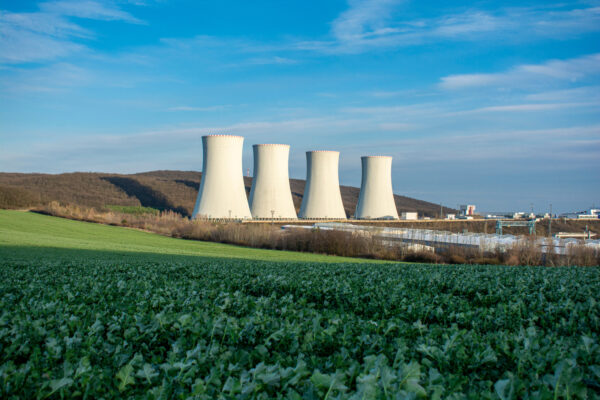
Chernobyl. Three Mile Island. Fukushima.
While 2026 marks the 40th anniversary of Chernobyl, those disasters seem to be fading from our collective memories. However, they did help put the brakes on global nuclear power growth in recent years.

In Ontario, that is rapidly changing. Maybe it’s because our reactors are largely lauded as safe.
The Ford government is full steam ahead on nuclear expansion, arguing we need the power to meet spiralling demand and our climate targets.
Plans in the works include:
Refurbished reactors at Darlington and Bruce nuclear power stations.
Planned refurbishment of very old reactors in Pickering.
Building one of the world’s largest nuclear stations just east of Port Hope, where radioactive contamination is still being cleaned up.
Building four small modular reactors (SMRs).
The total bill is somewhat hazy, but a York University professor who studies nuclear projects estimates it could be as high as $400 billion. History shows these systems are notorious for costing at least double, with construction taking an average six years longer than scheduled.
I’ve supported keeping existing nuclear in our energy mix. It’s considered a reliable and clean alternative to fossil fuels. The International Energy Agency projects nuclear power will need to provide about 10 per cent of our power by 2050 on the road to net-zero emissions. The remaining 90 per cent would mainly come from renewables like wind, solar and hydro power.
Ontario’s plans for nuclear would mean our reliance would go from half our grid right now, to over 70 per cent with natural gas as back-up. That locks us into years of escalating emissions.
And time is of the essence. We need to cut our pollution as much as possible now to help curb run-away climate disruption. Ontario’s projects are not expected to power up until the 2030s to late 2040s – if they finish on schedule. Meanwhile, new renewables could be up and running in as little as two years or less.
Want lower electricity bills? Don’t hold your breath. The cost of all that nuclear development is already hitting us in the wallet. In November Ontario Power Generation received a 29 per cent increase in the price it gets for power, partly because of nuclear spending. And it just applied for an additional 72.6 per cent increase for nuclear power, to cover the costs of projects at Pickering and Darlington. We may not see that directly on our power bills. The province is likely to bury it in our taxes. Either way, we pay. And pay. And pay.
Meanwhile they’re ignoring the energy that could save us money – renewables like wind and solar with storage. Costs have plummeted – 88 per cent for solar since 2009, and 74 per cent for wind. The world has taken note. Last year 90 per cent of new energy builds were renewable.
What about reliability? In September, Ontario’s Independent Energy System Operator released a report showing we could meet most of our energy needs with renewables and batteries.
Last April, Spain confirmed it will wind down its nuclear power production because wind and sun can produce “three to four times more power with the same amount of investment.”
Australia has announced it will be giving away free power for three hours a day, starting this summer, because of all that sunshine.
Maybe it’s time we started relying more on that big nuclear reactor in the sky.



This article is largely an opinion that lacks a clear understanding of facts and reason. There are many reasons why Ontario has adopted more nuclear power vs other cities, regions or countries around the world. First is climate and geography. Nuclear power provides 24/7 base loading regardless of geography or weather. Both wind and solar are intermittent power sources that heavily rely on time of year, weather and geography. Yes when wind and solar are combined with storage the system becomes more reliable, however it cannot replace the base loading provided by nuclear for a province that is anticipating large population growth and an vast increase in electrical demand, especially with the push for more electrification (i.e. heat pumps, electric vehicles, etc.).
Additionally no where does anyone ever take into consideration power created per unit of land. Nuclear has a very high power output per unit of land compared to wind or solar. Take the Darlington Nuclear plant which produces roughly 30 TWh of power per year and occupies roughly 1,200 acres of land. To produce the equivalent power output solar would require 30-100 times that amount (75,000-100,000 acres) and wind would require 300 times that amount (180,000-350,000 acres). Now factor in all the infrastructure needed on that huge swath of land to connect all of those wind turbines or solar arrays which have to be very strategically located.
It is a much more complex topic than just suggesting nuclear is wrong or bad and that Ontario should be doing something otherwise without looking at all facts and data.
Well said. I was wondering how to refute this argument and you have done it for me. Thank you!
Amidst the deluge of the Ford government’s advertising about nuclear energy, I appreciate this well-researched article that points to an energy transition that is happening in so many other places, but, unfortunately, not in Ontario. Renewables – solar, wind and battery storage – are now a mainstream economic reality. Contracted energy costs for wind and solar have been cut in half over the past ten years and they are now the lowest cost source of new electricity generation in Canada. But the Ford government is locking us onto an unnecessarily expensive energy path. The eye-popping 72.6 per cent cost increases that Ontario Power Generation has requested for the Darlington and Pickering refurbishing projects do not even include Ford’s latest proposed mega project, the “world’s largest” Wesleyville nuclear at Port Hope, a project that could cost more than $165 billion. The first stage of the Federal Impact Assessment has recently been completed on the Wesleyville project, and, shockingly, the proponent, Ontario Power Generation, stated that no alternatives to the project are being considered. Why? Because nuclear is this government’s policy. In an economic environment where most of us carefully consider our purchases, who is looking out for us when it comes to energy decisions?