
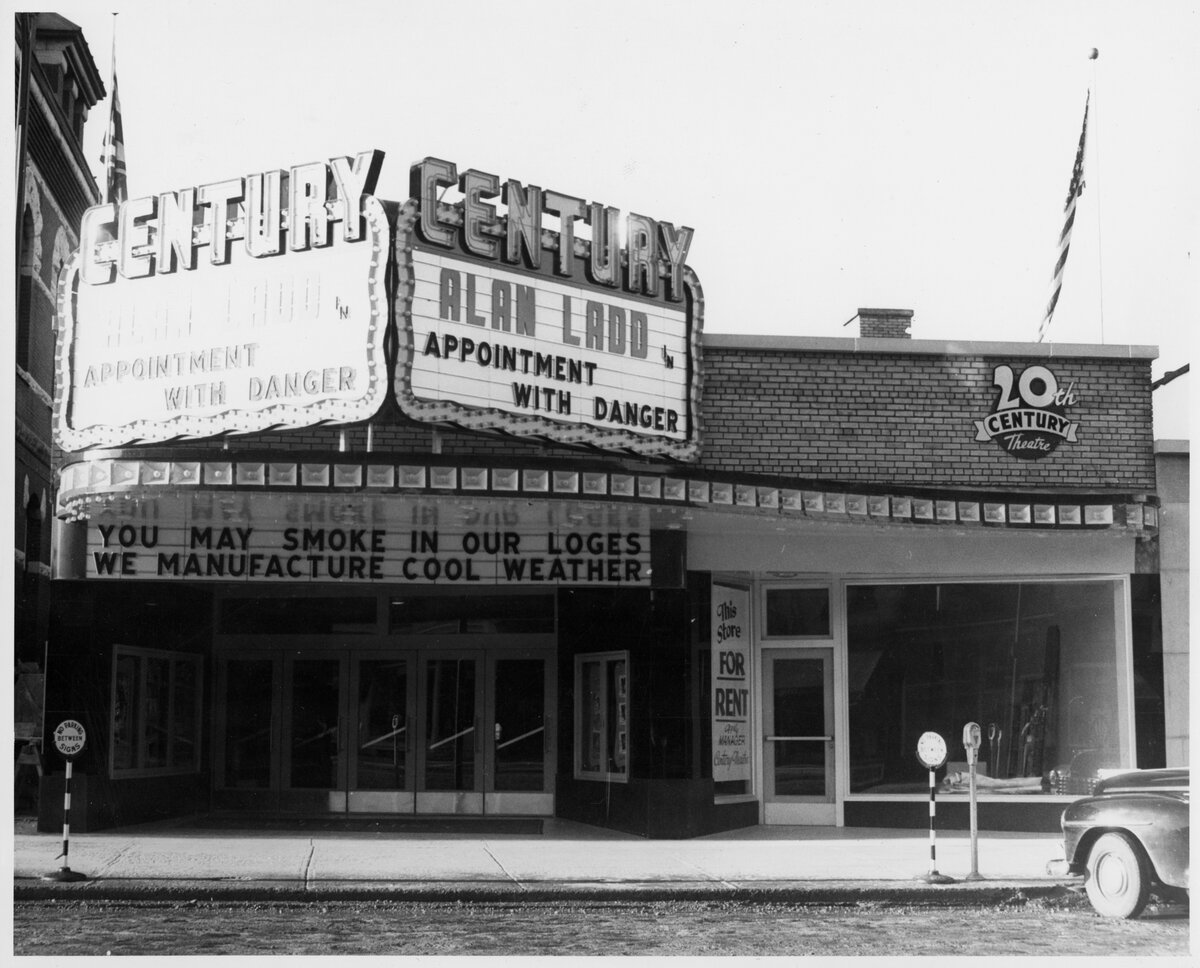
What might have been coursing through Premier Leslie Frost’s imagination when he cut the ribbon to officially open the Century cinema on June 14, 1951? Might he have thought back to the primitive films that entertained audiences in his boyhood town of Orillia at the turn of the 20th century? Frost was not quite five years old when on May 18, 1900, the Orillia Opera House hosted a screening of a moving picture about the Boer War. Or did his mind drift back to the early 1920s, when the Academy Theatre was still doing a thriving business in showing silent movies? Having just relocated to Lindsay, Frost and his brother would undoubtedly have read all about the thrilling and poignant pictures going up on the big screen in the famous red-brick building at the foot of Kent Street.
Now, 30 years later, the very cinema Frost was invited to open would prove to be formidable competition for the Academy, ultimately leading to the latter’s almost completely going out of business later that decade. The Century was the new kid on the block, and its opening 75 years ago ushered in the start of something fresh and exciting for the movie-going public.
Lindsay’s residents had long been enthusiastic patrons of the cinema. The Academy had been showing motion pictures since at least 1912, and almost immediately to the south of it was an enterprise calling itself the Wonderland Theatre. Established in 1915 by the English-born showman Frederick Conway Edmonds, it later re-branded as the Kent Theatre and remained in operation for nearly 70 years. But when it came to seating capacity, the Wonderland-turned-Kent Theatre paled in comparison to the Academy – and when the Century opened in 1951, it outshone both in terms of its modern design and the conveniences with which it tantalized local citizens.
As constructed by local contractor L.T. Braunton to a design by the architectural firm of Kaplan & Sprachman, the Century could accommodate 748 patrons in front of a screen that was said to be superior in quality to its competition down the street. Other innovations of which manager Ken Garbig was especially proud included hearing aid attachments – provided for those who might not otherwise be able to hear the film’s soundtrack over other noise in the room – and a specially-contoured floor that optimized a moviegoer’s viewing experience. And oblivious to the health hazard, the Lindsay Daily Post assured residents in its coverage of the grand opening that “a considerable portion of the rear seats of the auditorium has been set aside for the benefit of those who wish to smoke while watching the screen.” Outside, some 2,000 bulbs illuminated one of the largest marquees in Ontario.
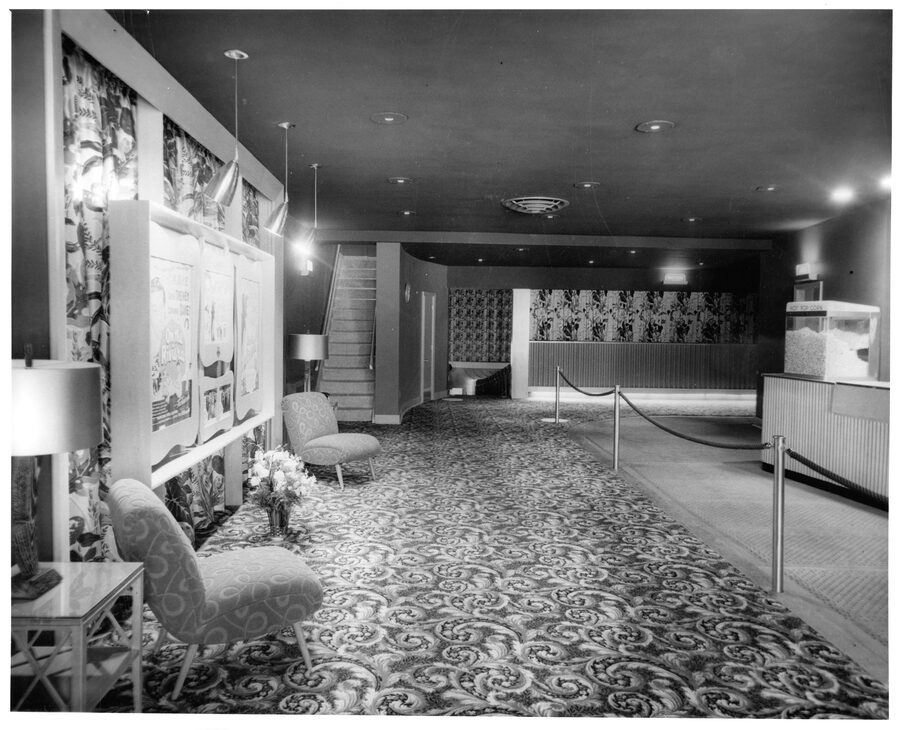
In remarks delivered at the opening of the Century, Premier Frost reflected on the place of movies in the province. “Regulations in Ontario covering the motion picture industry are second to none in the world,” Frost proudly told the assembled multitude. Said the Post in its reportage of the premier’s remarks: “He told how every effort was put forward to ensure safety of patrons physically and morally by looking for the latest and best in theatre construction practices and constantly be on the alert to provide the finest educational and entertainment films.”
Implicit in this discussion about the moral safety of movie theatre patrons was the fact that the industry had historically been heavily censored in Ontario.
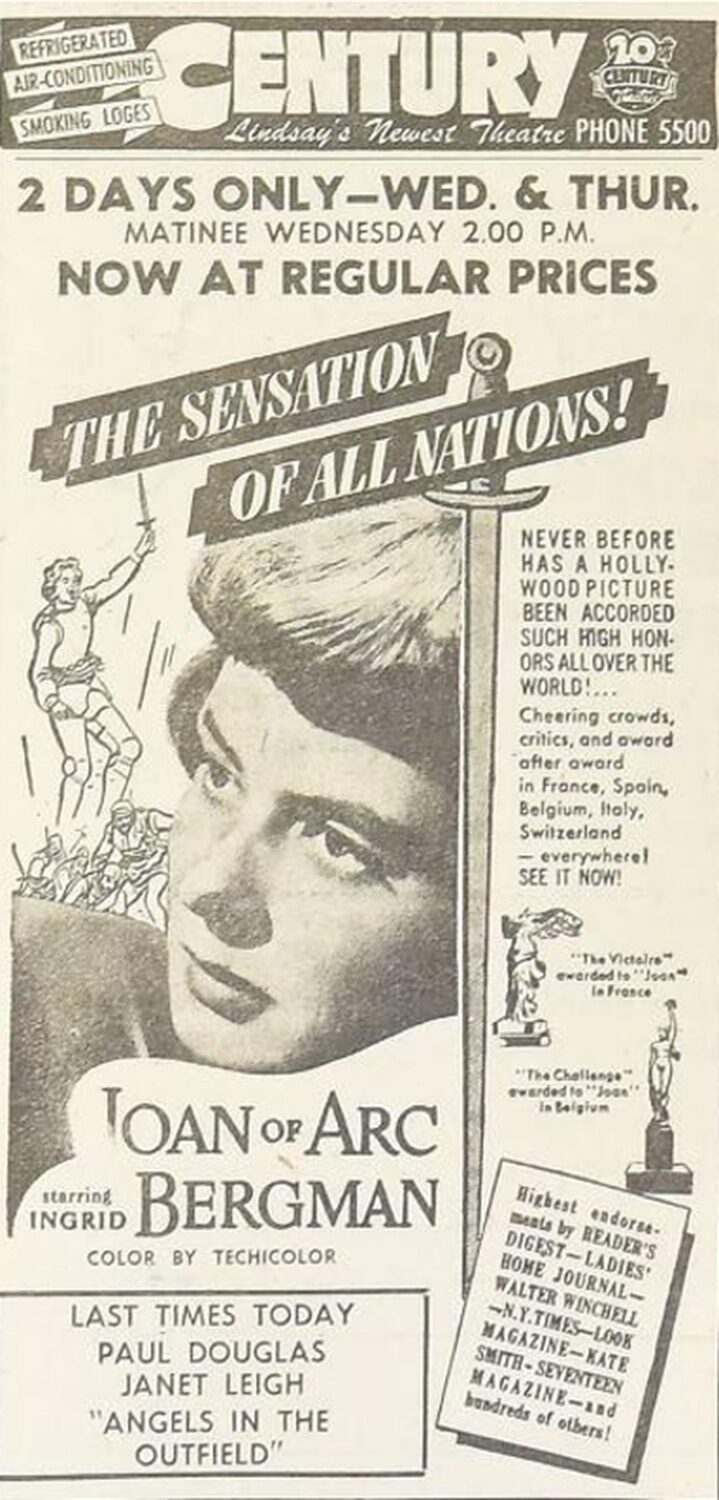
Not quite a year before he cut the ribbon to open the Century, Frost found himself at the receiving end of criticism from the Federated Women’s Institutes of Ontario and other groups who were concerned about the propriety of Italian director Roberto Rossellini’s Stromboli being shown in Ontario’s cinemas. Lead actress Ingrid Bergman had engaged in a well-publicized extramarital affair with Rossellini, drawing considerable public ire across North America. Leslie Frost insisted that responsibility for whether the film was to be shown in his province rested with chief censor O.J. Silverthorne, and explained that censorship boards focused on a film’s content, not the character of its cast and crew. “If the morals of actors and actresses in Hollywood were to be censored, few would make the grade,” Frost reportedly said at the time. (Ironically, Joan of Arc, starring the now-infamous Ingrid Bergman, would be shown at the Century in Lindsay on Dec. 5 and 6, 1951.)
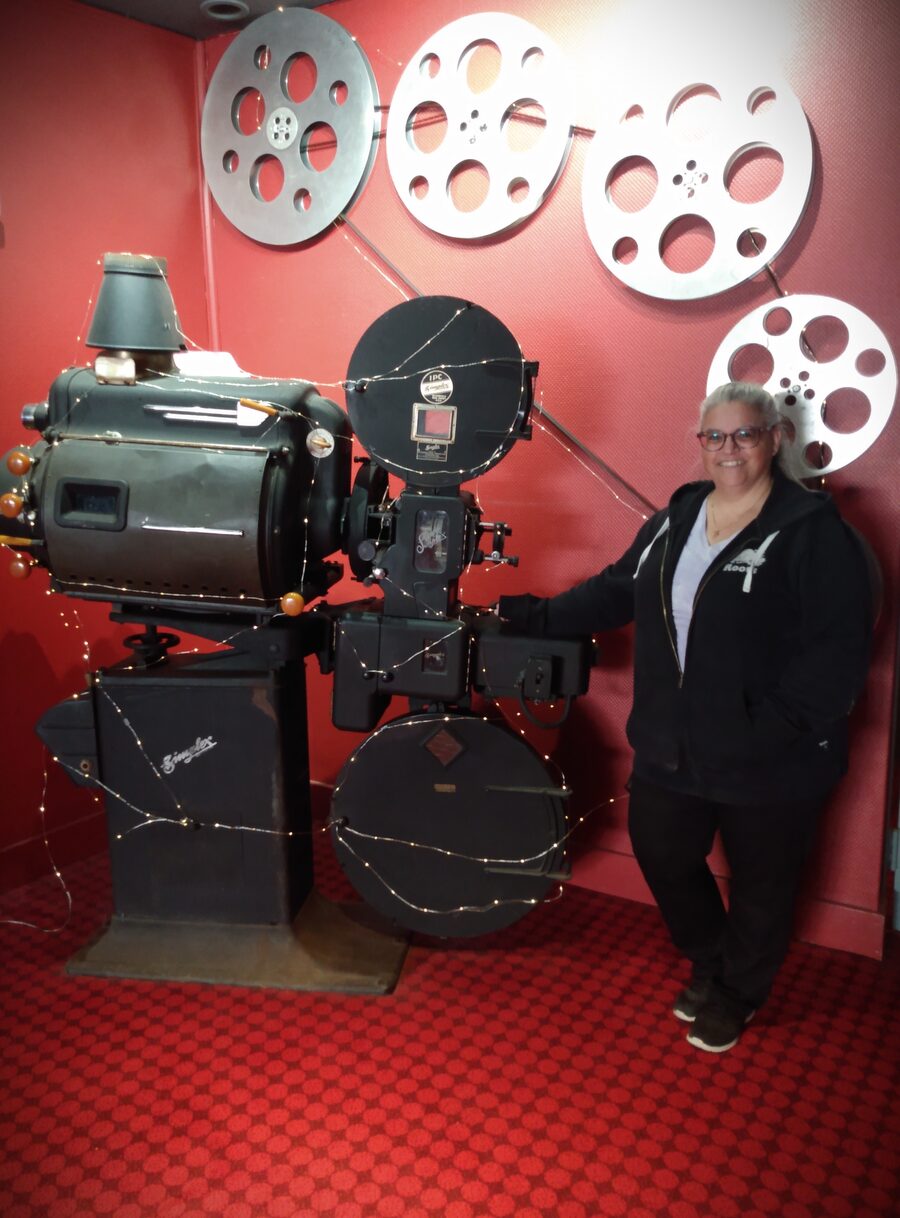
Much has changed over the past 75 years – not least the gradual phasing out of provincially-mandated film censorship. Other changes saw the Century being renovated in the 1990s to accommodate three screens, and in 2012 transition from film to fully digital projection. Still, despite the incursion of streaming services, much has remained the same about the movie-going experience says Sheila Dominic. She began working at the Century when she was 15 years old and later returned to work at the theatre when it expanded some three decades ago.
“I think some of my favourite memories are watching the kids – our customers – grow up,” she reflects. “You see them come to their first movie, their first date, then they are bringing their first child. It’s a full circle.”
Three quarters of a century on from its opening, “Lindsay’s Newest Theatre” remains a landmark for local cinephiles and families alike. Pass the popcorn, please.



Leave a Comment
Your email address will not be published. Comments are moderated.