
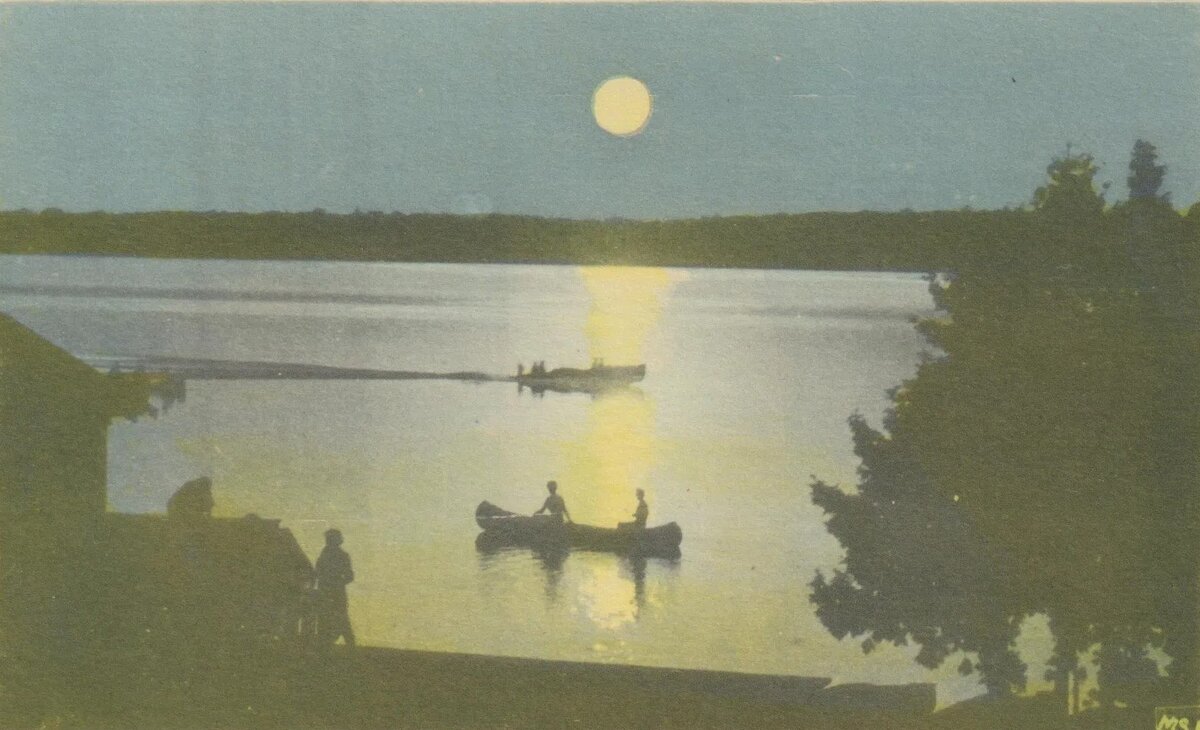
On July 20, 1926, 15 members of the Brotherhood of St. Andrew – an Anglican young people’s organization based out of St. James Cathedral in Toronto – set out across Balsam Lake for Coboconk in a war canoe under the watchful eye of their leaders, Arthur H. Lambden and Robert Shea-Butcher. They never made it; Shea-Butcher and 10 of the boys drowned when their massive craft capsized off the coast of Grand Island during a summer squall. The tragic story made headlines across the globe, and has been immortalized in the 2019 period drama film, Brotherhood.
More than three months later, another canoeing tragedy – all but forgotten in the annals of local history – would grip the hearts of local residents and see a community pull together in trying circumstances. Brothers Douglas and Bruce Keys drowned on Oct. 24, 1926, while duck-hunting by canoe on Sturgeon Lake. A century after their deaths, it is appropriate that we remember not only the Keys brothers, but also the people who stepped up to search for them.
Douglas Keys (sometimes spelled Keyes) was 18 years old and an employee of the Edwards & Co. hardware store in downtown Lindsay. His brother, Bruce, was four years younger and enrolled at Lindsay Collegiate Institute. The Keys clan lived at 76 Peel Street, a short walk east of the high school; the father, W.R. Keys, died in 1925, leaving behind his widow, sons, and a daughter.
The Keys brothers, like most boys, eagerly sought adventure on the open road and open water. Bruce cycled out to the family cottage at Snug Harbour on Friday Oct. 22, where he would be joined by Douglas the following evening. On the Sunday morning, Lloyd Davis, a friend of Douglas Keys, spotted the brothers paddling out towards the point where southwestern Sturgeon Lake meets the channel leading into the Scugog River. A few hours later the wind picked up and the waters grew rough. Local boaters avoided venturing out; although both Douglas and Bruce were said to be experienced canoeists and excellent swimmers, they would never return to Snug Harbour.

Back at 76 Peel Street, Mrs. Keys, worried about the whereabouts of her sons – whom she expected home on Sunday afternoon after a day of duck-hunting – rang up a Constable Reeves (who incidentally maintained a cottage at Snug Harbour). A search got underway at once, with Const. Reeves driving out to Snug Harbour to make inquiries about the brothers’ whereabouts. By the following morning, a search party comprised of Raney Burke, Lloyd Davis, R.V. Mark, A.T. Porter, Everett Reeves, Ewart Reeves, and Dr. J. Ross were crossing Sturgeon Lake in search of the brothers’ bodies.
Theories abounded about how they might have met their fates that stormy afternoon. Did the recoil motion of their rifles cause their canoe to capsize amid the frothing waters of Sturgeon Lake? Did they lose their balance while retrieving duck decoys, or perhaps a duck itself?
On Tuesday Oct. 26, searchers located Douglas Keys’ cap, and not long thereafter Angus Campbell, an employee of Horn Bros. Woollen Mill, pulled from the water a long rubber boot belonging to Bruce Keys. Nearly 35 men were by this point engaged in the search. Three days later, on Oct. 29, the body of Douglas Keys was recovered in seven feet of water not far from where the duck-hunting blinds were situated. His remains were promptly taken to Lindsay aboard Raney Burke’s yacht, where they were transferred to a hearse at the town wharf.
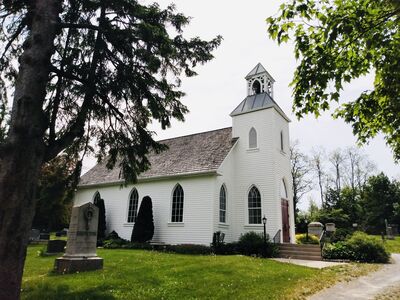
A solemn funeral service for Douglas Keys took place in the chapel at Riverside Cemetery on Nov. 4, 1926, after which his body was lowered into the vault below. “Does God know? Does God care?” asked the Rev. T.E. Holling, minister of Cambridge Street United Church, as he spoke on behalf of a community overcome with grief. The answer, he said, was yes – even in these moments of loss.
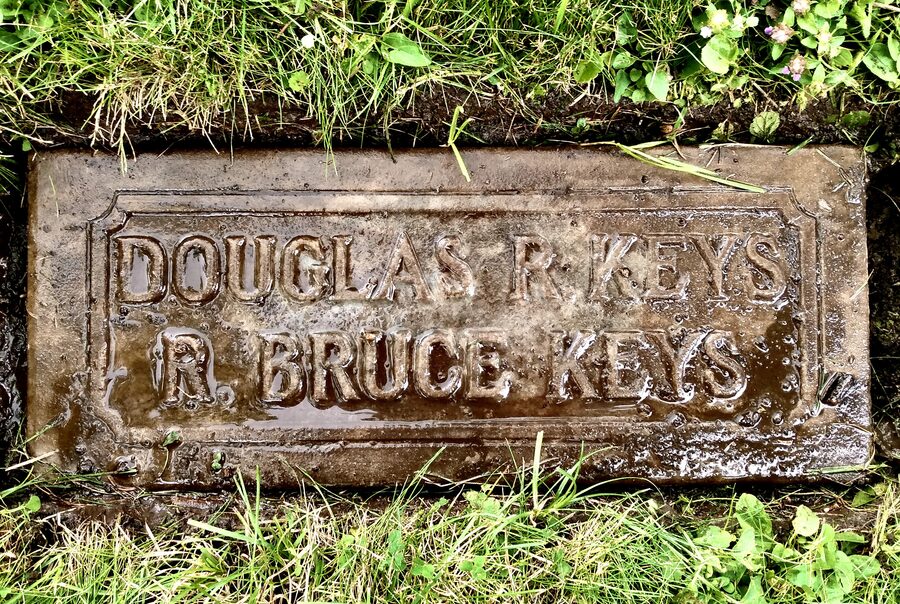
Though it was hoped the body of Bruce Keys would soon be recovered so the brothers could be buried together, the search went on. Local women provided searchers with ample quantities of coffee, cake, and sandwiches. A local Chevrolet dealer offered up the use of his car to ferry search parties between Lindsay and Snug Harbour. Johnson Paudash, a decorated Ojibwa veteran of the First World War, walked out to Snug Harbour and offered to help. “The lake presented a very cold, gloomy scene. There was absolutely nothing cheerful about its appearance,” intoned a Lindsay Daily Post reporter, who joined the search party on Nov. 12. “The sun was hiding behind a cloud, a somewhat stiff wind was blowing [and] the tall growth of weeds which dotted the water as far as the eye could see bespoke the hazardous nature of the grave which carried off two young lives, and which still clings to one.”
And it may still. Fall turned to winter with no sign of Bruce Keys. Was his body never recovered? We may never know. But his memory must be – for as authors Mark Sandle and William Van Arragon argue in their 2019 book Re-forming History: “[historians] seek to bring to life those in the past who have been forgotten...and try to ensure their lives—however short or tragic—are remembered.”

Leave a Comment
Your email address will not be published. Comments are moderated.