
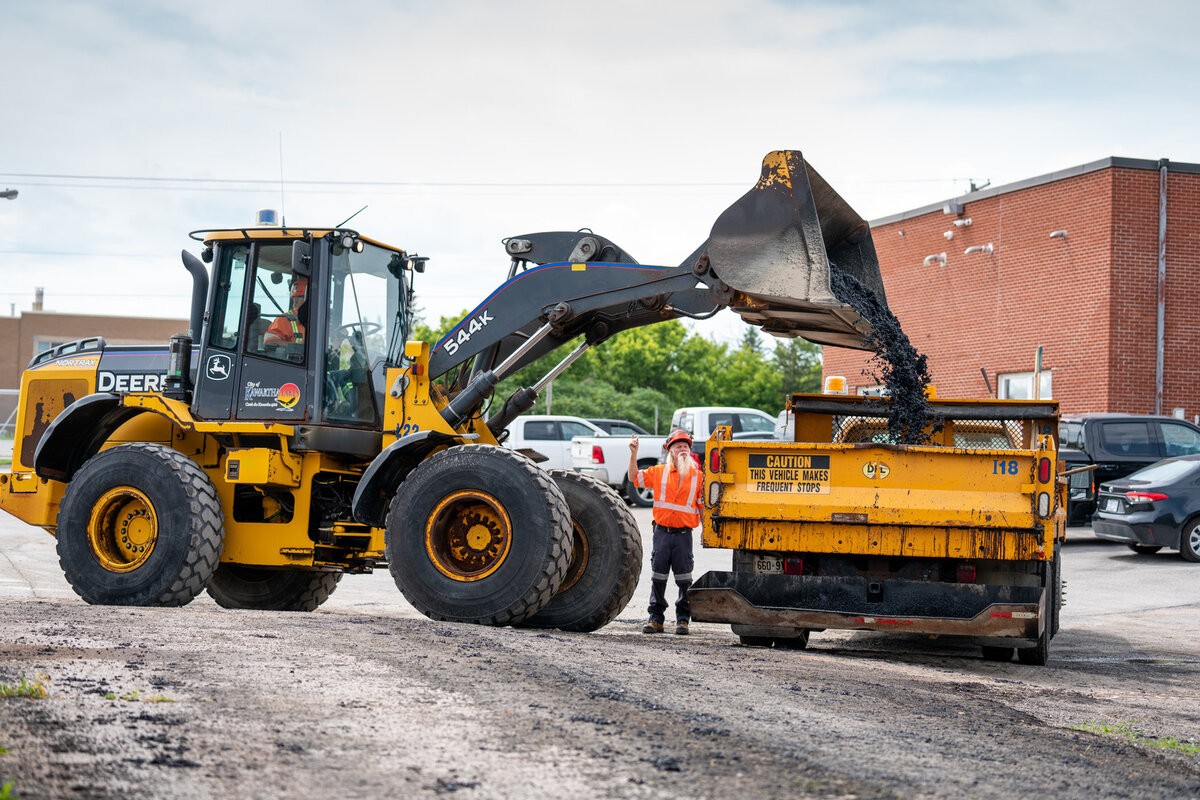
Road service depends on depots, employees, contractors and materials. As two major depot projects approach, council needs an updated business case connecting their cost to the standards residents expect.
WHY THIS MATTERS
Kawartha Lakes' 2026 departmental proposal identified $36.126 million in net roads operations spending, while its approved tax-supported capital budget allocates $58.858 million to roads and bridges. Together, that is roughly $95 million in budgeted operating and capital activity. Those separate figures show the scale of the financial decisions; they do not include the future central depot project.
Two signs and a much bigger question
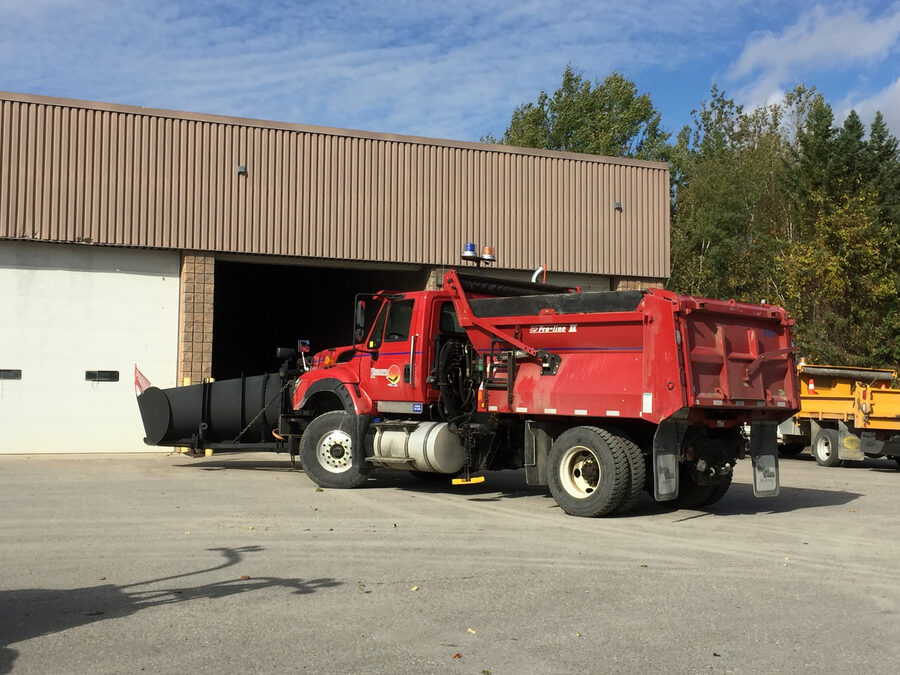
On Duke Street in Bobcaygeon, signs still identify Bobcaygeon Public Works and the former Bobcaygeon Hydro Service.
Old signs do not prove waste, and a longstanding depot may still be useful. But they recall a challenge posed by restructuring commissioner Harry Kitchen before amalgamation in 2001: Would combining administrations lead to fundamentally more efficient service delivery?
Twenty-five years later, the answer should be measurable.
Follow the money — and the road condition
The proposed roads operations budget included about $13 million for wages and benefits and $9 million for contracted services. Both are already included in the $36-million net total; the $59-million roads-and-bridges capital budget is separate.
The city reports that average road structural adequacy rose from 67.5 in 2016 to 71.5 in 2021. That is evidence of improvement. The next road needs study should show whether it continued and how the result relates to investment.
The financial test is not simply whether the municipality spends more or less. It is what condition, reliability and service it buys for each dollar.
What did depot restructuring promise?
The 2017 Roads Depot Master Plan proposed three primary operating areas with strategically placed satellite depots, eventually closing eight older locations. Council endorsed the preferred arrangement.
Consultants estimated almost $36 million in depot capital and facility costs over 20 years for the existing network, compared with nearly $36 million for the preferred one: approximately $1 million in direct savings. They also projected $4.5 million in labour-productivity benefits.
The combined nearly-$6 million was a forecast, not money already realized. More productive crew time can mean more roads maintained, even without lower payroll costs. Council should report cash savings and service improvements separately.
The plan staged implementation into the 2030s. With its first phase approaching the 2027 milestone, council should publish which projects have proceeded, what they cost and what operating benefits have actually appeared.
Central to which roads — and at what cost?
The 2017 plan proposed a central primary depot slightly east of Fenelon Falls. “Central” referred to one of three operating districts, not the geographic centre of Kawartha Lakes.
The original estimate was $7.34 million. The 2025 Development Charges Background Study forecasts $20 million for the Central Roads Operations Depot in 2028. The same study forecasts a $25-million southern depot in 2034 — more than $45 million for both facilities.
Construction prices and scope have changed since 2017. The decision now requires a current, like-for-like comparison of site options, land costs, facility sizes, existing-depot renovations and the full operating network.
Part Five asks whether priority routes can receive timely treatment and emergency vehicles can reach rural properties. The depot business case must answer those same service questions. Will consolidation reduce crew travel, improve equipment reliability and protect early-morning response? What will each alternative cost over its working life?
A cheaper building that leaves plows travelling farther may be a more expensive roads system.
Development charges are not cash in hand
The 2025 study allocates $13 million, or 66 per cent of the central depot's estimated cost, to growth-related development charges. The other $7 million relates to existing development.
The study forecasts about 69 per cent of new housing through 2051 in Lindsay and its expansion areas, compared with about six per cent in Fenelon Falls. Roads development charges are collected citywide, so Lindsay growth can properly help finance infrastructure elsewhere.
But council should explain how the proposed depot location supports that growth and how the growth-related share was calculated. It should also publish actual roads development-charge receipts and reserves, not simply amounts eligible for recovery.
If new housing is built more slowly than forecast, what happens to the construction schedule? What would borrowing cost? Would a different project scope be justified?

Municipal gravel or private supply? The city has done the math before
Municipally owned pits can be valuable, but their economics depend on hauling distance, material quality and processing costs.
A 2018 staff comparison estimated gravel delivered and placed on Post Road in Manvers at $8.80 per tonne from a city pit versus $9 privately. For Taylor Road in the Carden area, farther from the municipal pit, the figures reversed: $16.55 municipally versus $11.55 privately.
That is the kind of business case taxpayers should expect. The new Roads Operations Master Plan should update it using current crushing, screening, transport, reserves and rehabilitation costs, and consider whether additional municipal gravel pits could be economical in poorly served areas.
The same discipline belongs in contracted road maintenance. Compare the fully allocated cost of CUPE-represented crews with complete contractor prices for equivalent work, including equipment, facilities, supervision, downtime, emergency availability and durability of results.
Either model may be better for a given job. The purpose of comparison is to know why.

Turn the city's scorecard commitment into public accountability
Kawartha Lakes has already committed to standardized departmental performance scorecards by the end of 2026. It also reported deploying mobile road-maintenance tracking in 2025. Those are constructive steps.
Roads Operations should now publish a quarterly account of spending against budget, unit costs, road conditions, repeat repairs, maintenance backlogs, contractor results, depot utilization and progress against the 2017 plan.
The measures should connect directly with Part Five's service standards: when priority roads were treated, how durable gravel-road repairs proved and whether emergency access was maintained. Exceptional storms and other constraints belong in the explanation.
If persistent deficiencies are documented, the chief administrative officer should provide a time-limited improvement plan with actions, costs and deadlines. Council should set standards and assess results, not dispatch individual crews.
Three questions for the 2026 municipal election
Will you require an updated, public lifecycle business case for both proposed primary depots, including site alternatives, growth financing and the impact on winter and emergency-road service?
Will you publish the financial and operational results of the 2017 depot plan, and require comparable unit-cost analyses for municipal and private roadwork and aggregate supply?
Will you require quarterly public Roads Operations scorecards, with explanations for missed standards and corrective plans when shortfalls persist?
A scorecard should outlive an election
Kitchen called for restructuring, not merely new names on familiar buildings.
A master plan describes what the city intends to do. A business case explains why the investment is justified. A public scorecard shows what taxpayers received.



Leave a Comment
Your email address will not be published. Comments are moderated.