
There is not much left of Viskase on Colborne Street East. The plant opened in 1950, when Lindsay was working hard to build up its industry after the Second World War. Today the site is a partially remediated brownfield.
The decision that emptied it was made in the United States. Bemis, an American packaging company, bought Viskase in July 2000 and shut the Lindsay plant that fall. About 55 people still worked there, down from 400-500 in the 1970s.
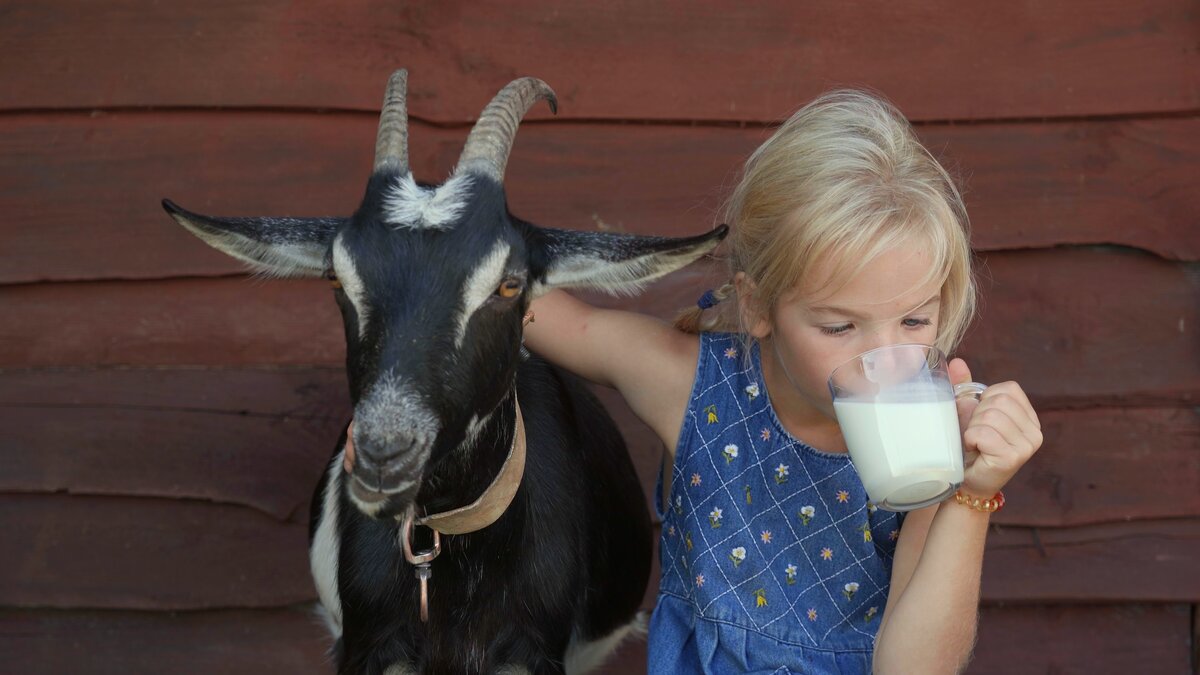
Today another Lindsay manufacturer is exposed to a decision made in the United States. Mariposa Dairy was built here. It employs about 200 people from the area and buys milk from about 200 Ontario farms. About four-fifths of its cheese goes to the U.S., where its goat cheese now faces a 50 per cent tariff — one that, according to a U.S. court filing, is tied to a dispute over cars.
Viskase was one of several plants to close. Union Carbide shut its Lindsay film packaging plant in 1989. In 2007, Fleetwood Enterprises shut its Canadian operations on Highway 36, taking more than 300 jobs. The Fleetwood building did find a second life. Today it is home to Brooklin Concrete Products.
Viskase was part of what’s known as the branch-plant economy. Factories were built here, owned elsewhere and kept open as long as the numbers worked for head office. Ontario’s auto industry grew on that model.
What’s happening in Brampton shows what workers can do when an owner pulls out. Mariposa’s farmers face a different question. In January 2026, Prime Minister Mark Carney told the World Economic Forum in Davos that “the middle powers must act together because if we’re not at the table, we’re on the menu.” He was talking about countries. In Lindsay, the question is who can act on behalf of 200 goat farms when the decision comes from Washington.
Brampton’s workers have a seat at the table
Since the 1965 Canada-U.S. Auto Pact, Ontario’s car plants have been part of a continental industry run largely from Detroit. That system brought good jobs, and many of the biggest decisions about those jobs were made elsewhere.
Stellantis idled its Brampton Assembly Plant in December 2023 to retool for the electric Jeep Compass, laying off more than 2,200 members of Unifor Local 1285. Retooling stopped in 2025 as the U.S. rolled out tariffs.
On Oct. 14, 2025, Stellantis said the Compass would be built in Illinois instead, as part of a US$13-billion plan to expand U.S. production. Carney said at the time that Stellantis’ global head told him the company was looking for a new model for Brampton but needed more trade certainty.
On Nov. 9, 2026, Stellantis signed a deal, subject to closing conditions, to sell the plant to Roshel, a Canadian armoured-vehicle maker. Roshel CEO Roman Shimonov called it “the best thing that can happen to this plant and to this city.” Carney called it “a betrayal of the workers.”
Under a 2022 agreement, Ottawa committed up to $529 million and Ontario up to $513 million to retool the Brampton and Windsor plants. On Nov. 12, 2026, Industry Minister Mélanie Joly gave Stellantis 30 days to fix what Ottawa calls a breach of that agreement. The company has offered to repay $24 million, the federal support it says it received for Brampton’s retooling. Joly says it could owe hundreds of millions.
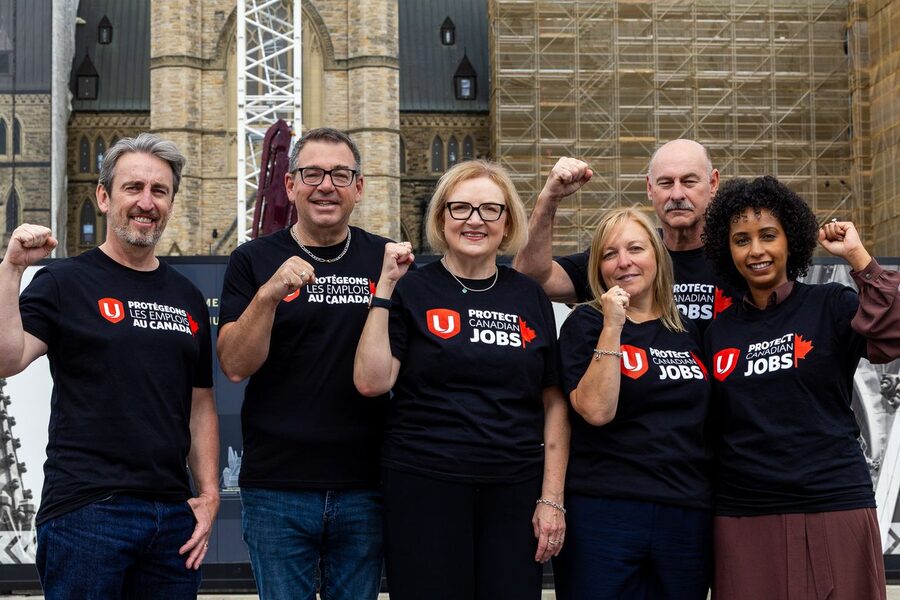
Unifor says the closure also breaches its collective agreement. National president Lana Payne called the sale an “underhanded deal,” and in October 2026, Stellantis workers in Canada gave the union a 97.3 per cent strike mandate.
Federal and provincial officials and Unifor are scheduled to meet Stellantis global CEO Antonio Filosa in Toronto on Nov. 20. The union hasn’t won the jobs back, but it has a place in the talks.
Lindsay has been here before
Holsag made beechwood chairs, barstools and benches in Lindsay from 1990. For 27 years, the plant was run from here. In January 2017, Mity, a furniture maker based in Utah, bought it.
In October 2025, the company’s CEO flew in from Utah for a plant-wide meeting. “We had no idea he was coming up,” one employee told The Lindsay Advocate. The company said it was moving production to Utah and planned to close the Lindsay plant in March 2026. Initial reports put the number of jobs at risk at up to 130. Mity cited fluctuating tariffs, shifting trade policies and rising costs among the reasons for the move.
Lindsay has felt the auto industry’s decisions directly before, twice in the same building. Uniroyal Goodrich made tire cord on Greenfield Road until 1991. The company said the 74-job plant had been running below capacity for more than a year. It blamed global overcapacity in the tire industry, made worse by an auto slowdown and recession.
Pilkington Libbey-Owens-Ford later used the building to make window components for General Motors pickups assembled in Oshawa. After losing the GM work, it closed the plant in 1998 and consolidated production in Michigan.
I know that building from the inside. My father worked in Uniroyal’s high-pile fabric plant. My first job out of high school was at Libbey-Owens-Ford, making truck glass. I was there when the autoworkers’ union certified the plant. One of the concerns on the shop floor was exposure to isocyanate, a chemical used in moulding the polyurethane plastic. I left for Fleming College to study engineering. About a decade later, the plant closed, union and all.
That building did not stay empty. It is home today to Armada Toolworks, a Lindsay autoparts maker. In August 2026, Armada received federal funding to help it diversify into medical devices.
Who speaks for the goat farmers?
Bruce and Sharon VandenBerg started making goat cheese on their farm in the former Mariposa Township in 1989. It was meant to be a part-time business. Production moved into Lindsay in 2007, and the company now runs two plants in town.
The milk it buys comes from roughly 50,000 goats. Much of the cheese it sells in the U.S. goes out under retailers’ own labels, including Costco’s and Trader Joe’s. Its Celebrity Original Goat Cheese took first place in its category at the 2026 American Cheese Society awards.
Gabe Benschop, who farms about 800 goats, told CTV News that if the trade dispute drags on, farmers could have to cull thousands of goats. “There will be either firms going out of business or farmers having to cut back,” he said.
The first 50 per cent duties took effect Aug. 22, 2026. Mariposa says the tariffs cost its farms, plant and distributor roughly $1 million a week combined. “They can’t stay in place at 50 per cent for us; that will decimate our industry,” CEO Mark Anderson told the Advocate.
Mariposa’s New Jersey importer, Gellert Global Group, is challenging the tariff in the U.S. Court of International Trade.
Its complaint puts a number on one delivery: more than US$60,000 in duty on a Sept. 28, 2026, shipment of goat cheese valued at about US$120,000.
The importer pays at the border and says it is absorbing the cost for now. If it raises prices and orders fall, the effect will run all the way back to the farm. The lawsuit gives the importer a way to fight the tariff directly. Ontario has no such route.
When a U.S. state believes the federal government has overstepped, it can go to court. Washington state has filed 85 cases against the current federal administration since January 2025, leading or co-leading 29 of them, according to its attorney general’s office. In May 2026, it won a U.S. Court of International Trade ruling against a separate 10 per cent worldwide tariff.
Even U.S. states must show they were directly harmed. In that case, the court ruled that states that did not import tariffed goods lacked standing to sue. Ontario would face the same test. It doesn’t pay the duty on Mariposa’s cheese — Gellert does — and its losses in jobs, farm income and tax revenue, while real, are indirect. Its main route to relief runs through Ottawa, in trade talks and dispute panels.
Goat milk falls outside supply management, but it was caught in the trade fight anyway.
The first U.S. dairy tariff targeted how Canada allocates its cheese import quotas, and early coverage, including the Advocate’s, tied the cheese duties to that dispute. But Gellert’s complaint says goat cheese was added on Sept. 15, 2026, under a separate proclamation tied to Canada’s 25 per cent surtax on U.S.-made vehicles. Lindsay’s goat cheese is paying for a fight over cars.
Ontario’s goat milk producers voted in June 2026 to form a marketing board. It can collect a fee for research and promotion, but it has no power over price or supply.
The National Farmers Union can advocate for farmers, and the Ontario Dairy Goat Co-operative gives producers an organization of their own. None of them can bargain over the tariff or set a price that makes up for it. The farmer still depends on a buyer.
For now, Mariposa keeps buying. “Most companies could just stop and cut their supply off,” VandenBerg told CTV News. “But we have 200 dairy goat farms that are relying on us to take their milk.”
“The goats milk every day,” Anderson added.
What can Kawartha Lakes do?
Local ownership offers some control over where a company invests and whose milk it buys. It can’t guarantee a market. Trent Rubber, on Mary and Albert streets, was employee-owned from 1978 and sold to a Toronto company in 1990. It closed in 2005 after tubeless tires eroded demand for its inner tubes. Mariposa’s exposure comes from sending most of its cheese across a single border.
Ottawa has already provided expansion support. On Aug. 17, 2026, federal minister Evan Solomon came to Lindsay to announce more than $6.5 million in repayable funding toward a $19.5-million expansion. Federal agriculture programs have also committed about $6.9 million to the company since 2022, including support for automation and cow’s-milk cheese production. That money goes to the processor, not the farms. If Mariposa loses its U.S. market, farmers still have goats to feed and milk to sell, and no one to sell it to.
Kawartha Lakes has a stake of its own. Its 2026-30 agriculture and food action plan makes business development and value-added growth a priority and identifies gaps in local processing. Mariposa already does the kind of work the city wants more of. It turns Ontario milk into cheese in Lindsay and supports jobs on both sides of the plant gate.
Mariposa’s suppliers are part of an industry Anderson estimates supports about 1,500 jobs. They have a buyer that keeps taking their milk, at least until the end of December and a marketing board with limited powers. The tariff is for Ottawa and Queen’s Park to settle with Washington. On Colborne Street East, a brownfield shows how it ends when no one at the table speaks for the town. Mariposa is still making cheese, and its farmers are still milking. The decision hasn’t been made yet, but time is short for Ottawa and Ontario to show who speaks for Lindsay.



Leave a Comment
Your email address will not be published. Comments are moderated.