
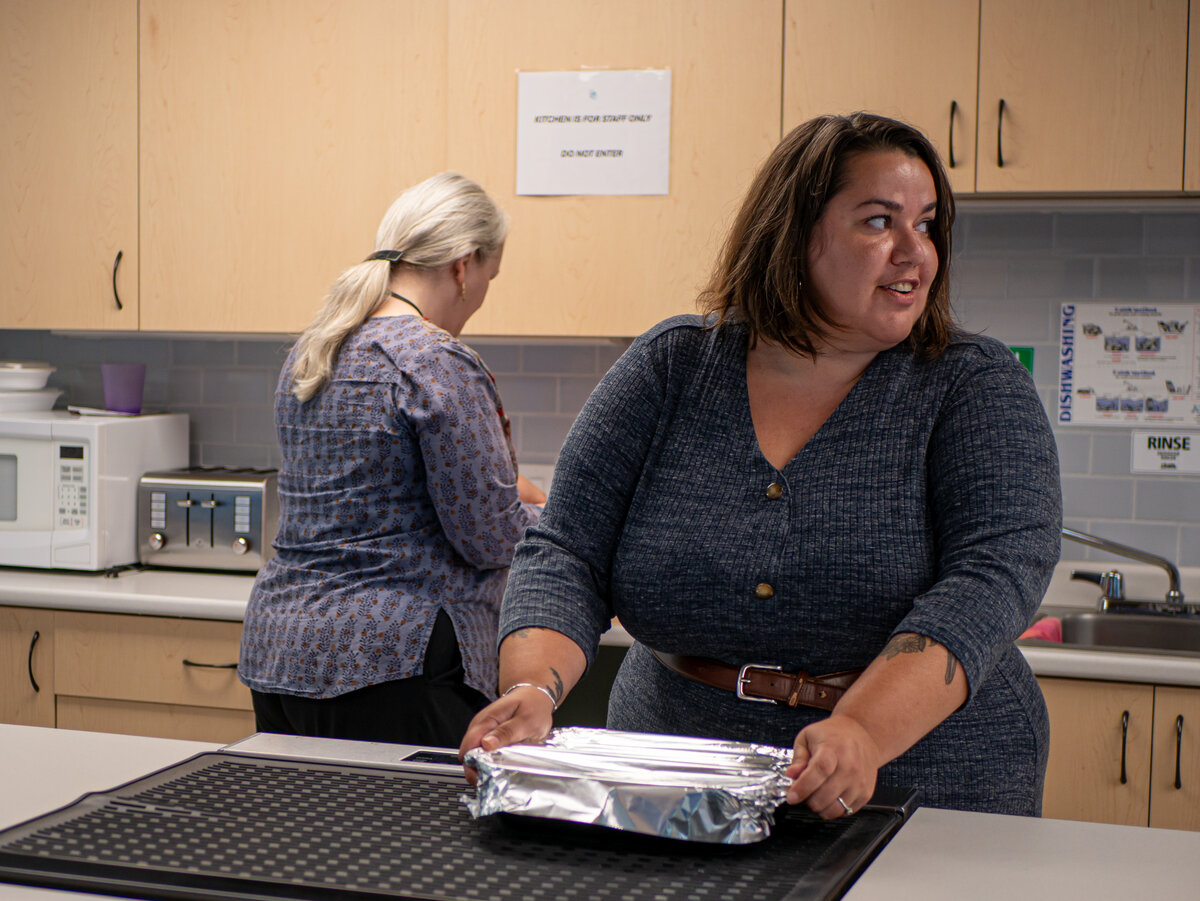
The business of caring just got a boost from the Hub, a 24/7, low-barrier space in Lindsay operated by the John Howard Society of the Kawarthas. At its core, it’s about making sure people experiencing homelessness or significant barriers have somewhere to go where they can be safe, meet their immediate needs and, connect with supports that can help them move forward.
Located on Peel Street, the space provides overnight accommodations, meals, showers, laundry, basic necessities, housing support, service navigation and access to technology.
Community partners come directly into the Hub to provide healthcare, income supports, housing outreach and other services. Instead of expecting someone in crisis to navigate multiple systems and appointments across the community, the HUB tris to bring those systems together around the person.
Different organizations come in on different days, including community paramedics and there’s a spot where guests can access virtual court support once a week. Kristal Jones-Craighead, Community Integrated Care Hub director, said it can be hard for a lot of people to ask for help, by providing services, like wound care and midwives, it makes it easier for that first step to be taken.
Since opening in April, the Hub has had more than 1,000 overnight stays, and more than 90 unique individuals access the program. “I think it demonstrates how much services like this are needed, and how successful this model can be,” said Jones-Craighead.
Those who are looking to stay overnight sign up at 6 p.m. and need to check in at 7:30 p.m. It is first come, first serve and 12 beds are available, however, meals, showers, laundry and other services, are available for anyone.
There is also a mix of triage being done when it comes to deciding who gets a bed each night, “being low barrier means meeting the most vulnerable people in our community and meeting people where they’re at and understanding that not everybody can keep track of the time,” Jones-Craighead said.
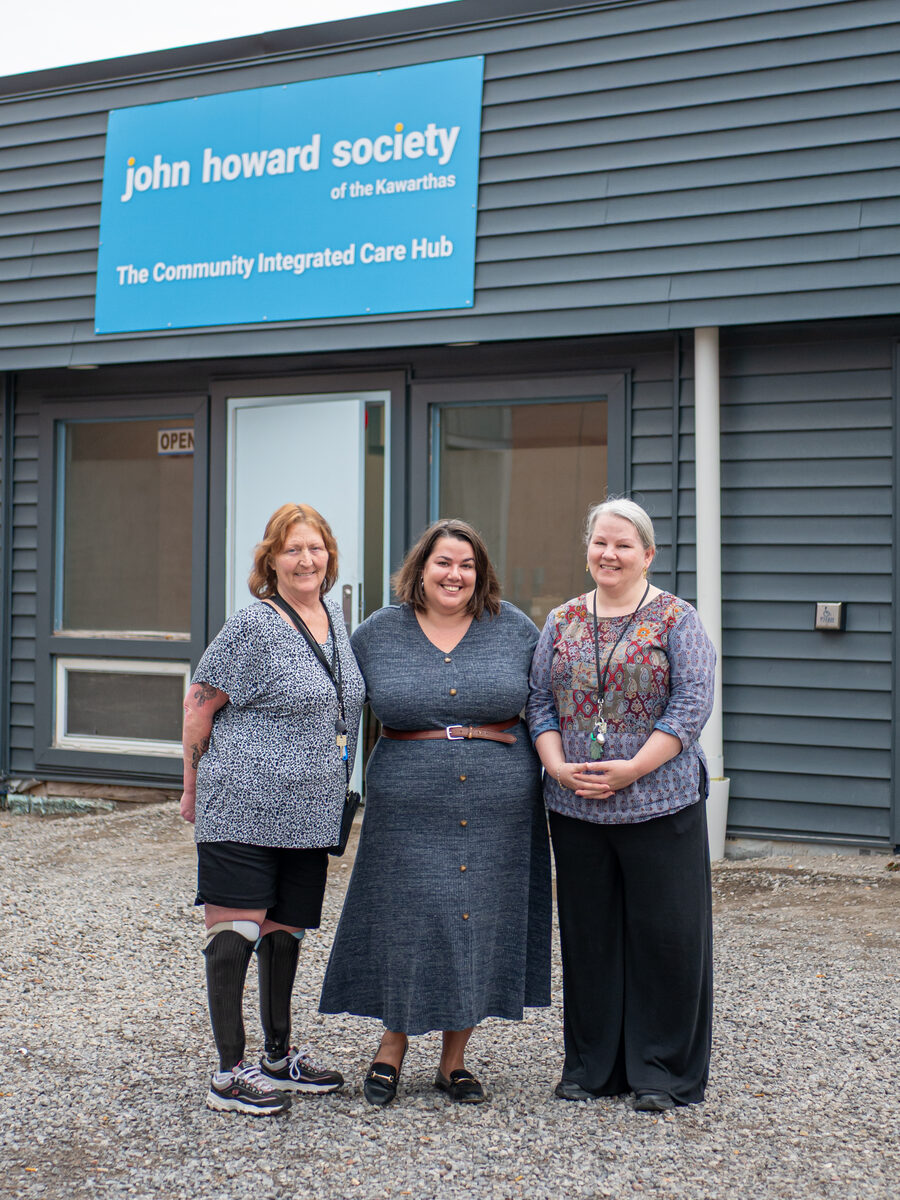
Anything guests have with them gets put away into a supervised area overnight. “What we are seeing is folks are sleeping through the night, they’re not having to be mounted up on their belongings,” Jones-Craighead said.
One of the things Jones-Craighead is most proud of is how guests respect the space. “One of the clearest ways that’s indicated to me that the people who stay here are taking pride in the space, and appreciate the space, and the community we’re building is that (there’s) not any graffiti (on the walls).”
They also have a quiet room where guests have a space for themselves. “If things get escalated, it also gives us a tool to be able to support people in the moment rather than just resort to restrictions or just telling somebody to calm down,” Jones-Craighead said.
Currently, an accessibility ramp is being built as well as a privacy fence and covered seating area. “There will be a place for people to gather (outside) that’s dignified,” Jones-Craighead said.
The goal of the Hub is to create a safe space for those in need. “Some folks have been living rough for so long that they’re not ready to open up yet, and they just need some stabilization and support before they can take that next step. We’re here to identify and make those assessments and meet people where they’re at, so we can start the good work of helping.”
While there’s still a long way to go, Jones-Craighead is glad to see the conversation around those on the streets has begun to change; she hopes the Hub can continue to encourage positive conversations to happen. “I really appreciate that the focus is less on the perceived individual failings of people who are struggling, and rather we’re looking at the bigger systemic issues and changes that we can implement as a community.”

Leave a Comment
Your email address will not be published. Comments are moderated.