
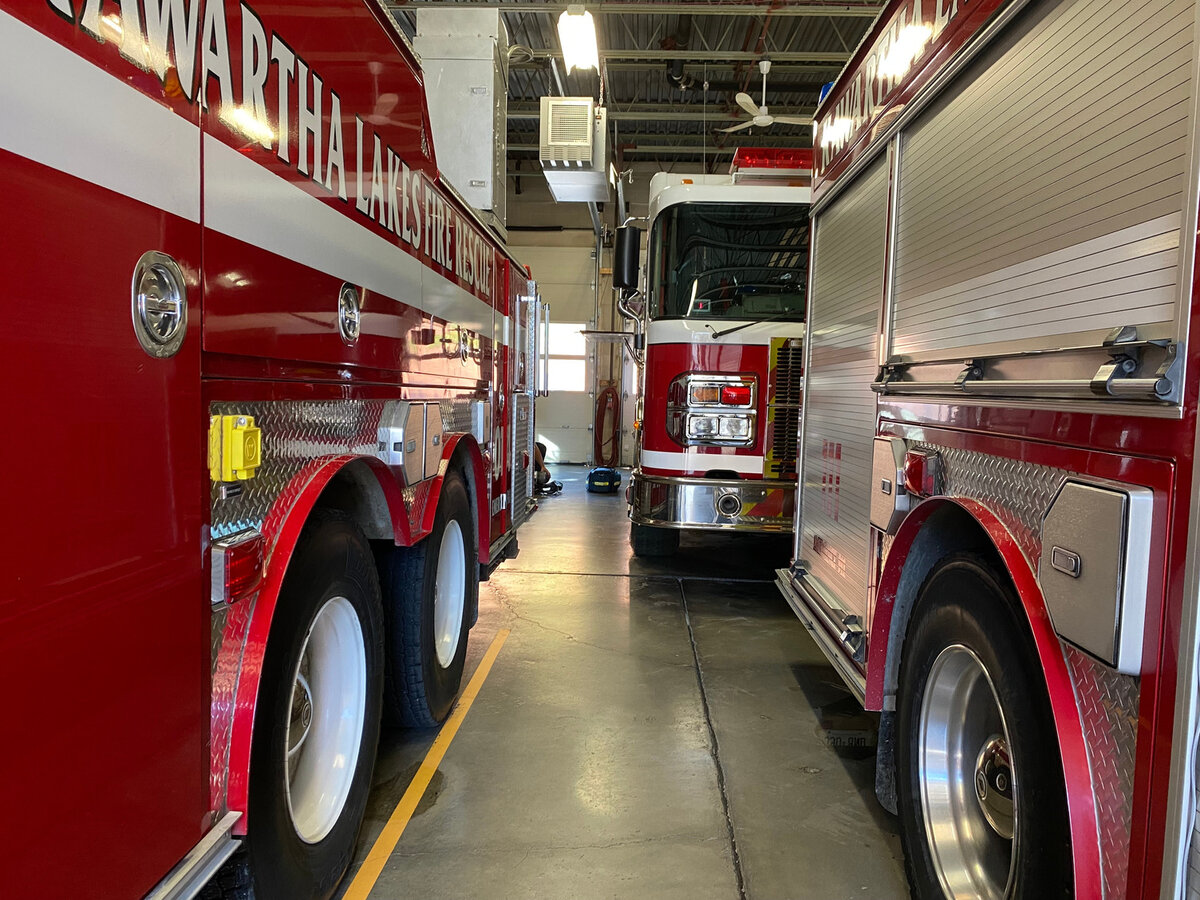
The city's own fire review called for measurable targets and public results. Four years later, residents should be able to see exactly what fire-protection standard they are buying.
Kawartha Lakes operates 19 fire stations across a large rural geography. Most depend heavily on paid-on-call firefighters. Large areas have no municipal hydrants. Fire stations must support one another over long distances.
That makes fire protection difficult and expensive. It also makes clear performance reporting essential.
The first question should not be which truck to buy. It should be: What fire-protection result has council decided taxpayers are buying, and is it being achieved?
The city's own review already called for this
Kawartha Lakes commissioned an independent Fire Service Modernization Review that was completed in 2022. The review recommended measurable performance targets and annual reporting to council showing actual results against those targets. It also called for service-level expectations that reflected the city's different urban and rural fire models.
That makes the 2026 accountability question straightforward: Which recommendations were implemented? What measurable targets are now in force? Where can residents see the annual results?
If those answers exist, publish them prominently. If they do not, the city should explain why a recommendation central to measuring a life-safety service has not produced a clear public scorecard.
A truck arriving is not necessarily an effective response
Response time matters, but the first apparatus reaching an address is not necessarily the same as having enough qualified firefighters, equipment and water to perform the required work.
That distinction matters in a largely paid-on-call system. Firefighters may be working outside their community when a call comes in. A neighbouring station may have to respond. In a non-hydrant area, crews must also establish and maintain a water supply.
Where operationally appropriate, Fire Rescue should report more than a citywide average: first-apparatus arrival, effective-crew arrival, firefighter availability, reliance on neighbouring stations and, in rural areas, establishment of sustained water supply.
If a response area cannot reliably meet the intended standard at certain times of day, council needs to know. So do the residents who depend on that service.
Different service should be visible
Kawartha Lakes does not provide the same fire model everywhere. Lindsay is primarily served by a full-time urban system. Much of the rest of the municipality relies heavily on paid-on-call firefighters. Lindsay, Bobcaygeon and Fenelon Falls have municipal hydrants; large rural areas do not.
Operating fire costs have historically been area-rated differently, while capital costs have been shared more broadly. The 2022 modernization review identified capital cross-subsidization between parts of the system.
Cross-subsidy is not automatically unfair. Fire stations support one another, and major incidents ignore tax boundaries. But taxpayers should be able to see the differences: Who receives materially different service? What does each model cost? What is shared citywide? Does the tax structure still reflect council's view of fairness?
The tanker question begins with the specification
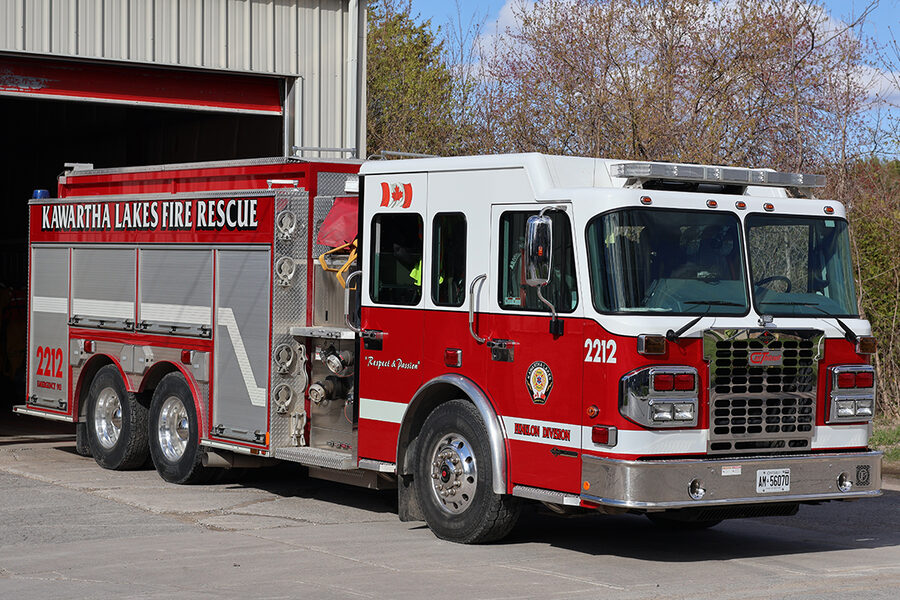
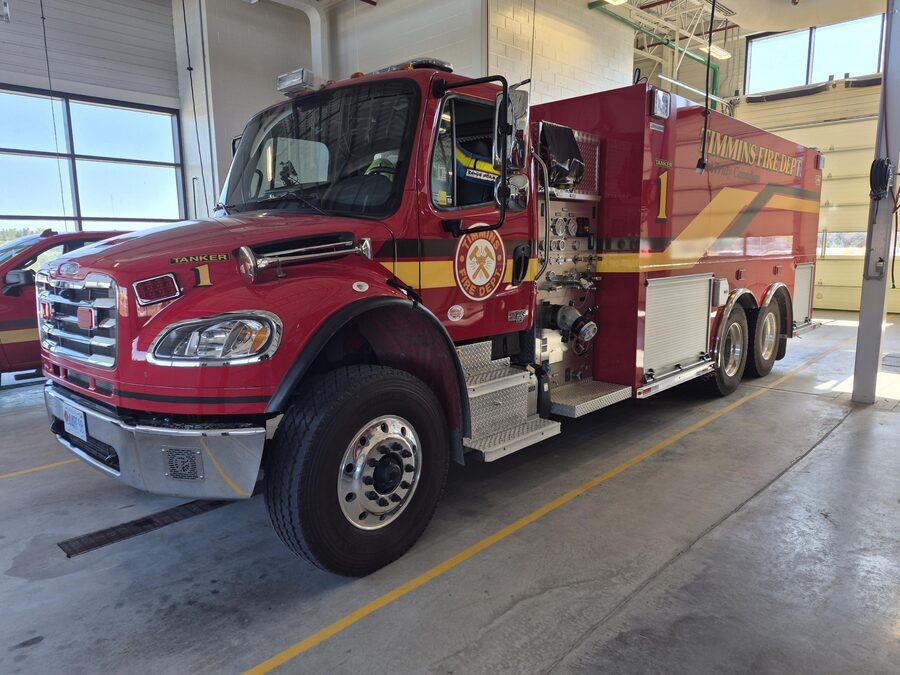
In 2023, Kawartha Lakes awarded three tankers at $1.069 million each before the city's net HST cost. Timmins approved a commercial-chassis tanker in 2024 for $704,392 plus HST. The acquisition-price difference is about $365,000 per truck. Applied across a 19-tanker fleet, it would approach $7 million.
That fleet-wide calculation is hypothetical, not a demonstrated saving, and the vehicles are not assumed to be equivalent. They may differ in chassis, seating, pumps, axle loads, safety systems, durability and operating requirements. The Timmins comparison is a reason to ask for the analysis, not a procurement verdict.
The proper question is whether documented engineering, safety and life-cycle evidence shows that the more expensive custom specification is the least-cost safe way to deliver the required service.
Purchase price is only one input. Maintenance, downtime, fuel, parts, expected life, crew safety and operational performance all matter. But institutional preference alone is not enough to justify a materially more expensive specification.
If the specification is justified, the supporting engineering, safety and life-cycle evidence should be available for public scrutiny.
Accreditation should be explained, not invoked
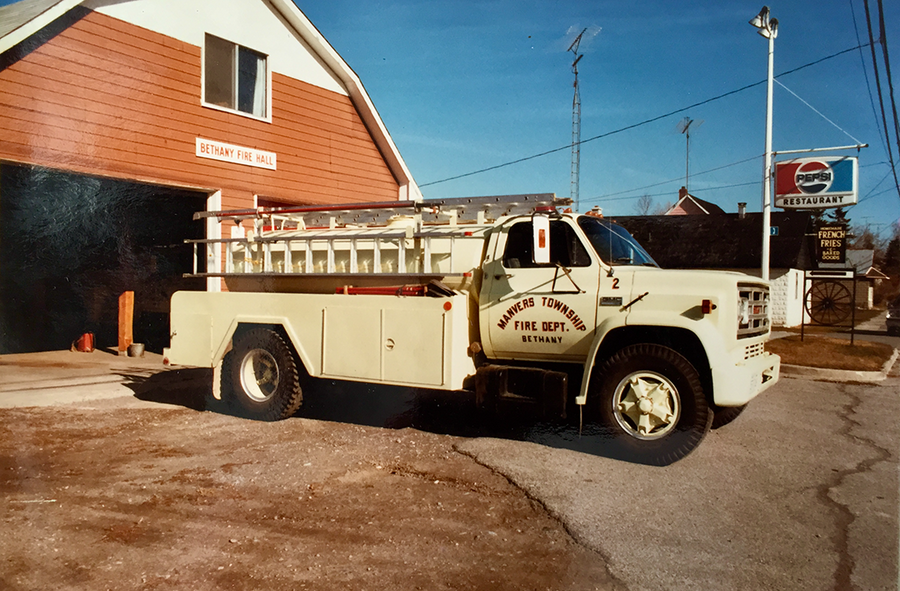
Superior Tanker Shuttle Service accreditation demonstrates an important rural firefighting capability and may affect insurance treatment for qualifying properties.
Our geographic information system (GIS) analysis tested 44,213 municipal address points against one geographic condition associated with that recognition: whether they were within eight kilometres by road of a fire station. About 75.4 per cent were inside that first test and 24.6 per cent were outside it.
That does not mean 75 per cent receive an insurance benefit. Water-source distances and insurer rules also matter. The calculation establishes a geographic ceiling, not a beneficiary count.
If accreditation is used to justify apparatus capacity or equipment cost, taxpayers should be told what additional capability is required, what it costs and who benefits.
ELECTION QUESTION
Will you require Fire Rescue to publish measurable performance against council-approved standards - and require major apparatus specifications to be justified by documented safety, operational and life-cycle evidence?
Fire protection is too important to run on assumptions. It is also too expensive. If the present system is the right one, the evidence should prove it.



Leave a Comment
Your email address will not be published. Comments are moderated.