
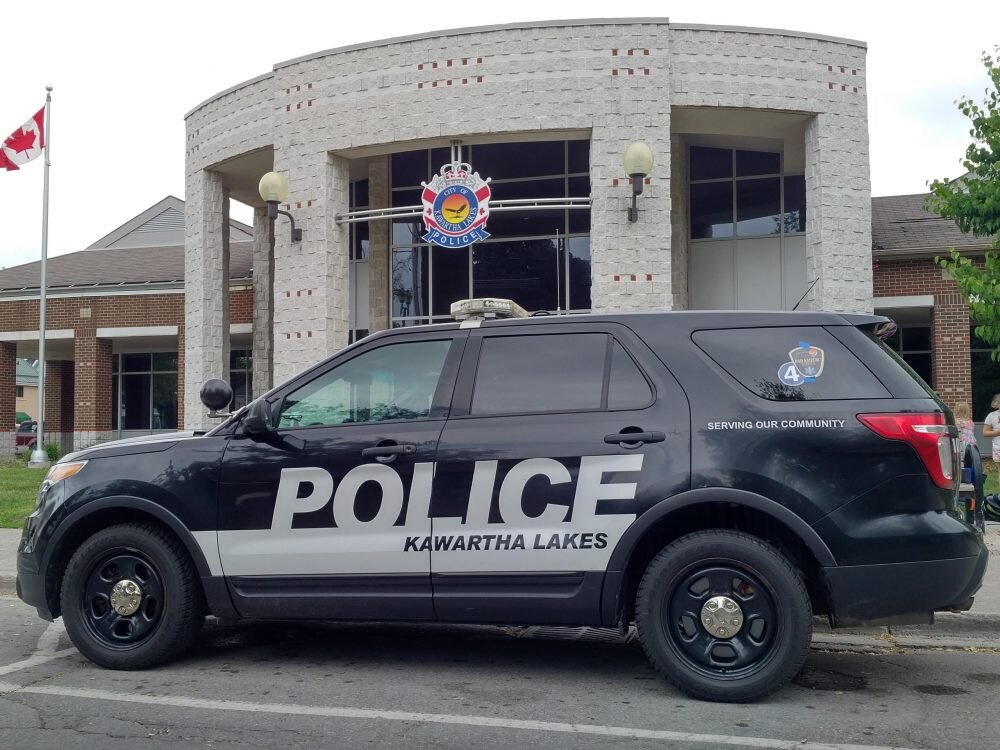
I support the Kawartha Lakes Police Service.
But support must be grounded in accountability.
As a retired local lawyer who spent decades working within the justice system, I have seen firsthand how policing decisions affect individuals, families and communities. Public institutions entrusted with authority deserve careful, evidence-based evaluation.
This report card is based on the most recent complete year of published data available (2024), together with publicly available information released since that time.
In other words, it’s based on what has actually been published — not what may exist but is not publicly available.
Community Safety Outcomes:
The most important question is simple: Are serious crimes being addressed effectively?
According to the Kawartha Lakes Police Service 2024 Annual Report:
• 523 violent crime incidents
• 68.3% violent crime clearance rate
• 1,539 property crime incidents
• 22.4% property crime clearance rate
• 16,737 total calls for service
A violent crime clearance rate approaching 70% is strong. These are the offences that most directly affect public confidence and victim safety. Property crime clearance remains challenging across Canada, and the 22% rate reflects that broader reality.
Nearly 17,000 calls for service in one year also demonstrate demand and accessibility.
This performance is occurring during a period of continued population growth in Kawartha Lakes — particularly in Lindsay — placing additional strain on infrastructure, housing, social services and emergency response systems. More people means more calls.
Grade: A
Workload and Modern Policing:
Policing today extends far beyond traditional enforcement. Officers regularly respond to mental health crises, addiction-related incidents, vulnerable persons calls and community disorder.
Police have increasingly become the 24-hour service of last resort. When no one else answers the phone, police do.
Sixteen thousand calls reflect volume, but also complexity. Many calls require de-escalation, coordination with health services and professional judgment — not simply arrests.
What is not yet publicly detailed — and would improve transparency — are response-time breakdowns by call priority. Publishing that data would strengthen public understanding.
Given rising population pressures and expanding policing demands, KLPS appears to be managing workload responsibly.
Grade: A-
Accountability and Complaints:
Accountability is measured not by whether complaints exist, but by how transparently they are addressed.
According to the 2024 Annual Report, 16 public complaints were recorded through Ontario’s Law Enforcement Complaints Agency (LECA), the province’s independent oversight body.
The published record identifies the number of complaints. What is not detailed publicly are complete breakdowns of dispositions — for example, how many were dismissed, withdrawn, informally resolved, or substantiated.
In a service responding to nearly 17,000 calls annually, complaints are inevitable. That’s democracy at work. The essential question is whether they are processed independently and according to provincial standards.
There is no public evidence of systemic failure. However, fuller reporting of complaint outcomes would strengthen confidence. Sunshine is good for public institutions.
Grade: B
Traffic Safety:
In 2024:
• 547 reported collisions
• 1 fatal collision
• 1,334 traffic enforcement tickets issued
Traffic enforcement remains one of the most practical forms of preventative policing. Active enforcement reduces harm before tragedy occurs. With growing traffic volumes in both urban and rural areas of Kawartha Lakes, this engagement is significant.
Speed limits don’t enforce themselves.
Grade: A
Transparency:
KLPS publishes an annual report with meaningful statistics and narrative context. Many comparable services provide less.
At the same time, modern accountability would benefit from:
• Quarterly key performance dashboards
• Response-time reporting by priority
• Public satisfaction metrics
The foundation is solid, but reporting depth could expand. Clearer numbers mean fewer assumptions.
Grade: B+
Drug Crisis and Community Impact:
No evaluation of policing in 2024 can ignore the impact of drugs, particularly opioids.
The opioid crisis affects every Ontario community. It contributes to property crime, repeat police contact, overdoses and public disorder. Police are often first on scene at overdoses, even though addiction is fundamentally a health issue.
KLPS operates within its legal mandate: enforcing trafficking laws, responding to overdoses and addressing criminal supply chains. But policing alone cannot resolve addiction. Arresting addiction is not the same as treating it.
Within its role — amid population growth and province-wide drug pressures — KLPS appears engaged and responsive, though continued collaboration with health and community partners will be critical.
It is also important to recognize that modern policing includes responding to serious offences such as human trafficking and sexual exploitation — crimes that are often hidden, multi-jurisdictional and complex. While these offences may not generate frequent headlines locally, they remain Criminal Code matters within the mandate of municipal police services, often in collaboration with provincial and federal partners. Addressing such crimes requires investigative resources, victim-sensitive approaches and inter-agency coordination — all of which add to the demands placed on local policing.
Given the seriousness of these offences, future annual reports could also benefit from clearly identifying whether such incidents occurred locally — even if the number is zero. Explicit reporting on serious but less visible offences enhances transparency and prevents speculation.
Grade: B+
Costs and Municipal Strain:
Policing is also one of the largest line items in any municipal budget.
As population grows and service demands expand, policing costs inevitably rise. That creates tension for municipal councils balancing tax pressures, infrastructure needs and public safety expectations.
Residents want safe communities — but no one enjoys higher property taxes. The relevant question is not whether policing costs money. It does. The question is whether the community is receiving measurable public safety value in return. Based on available data, the answer appears to be yes.
How We Compare:
To put our local numbers in context, it helps to compare them to provincial and national trends.
Statistics Canada reports that the national Crime Severity Index (CSI) for Canada in 2024 was 77.9, reflecting a modest decrease in the seriousness of police-reported crime compared with the previous year.
By comparison, Kawartha Lakes recorded a CSI of 96.2 in 2024 — meaning the overall seriousness of crime here is higher than the national average and higher than many similar Ontario municipalities.
What does that mean?
It means our local police service is operating in a community where the volume and seriousness of crime are relatively elevated compared to national norms. In other words, KLPS is not policing in a low-pressure environment.
That context matters.
A higher Crime Severity Index does not mean substandard policing. It reflects broader social factors — including drug activity, population growth, economic pressures and repeat offending — many of which extend beyond the control of a local police service.
So, keep in mind, when evaluating clearance rates and performance outcomes, it is fair to acknowledge that KLPS is working within a comparatively challenging environment.
Some Will Say…
Some will say any grade less than perfect is unfair to officers working under intense pressure.
Others will argue that no police service deserves praise in today’s climate.
Both positions miss the point.
Public institutions should neither be shielded from scrutiny nor judged by ideology. They should be evaluated by evidence — and within the realities they operate in.
Final Grade:
When safety outcomes, workload pressures, oversight, enforcement activity, transparency, drug-related realities, rising costs and rapid population growth are weighed together, the conclusion is clear.
The Kawartha Lakes Police Service is performing very well within the real-world demands of modern policing.
Not perfect. Not immune from improvement. But delivering measurable public safety in a growing community under financial and social pressure.
Public trust is built not through slogans, but through results.
On the evidence available, the overall grade stands: A


Leave a Comment
Your email address will not be published. Comments are moderated.