
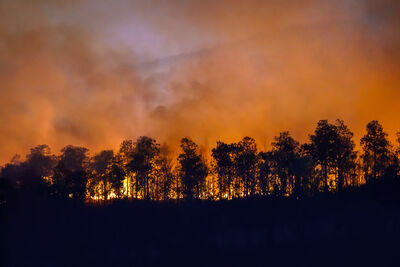
My good friend’s granddaughter was born shortly after the Paris climate accord was signed. That little girl’s family lives in California, where she has experienced severe drought and pollution from wildfire smoke almost every year since. When she was two, her babysitter’s family home burned in the blazes.
Those kinds of impacts are getting more frequent and closer to home. Some young adults are so concerned they’re rethinking how many children they want to bring into this over-heated world – if any. In 2021, a global study in the Lancet reported that almost 40 per cent of the 10,000 16-25 year olds surveyed said climate change made them hesitant to have children one day. In 2019, singer Miley Cyrus made headlines when she said she wouldn’t have a baby on this “piece of shit planet.” That same year, Prince Harry and wife Meghan publicly committed to having a maximum of two children to reduce their impact on the environment.
For some, the concern is the world their babies would inherit. For others, it’s because more babies mean more planet-warming pollution. And before we point any fingers at large family sizes in poorer nations, consider this: The annual greenhouse gas emissions (GHGs) per Canadian in 2019 was 20.7 metric tons. For the average person in Bangladesh: 1.5.
In 2019 Canadian university student Emma Lim started the online pledge #NoFuture,NoChildren. By 2020 10,000 young people across the world had signed on. That reluctance to have kids isn’t just created by the floods, droughts, and fires they’re hearing about. It’s largely because of the lack of serious action being taken by our governments, according to the Lancet study.
But while some are rethinking parenthood, others consider having a child an act of hope and a motivation to fight climate disruption. Britt Wray, one of the researchers for the Lancet study, moderates the recently released CBC documentary The Climate Baby Dilemma. By the end of the film, we see a very pregnant Wray talking about her decision to have a baby. “For me, not having a child was a commitment to fear, while having a child was a commitment to joy – and the responsibility to engage in climate action.”
I’m well beyond child-bearing years, but I’m deeply saddened by the baby dilemma. What can people like me do? For one, remember that it’s largely 35 years of political inaction that’s causing their anxiety. Now UN climate scientists are saying we have just seven years to cut GHGs in half to keep planetary warming in check.
We can also:
- Actively encourage politicians to reduce fossil fuel use – less natural gas and coal, more electric vehicles and heat pumps. Sign petitions, email, or call them. Contact them in support of policies that preserve natural areas that store carbon – our forests, wetlands and grasslands.
- Keep our eyes on the prize – the cleaner, healthier world we want to create. Then take action on a personal level to make it happen. We no longer have the luxury of waiting for the politicians to do all the heavy lifting.
As David Suzuki’s 12-year-old daughter told the Rio climate summit some 30 years ago: “You grown-ups say you love us, but I challenge you, please: Make your actions reflect your words.”
6 Comments