
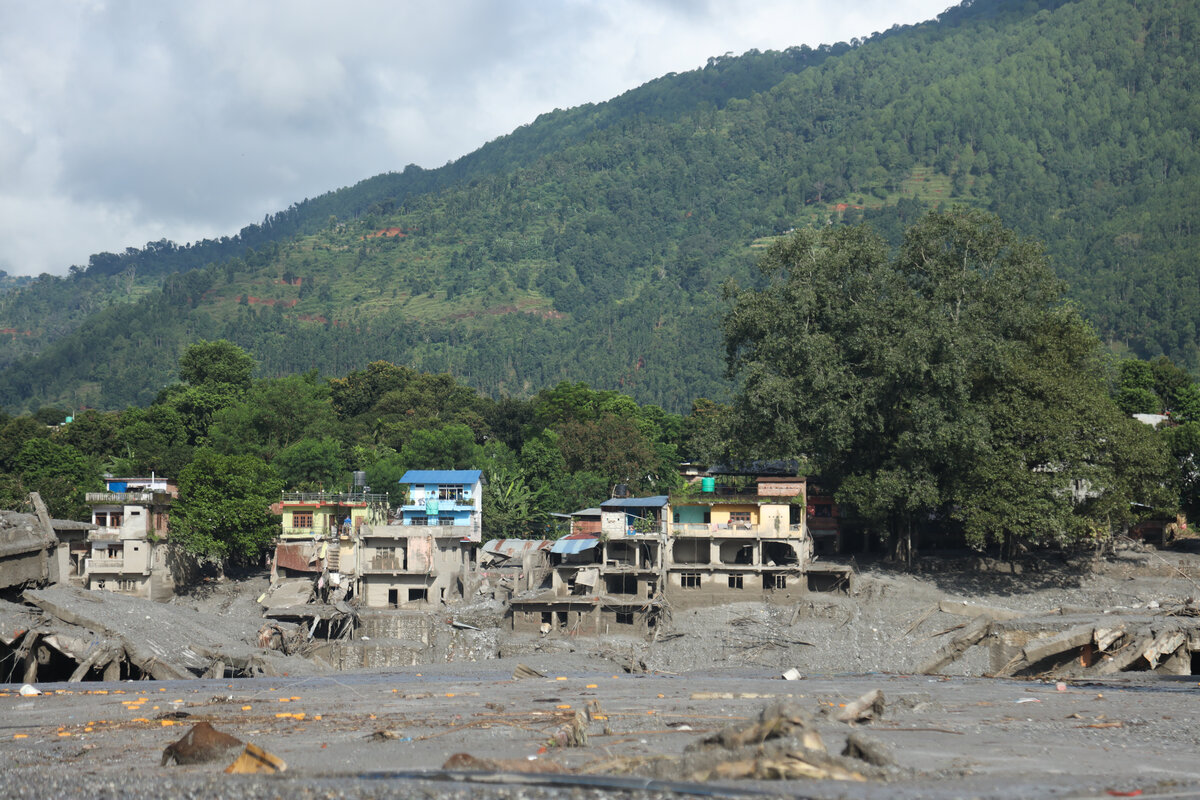
You saw the images. That three-story wall of water and debris obliterating Himalayan villages, bridges, roads, homes, forests and mountain sides. Thousands died or are missing.
The trigger? A landslide driven by glacier collapse. Increasingly, glaciers are crumbling around the world. One buried a Swiss village last year. Another killed 11 mountain climbers in Italy in 2022.
We are not immune. In 2012, a glacier collapse caused a mini-tsunami near Jasper. It washed over a parking lot and many kilometres of trails - luckily in the middle of the night.
These incidents are increasing as global warming accelerates. A recent study confirmed faster warming over the last 10 years than in any previous decade.
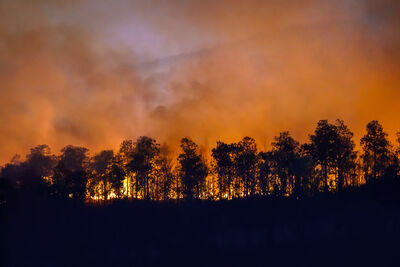
That supercharged warming came with overlapping catastrophes this summer. Killer heat and fires throughout Europe. Northern Ontario’s fires and smoke. Massive flooding in Texas, Japan, Spain and Germany, and in Ontario’s Niagara region. Some say to expect those peach prices to go up next year.
“We are indeed seeing the consequences of climate inaction,” climate scientist Michael Mann told CNN recently. It’s the new abnormal. Temperatures will keep rising, along with catastrophes, as long as we keep releasing fossil fuel pollution.
Some say it’s too late to do anything. Others say chillax, we have time. Both beliefs result in delayed action, or no action at all.
Thanks to our southern neighbour, countries, including Canada, are reversing climate policies. That’s not to say nothing good is happening. Last year, 42 per cent of the world’s electricity came from clean sources like wind, solar and nuclear. Worldwide, investment in renewable energy was double investment in fossil fuels. The number of people working in the clean energy sector has topped employment in the oil, gas and coal sectors for several years.
China’s rapid adoption of electric vehicles and solar has helped considerably. As a result, in August the chair of the country’s biggest oil refinery said China’s oil demand “very likely peaked” last year.
Meanwhile, the Carney government is supporting the expansion of fossil fuel pipelines and production – against the advice of climate scientists and UN secretary-general Antonio Guterres. Three years ago, he said fossil fuel production is “incompatible with human survival”. In addition to acting urgently to phase out fossil fuels, Guterres advised that governments boost renewable energy.
Recently our federal government did just that. Together with Quebec, and Newfoundland and Labrador, it announced an energy deal that’s expected to unleash enormous amounts of clean, reliable energy and transmission for the Maritimes, Quebec, and possibly Ontario.
Studies show that global temperatures will stop rising (though not fall) when we reach zero C02 emissions – that 2050 goal. Expanding oil and gas production puts that goal out of reach. Period. In a worst-case scenario we could be heading for about 4C degrees of warming by 2100. We don’t want to go there. Our current catastrophes happened in a world that’s 1.4C warmer than pre-industrial times.
Climate change is worse than scientists hoped, climate scientist Kate Marvel writes. At the same time, clean energy solutions are getting cheaper, faster than expected.
“The science is clear about what will happen if we keep spewing greenhouse gases into the atmosphere. It’s also clear that the future is still in human hands, and we have everything we need to make it better than expected.”


Leave a Comment
Your email address will not be published. Comments are moderated.