
We’re midway through this year-long exploration of the Kawartha Lakes Vital Signs report. To date, this monthly examination of the Kawartha Community Foundation’s Vital Signs “indicators” has looked at several challenging – perhaps even threatening – factors influencing the community’s wellbeing. Indicators such as food insecurity, health care pressures, economic shortcomings and other major measurement tools have tended to dwell on negative issues confronting our community.
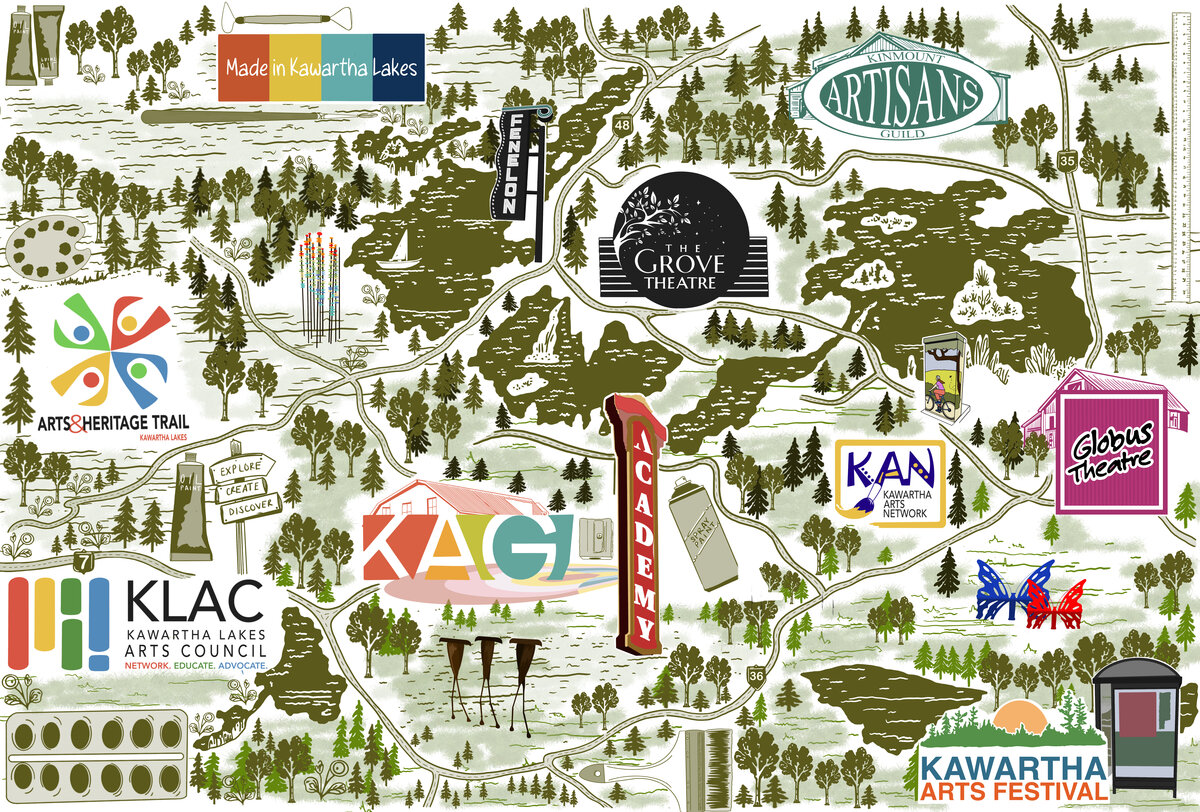
This month, the focus shifts to the positive with a look at the local Arts, Culture and Heritage indicator.
The list of positive Arts, Culture and Heritage elements in Kawartha Lakes is significant: theatres offering a wide array of live entertainment, art galleries highlighting local and national talent, a community parks system that is the envy of many Ontario municipalities, museums honouring local heritage, a library system offering resources, information and social opportunities for all ages, cultural and heritage plans that look to the future, and so much more make up a “growing and impressive creative economy,” Vital Signs states.
If there is any doubt, consider that the arts, entertainment and recreation sector is the fastest growing industry in Kawartha Lakes – boasting a 21 per cent growth rate in the past three years. While still a small percentage of all city jobs, our employment levels in these fields are higher than provincial averages.
Those involved in the local arts and culture scene are deservedly proud of what is offered here, but they also wish that levels of residential appreciation and support were greater.
“I don’t think the community really appreciates what we have. Some people have no idea of the calibre of talent that we bring in,” says Erica Ehm, who works with the volunteer board of directors for the Flato Academy Theatre in Lindsay.
Ehm, with a decades-long career in the Canadian entertainment industry, says past Academy requests to municipal council for financial support have not been very successful. Representatives of The Grove Theatre in Fenelon Falls and Globus Theatre in Bobcaygeon speak of similar experiences. Ehm says future efforts for financial support will be from a “united front,” hoping that collective presentations of the economic benefits the arts generate will impress decision makers.
For 23 years, Sarah Quick and James Barrett have operated the Globus Theatre near Bobcaygeon. Globus offers a year-round slate of live professional theatre as well as a variety of accessible arts programming for young people to foster a love of performance and storytelling. Always displaying an upbeat attitude, Quick says Globus prefers to focus on “the very positive aspects of local arts and culture,” rather than hurdles and challenges.
Though she does feel that arts and culture are appreciated locally, “We haven’t built the infrastructure to value it even more in the future. The investment side of supporting arts and culture could be improved.”
Additional municipal support would allow organizations such as Globus “To not just exist and present what we do, but to thrive. We could do even more than what we do now, which would attract more people and visitors to our community,” Quick says.
Quick says, “It’s incredible to have three distinct theatres in the area – the Academy, the Grove, and Globus. None of them are municipally owned, and all are slightly different. But the money given by the municipality should be greater (than it is now),” she says, noting other area municipalities give far more.
“When you look at the economic impact of the arts and culture sector, at what we bring into the community, it’s significant.”
Grove Theatre representatives are also quick to point out the economic contributions the organization makes. Founding board members Lynne Manning and Tim Wisener note that The Grove employs more than 50 people throughout the year as a wide variety of live musical acts, plays and special events are offered. More than 10,000 patrons took in Grove presentations in 2026, the theatre’s sixth season. That generated $4 million to the local economy. Manning adds that eight families moved to the Fenelon Falls area because of employment at The Grove.
“We exist because we’re trying to develop community, to bring jobs and businesses here. We want to contribute to providing a fulsome life… for people,” Wisener says. “We get very little money from provincial and federal sources such as the Ontario Arts Council, not because we haven’t applied, but because we don’t fit the vision of those granting sources.”
Vital Signs states that the Canada Council for the Arts, a respectable funder that awarded more than $300 million in 2024/25, gives just $.88 per capita funding to Kawartha Lakes. The provincial average is $6.29.
Frustration with lack of funding is echoed by Susan Taylor, executive director of the Kawartha Art Gallery in Lindsay.

“Our municipal government is making investment in local arts and culture, but our provincial and federal governments are not. Why do federal and provincial reps not see the value of culture and other sectors? We no longer are a sleepy little town here, but we’re being treated like one,” Taylor says. She remains positive that this fall’s opening of the gallery’s new centre on Cambridge Street in Lindsay will help raise the profile of local arts organizations and provide greater exposure to local artistic and creative initiatives.
Karen Richardson of Lindsay is a talented artist specializing in paintings of Canadian landscapes and natural resources. She relocated from the Port Perry area in 2014 and is positive about the local arts scene.
“I don’t have the feeling that there’s a lack of appreciation here. The artists I’m acquainted with are great, and I think Kawartha Lakes understands the importance of the arts as much as any other small town.”
Richardson adds that, “Organizations like the Kawartha Arts Network and the Kawartha Lakes Arts Council are doing amazing work.” Events such as annual public studio tours are “positive things about artists in the community and break down barriers that may be reasons for some people to not know what’s available in the community.”
Library’s role in community
Perhaps a lack of appreciation for what the local scene has to offer relates to the difficulty in quantifying tangible benefits. However, there’s no denying the positive role that our city-wide library system plays in many residents’ lives.
On a recent Friday morning, the children’s area at the Bobcaygeon Public Library was abuzz with laughter and music as parents and their children were welcomed to “Storytime with Miss Jacqueline.” Presented by Library Specialist Jacqueline Chartier, the program is a chance for participants to learn in a safe environment and to have fun with others.
At any given Storytime session, there will be sing-a-longs, Miss Jacqueline will read a couple of stories such as “How Do Dinosaurs Go to School?”, and the Library Lion will have brought in flashcards featuring the letter of the day. And there’s LEGO, of course.
Local resident Shelley regularly brings her daughter Haley, age three, to the half-hour program. Mom says that Haley calls it “practice school.”
“We really like this, and it’s free. It’s going to help when she starts school next year (and) this has helped her get over her shyness,” Shelley said.
“When I go out to the different communities, I try to promote that the library has so much to offer everyone – it’s more than just a place to borrow books,” Chartier says. “It becomes a social opportunity for the parents and grandparents, too.”
Indeed, Vital Signs says the Kawartha Lakes public library system is “One of the most powerful and under-recognized tools we have for addressing complex societal challenges.”
Kawartha Lakes Library CEO Jamie Anderson points out the many valued roles the system plays and says usage and participation by library patrons has increased steadily since COVID restrictions lifted in 2022.
“There has been definite growth in demand from the community, even in rural areas, where the library might be the only social concentration point for some households,” Anderson says. “We might be the face of the community for them.”
A measurement toolkit employed across Ontario recently stated that the economic benefit of the local library system is $13.5 million – strong value for the community’s size and underscoring the importance of library investment in smaller municipalities.
Another outstanding feature of our community that has drawn praise for decades is the parks and recreational facilities. As the community’s demographics shift for many reasons including a growing and diverse population, the city’s Parks and Recreation Division strives to evolve with changing interests.
“People are happy when the department recognizes the changing demographics of the community and those that are to come in the next few years,” says Jennifer Johnson, director of community service. Johnson says the department’s current master plans for both parks and recreation facilities acknowledge that though Kawartha Lakes still has a significantly high seniors’ population, the interests and use of that age group have changed. Seniors tend to be more active than they were a generation ago.
While longtime residents tend to be aware of the community’s significant historical aspects, maintaining such appreciation will rely on stoking interest and involvement of the predicted newcomers in the years ahead.
Emily Turner, heritage planning economic development officer for Kawartha Lakes, says that “There is a lot of interest locally in the community around preserving local heritage, both from our long-term and newer residents. The city recently adopted a new Heritage Designation Strategy and the input we received from the community was substantial and showed that there is enthusiasm for preserving and celebrating our local history.”
“Our heritage can only be effectively protected when the community is engaged and onboard so we’ve been working to expand our outreach, connect with local residents, and make sure that the story of the city and its different communities continued to be celebrated through initiatives such as heritage designation, events such as Doors Open, and workshops where people can learn about local history and doing their own research.”
Verifying strong heritage interest, local museums, galleries and historical centres report increasing attendance and public support since COVID bans lifted.
While sometimes considered ‘soft services’ compared to municipal concerns such as tax rates and infrastructure challenges, there is no doubt about the contribution that arts and culture make to what a community has to offer.
“Arts and culture is a billion-dollar industry in Ontario,” the Kawartha Art Gallery’s Taylor says. “We’ve really worked hard to make the point that culture needs support and is of value. We can contribute to the economic wealth of the community, but we’re so easily dismissed. How can any responsible government ignore that?”
Next month: As temperatures drop and winter approaches, affordable housing becomes more vital than ever.



Leave a Comment
Your email address will not be published. Comments are moderated.