
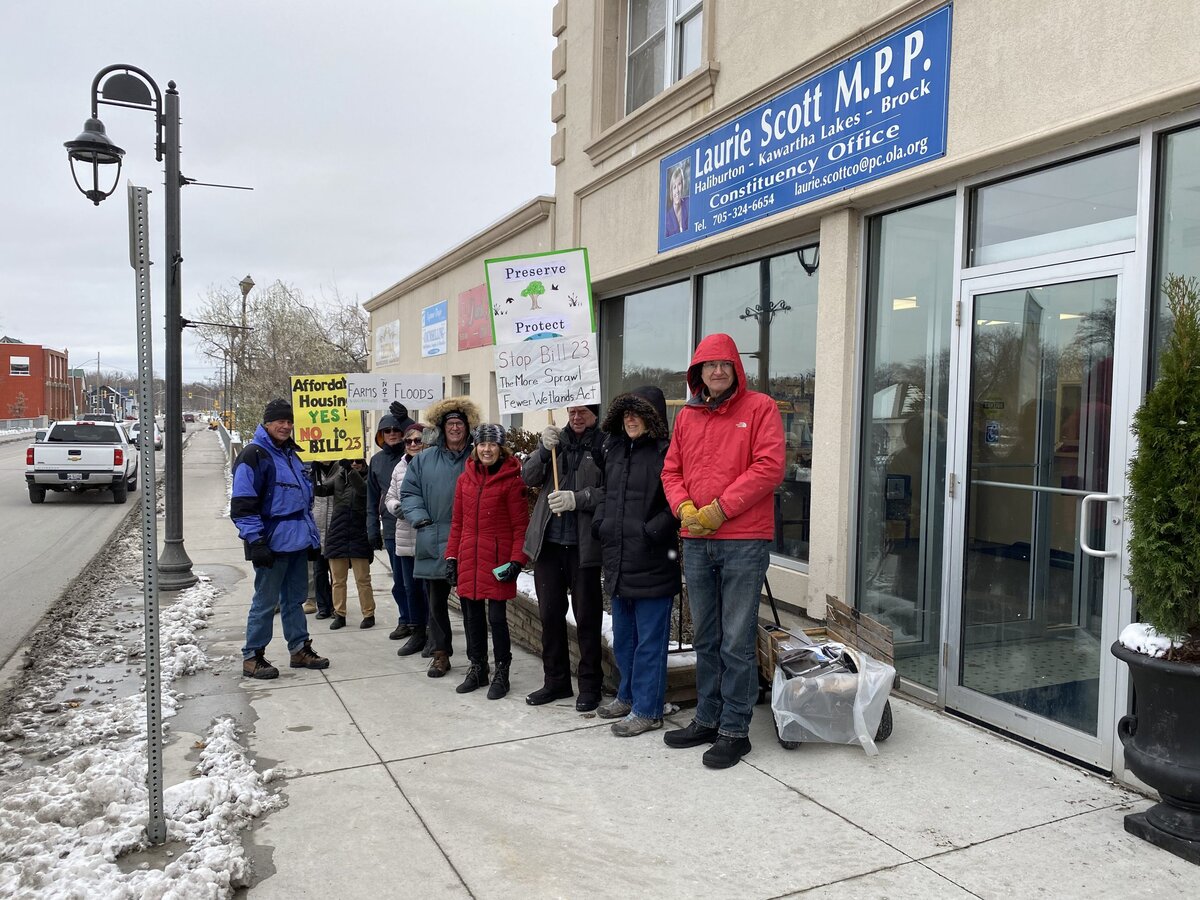
Few proposed pieces of provincial legislation have rallied opposition forces faster as the More Homes Built Faster Act, better known as Bill 23. The bill, currently in front of a Queen’s Park committee chaired by Haliburton-Kawartha Lakes-Brock MPP Laurie Scott, could radically change the regulations and process that sub-divisions are approved and built under in Ontario, and threatens the possibility of opening both the protected Greenbelt and Oak Ridges Moraine to significant development.
Opponents of the bill who include the Association of Municipalities of Ontario, all 36 provincial conservation authorities, heritage groups, First Nations associations, environmentalists and advocates for sustainable and environmentally friendly construction have joined together to pressure the province to at least alter if not kill the bill.
The province, with a newly elected majority government, does not seem likely to do that with Minister of Municipal Affairs and Housing Steve Clark stating publicly that the bill is necessary to allow the province to make good on it’s promise of 1.5 million new homes constructed in the next ten years.
Local MP Laurie Scott, in an email interview with the Advocate, supports Bill 23.
“Everyday I hear from people in my riding and across Ontario, regarding their struggles to find a home. Bill 23…will bolster our ongoing work in addressing the housing crisis in our province. Bill 23 will empower our municipal partners to give them the tools they need to cut through red-tape and get shovels into the ground. Our government needs to build all types of housing so everyone can live in the home that is right for them.”
When asked what she would say to those groups concerned with the bill, Scott said, “The Ontario government will continue to work with stakeholders and municipalities to ensure our goal of building 1.5 million homes over 10 years is met. Bill 23 is one of many ways that will help with the ongoing housing crisis by allowing us to build more homes and affordable living spaces.”
The bill’s genesis appears to be that the shortage of “attainable and/or affordable housing” is because there is not enough acreage available for new home builds. As well, multiple layers of bureaucracy that must be navigated by developers before a shovel is even put in the ground, appears to be a disincentive to developers and largely responsible for the spiraling costs of housing in Ontario.
Many of Ontario’s developers and building trades associations are solidly behind the legislation and are encouraging its swift passage.
Opponents, including Ward Two councillor Pat Warren and former councillor Heather Stauble see the bill much differently than the ruling Conservatives and local member Scott.
“I oppose this bill because it won’t bring affordable housing to Ontario,” Warren said. “It will only support the development community. We need housing for all, not just the wealthy.”
“It will destroy the Conservation Authorities,” Warren said, “because municipalities won’t be allowed to use them to comment on natural heritage issues. Conservation areas are being asked to open up lands they own for development. These lands are usually environmentally significant. We need corridors to protect wildlife.”
“This bill affects all municipalities,” Warren adds,” not just the Greenbelt. We have the Oak Ridges Moraine in our municipality but this awful bill affects everything including farmland. It diminishes powers of the municipality regarding parks, development charges, environmental requirements and much more. The bill was sneaked in while councils were changing.”
Stauble agrees with Warren, and itemized her opposition to the bill noting a significant number of concerns she too has with the legislation.
“Bill 23 ties municipalities hands in every possible way,” Stauble said, “by ignoring the municipality’s ministry approved Official Plan, reducing their ability to plan for infrastructure, finance and develop in a safe and efficient manner. It takes control of planning away from municipalities and hands it over to developers.”
“It impacts municipalities' ability to pay,” Stauble said, “for infrastructure and to ensure safe development that protects people, homes, businesses and the environment. Development charges, which pay for infrastructure like roads, sewers, storm water, water systems, parks, and housing, will be reduced and deferred under Bill 23, transferring the cost of building and carrying the cost from developers to the municipal tax payers.”
“The municipality would no longer be able to ask conservation authorities to review and comment on proposed development near water, to ensure development is safe and protects people, homes, businesses and land against flooding, pollution, and natural hazards,” Stauble continues. “Bill 23 requires land managed by conservation authorities, which protects and manages water and soil erosion; and captures and stores carbon, and habitat, to be identified for development. Prime agricultural land, wetlands, conservation land, can all be developed.”
Stauble believes that designated historic buildings can more easily be demolished under Bill 23. She is particularly concerned about the loss of local discussion and input by interested parties regarding future development because Bill 23 contains clauses that eliminates the public's ability to speak to planning proposals at Planning Committee or appeal decisions through the Ontario Land Tribunal.
“It does nothing to address affordable housing,” Stauble says. “There are already tools in the Planning Act to require developers to contribute a percentage of their development to parks, trails and affordable housing, or contribute cash-in-lieu to the municipality. Funding from the province to assist with paying for affordable housing would be much more useful. Submissions from homelessness and housing groups have said (Bill 23) will only make the problems (they experience) even worse.”
The province hopes to have Bill 23 out of committee and approved by parliament by late in December and ready for implementation January 1, 2023.



3 Comments