
It was a hot evening when we visited with José after his shift in the papaya factory in Belize. We were there to hear his story: how he had grown up in a small village close by, how he had cultivated corn for tortillas on communal village land, and beans, squash, peppers and greens in a garden behind his thatched hut.
Then the papaya company moved in and the government forced him and the other villagers off their land so that papaya could be grown instead. José now works at the papaya factory for very low wages. Not only does he have to buy his food in the town, he now also has to pay rent.
My students asked José what we should do: “We have heard that we should buy papaya from your factory because if we don’t you will lose your job. Even though it is a low wage, it is something. If we don’t buy the papaya, you will have nothing,” a student said. José shook his head.
“That is the kind of thing the papaya company says so that you won’t feel bad buying from them,” he said. “Don’t believe it. Don’t buy your food from these companies. If you don’t buy the food then they will stop taking our land to grow it. I don’t want this job. I want to grow my own food on my own land. And if you eat food from your own land, you won’t be eating food that was grown on my land.”
It was a startling answer for my students, most of whom didn’t know how to grow food from their own land. It was also a stark lesson on the importance of eating local. But how do we eat local here in the Kawartha Lakes, where the growing season is short and winter is long? What if we don’t have room for a garden? Thankfully we live in a farming community rich in farmer’s markets, and roadside farm stands where it is possible to buy food that can be stored well through the winter.
Here are some suggestions for storing that food, to help you eat local, starting with more complicated methods and moving to simpler ones.
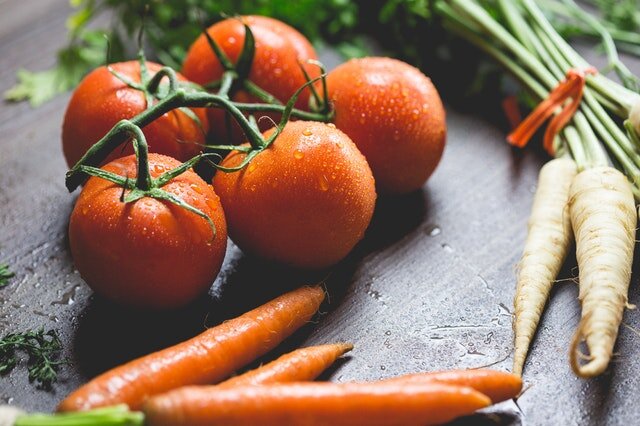
- Some vegetables can be preserved by canning: tomatoes can be turned into sauces, salsas, or canned alone. Cucumbers, beans, beets, hot and sweet peppers, onions and carrots can be pickled using either natural fermentation or hot water canning methods. Most fruit can be turned into jam.
- Some vegetables and fruit can be frozen as is: rhubarb, whole tomatoes, peppers (diced), blueberries and strawberries are good candidates.
- Meat can be purchased from local producers at the farmer’s markets in Lindsay, Fenelon Falls, Bobcaygeon and downtown Peterborough, as well as from the Amish. Once the markets close for the season pork and beef are available from O’Brienview Farm, lamb from Crow Hill Farm and Lane’s End Farm, chicken and beef from Field Sparrow Farm and Zehr’s Farm Fresh Produce and Bakery, and chicken and pork from Three Forks Farm.
- A number of vegetables can be stored over the winter with no processing of any sort to help you eat local. This is the most environmentally responsible method of local eating since it uses no electricity. Check your produce periodically to make sure that it is not rotting.
- Beets, carrots, rutabagas and turnips can be stored in boxes of sand in a cold cellar or a cold garage that doesn’t freeze. Depending on the variety, these will keep into March.
- Leeks can be put in a bucket with sand around the roots in a cold cellar or garage with temperatures just above freezing. They will keep until December or January.
- Squash can be stored at around 15 degrees celsius. A cool spot in a bedroom or porch will do. Acorn squash keep for a month or two, pumpkins a bit longer and butternut will keep until January.
- Potatoes can be stored in a root cellar or basement in closed boxes or bushel baskets. The warmer they are, the shorter their storage capacity, but they will keep into spring if stored under 10 degrees Celsius.
- Apples can also be stored in a cold basement. If they soften, they can be made into apple sauce.
- Onions and garlic can be stored at room temperature in a drawer or a box. Most cooking onions will last until spring, as will garlic. If the onions sprout, you can chop up the shoots for cooking.
- If you have grown kale in your garden, you can mulch it with leaves and harvest all winter long under the snow.
Although it seems daunting, give one of these a try this winter in order to eat local. With a little forethought it is possible to eat local for at least some of your meals year round. Your farming neighbours will thank you. And so will José.


2 Comments