
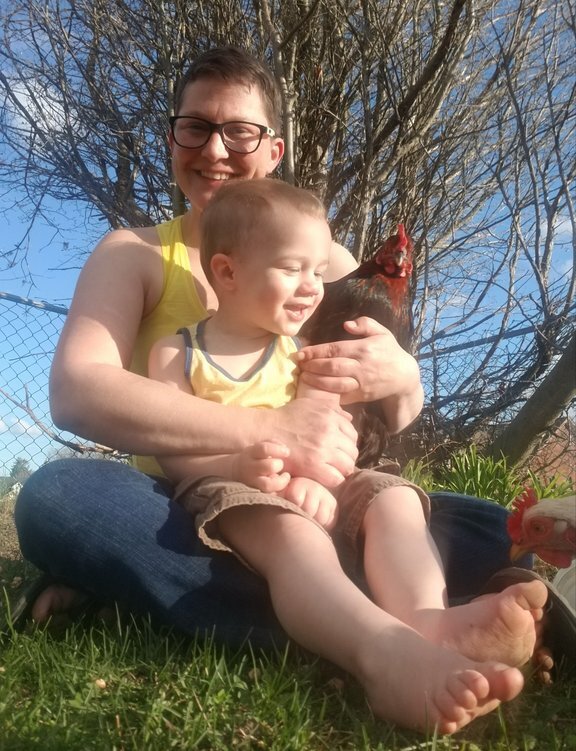
Once upon a 100-acre farm, there where many ducks and chickens, each of them with their own silly personality. Chewy, a 6-year-old ermine attack survivor, with her own distinctive chatter, has always been my special girl, having been a house hen for months of recovery.
I lived on that farm in the Fenelon Falls area quite happily for many years. Growing my own food has always been a passion for as long as I can remember. Playing in the dirt keeps me grounded. It’s great exercise, and it’s gratifying to harvest what I’ve grown. Fresh veggies from the garden also help lower the grocery bill.
I lived there, a single mother on a fixed income, with an ever-growing toddler who required ever more of my attention. I knew I had to make a change. Cutting and piling wood for my old stove had become increasingly laborious. Combine that with the animals, garden, pushing a mower in the summer, and a shovel in the winter, it was all too difficult to balance while trying to care for my son, Levi. So, in December, with a heavy heart, I moved to a larger population centre for my child, leaving the old farm and my precious fowl with it.
I instantly missed the farm. With Levi’s many half-eaten snacks, the hens reduced my food waste and vacuumed up discarded Goldfish crackers like champs. City life, for me anyway, is also more expensive than farm life; no more harvesting fresh – and less expensive - root vegetables to store, or farm fresh eggs to collect daily.
Still, we adapted to our new urban life. We went to playgroup for socializing and to maintain some sort of structure. I brought some of my rural-living experience to our new home and put up a small greenhouse in my back yard. But there was still a void.
Then COVID-19 happened, and we had to adapt again. There was no play group or getting together with friends. Shopping became terrifying. With my son strapped to my back, we ventured into the local grocery to see what was left. Shelves were sparse and the selection was limited because anxious customers had grabbed mainly the "no name" products leaving only overpriced brands. That shopping bill really damaged my monthly income and the remainder wouldn't stretch much further.
I worried that the combined cost of housing and food would become too much. I'd never missed the farm more. Women’s Resources suggested I try Kawartha Lakes Food Source. If not for the amazing and compassionate people there, it would have been a long, hungry month. Initially I was feeling self-conscious, but they quickly alleviated my embarrassment about asking for help. I felt humbled by their kindness and generosity. But it wasn't a permanent solution.
That's when the tenants currently living at my old farm announced they were giving away my hens. I took a leap. I drove out to fetch up my beloved girls whom I've had since they were chicks. I went for few and came home with all of them. Luckily, our new home was equipped with a sturdy fence and a vacant shed. I just added a roost and some nesting boxes. With some care and lots of tasty leftovers, they began to lay again. Picking up that first egg in our new home was as thrilling as when I got my first egg ten years ago. The void had been filled.
But now, I have a new challenge.
Unfortunately, Kawartha Lakes doesn’t support my little piece of poultry paradise. Their bylaw states that you require a minimum of 10 acres of land to keep fowl for eggs. The last word of revising this law was back in November 2019. It’s unique to Kawartha Lakes. In neighbouring cities, backyard poultry is welcome.
For update on this issue go here and hopefully soon more chickens can keep trimming grass, cleaning up leftovers, and laying tasty breakfasts. The cost of buying eggs for my child and I is approximately $40 per month. Feeding my hens for the month is approximately $15, which is much more affordable.
Yes, I must work hard to ensure a clean coop, and to not bother my neighbours, who have welcomed the girls and their eggs wholeheartedly.
I can't help but feel this is all necessary for our community to move forward – and to help us become more self-sufficient and independent.
I believe it’s worth it. Especially when I can shop for an omelette – well, its main ingredient - in my own back yard.
7 Comments