
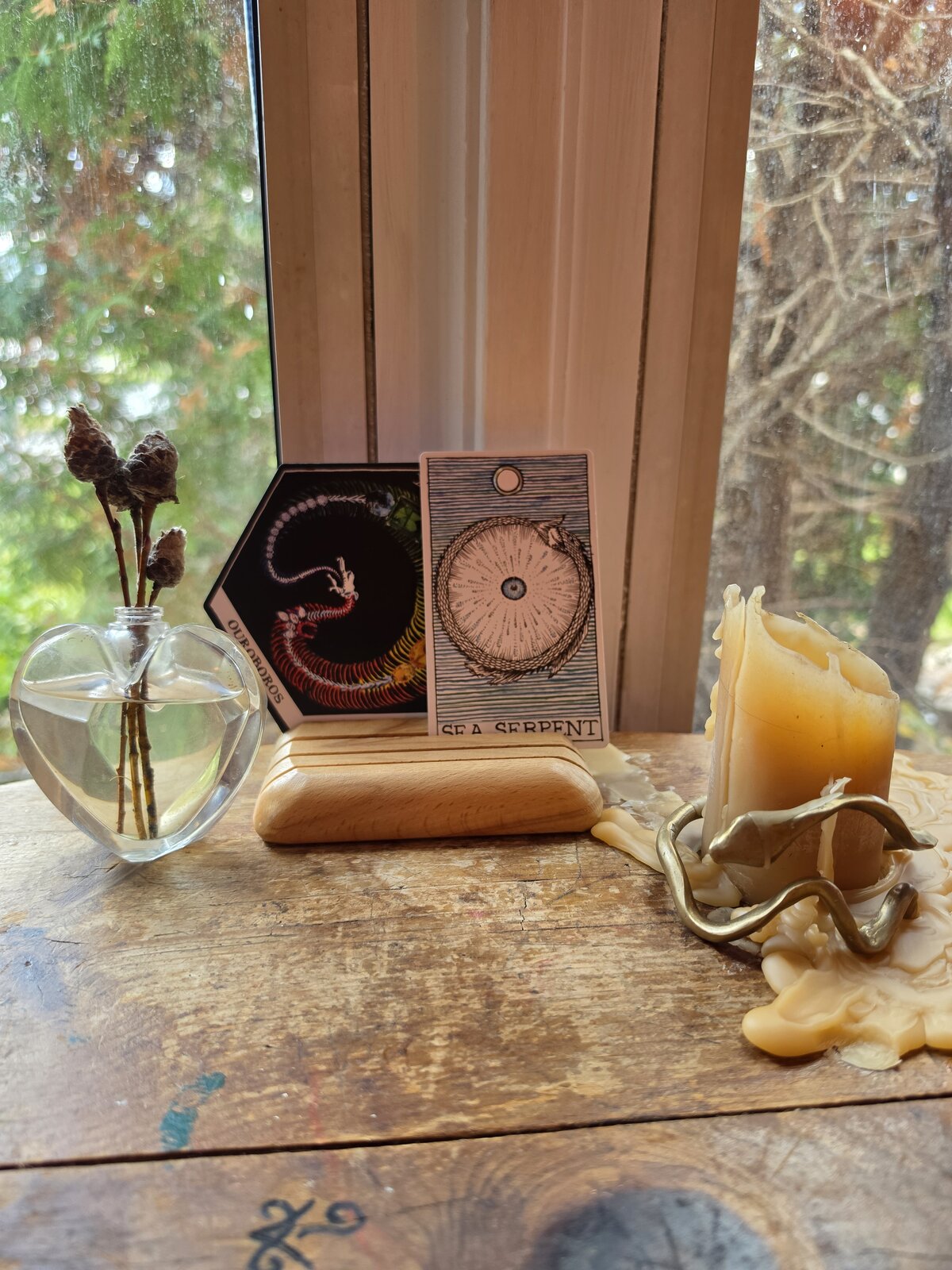

The days are shorter and darker. Some of us gather more often – instinct, perhaps, to fortify against winter’s imposition.
Yet others retreat into quiet spaces, somnolent and bewildered by the changing spectacle of the season.
Seasonal rituals reappear for families, as new memories are formed within old traditions.
For most of us, there is an unstated permission to slow down, reflect and ponder possibilities.
For Alyssa Huntley, the arrival of December is about more than colder temperatures and shorter days. It represents a profound shift in the natural rhythm of the year, one she believes humans would do well to pay attention to.
Huntley, a holistic health and energy-work practitioner, views fall and winter as the more yin part of the year, a counterbalance to the energy and activity of spring and summer. In the warmer months, she says, life tends to pull us outward: doing, producing, travelling and filling our days.
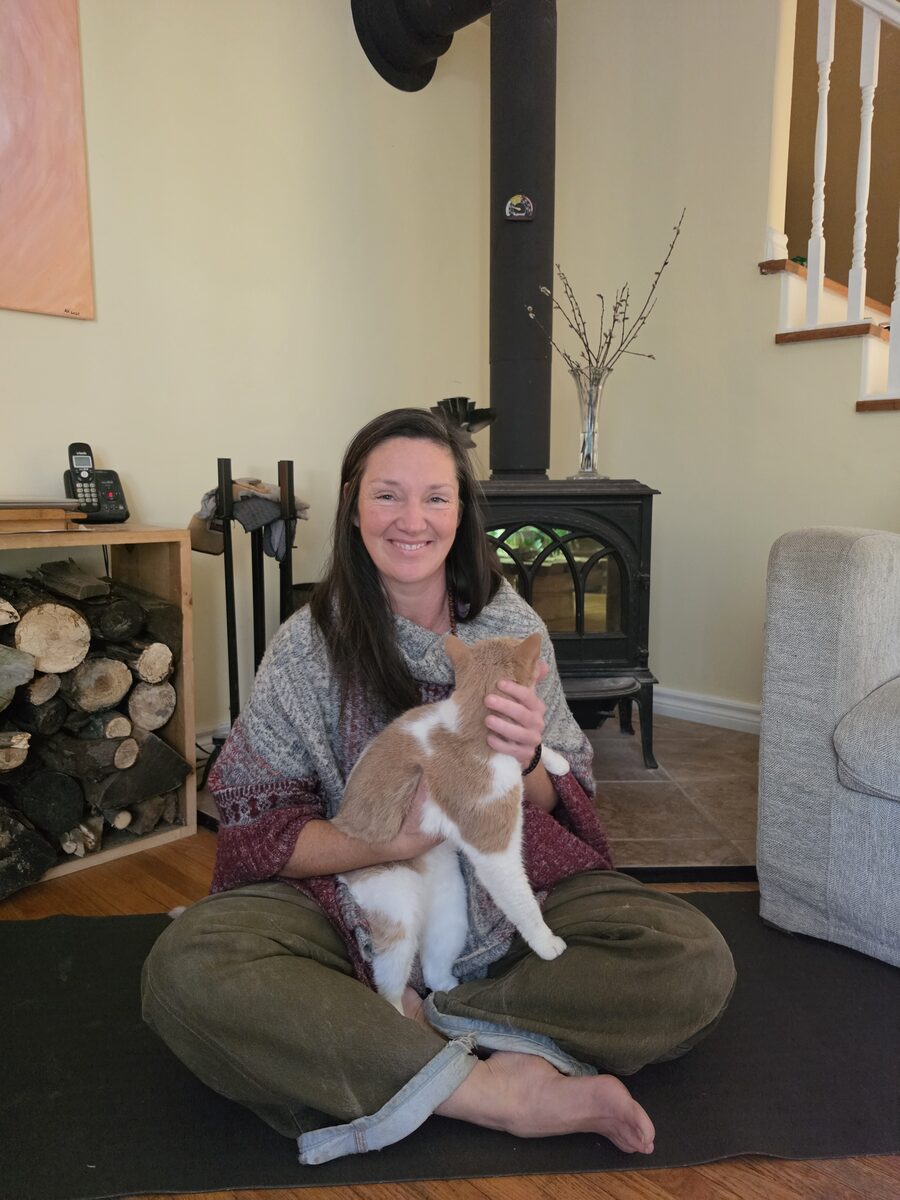
“Winter, though, turns us inward,” she says from her Lindsay home, where cedar boils on her stove, creating a sharp and pleasant scent.
“All the leaves fall from the trees. They send their energy down into the roots,” she says. “And so I really think as humans, we are a part of nature.”
The trouble, Huntley believes, is that modern life often encourages what she calls an “eternal summer,” an expectation that we should maintain the same pace and productivity throughout the year.
“We can’t, because we’ll burn out.”
Life for the Bryan family of Lindsay is often at a hurried pace. Their four children, ranging in age from seven to 15, ensures the calendar is packed with lots of extracurricular activities, including hockey. When their schedules calm down just a smidge in December, the family makes time for the people who matter to them most, echoing the belief of Huntley that it’s time to slow down some.
“My children love playing board games and watching movies. As a family as we don’t get to do this often,” says Angie Bryan. She explains that they play more games during December than at any other time of the year, and movies always start with such classic holiday fare as Christmas Vacation, Home Alone and Elf.
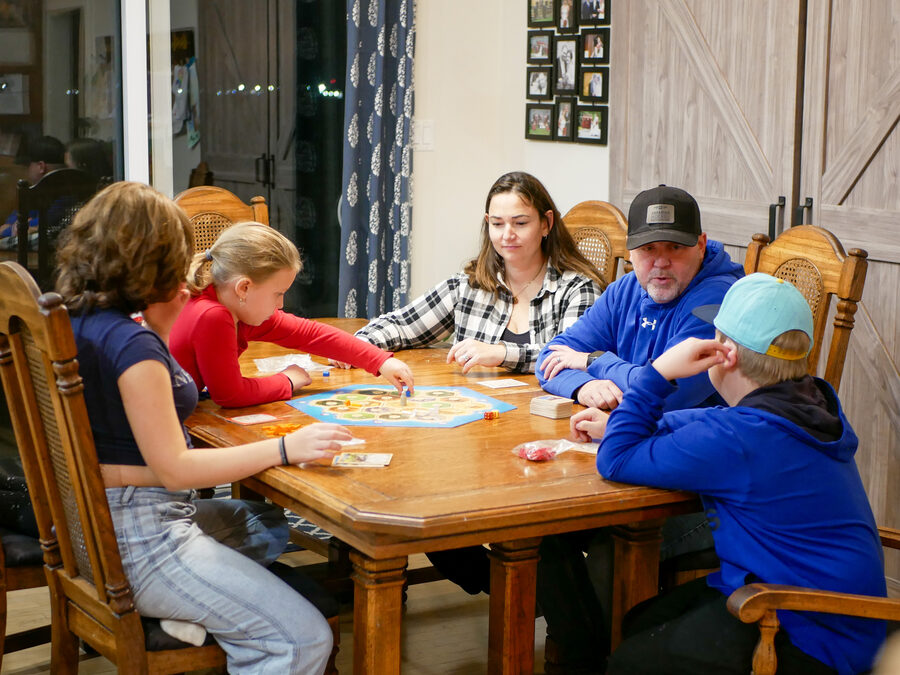
Bryan admits she mostly takes the lead in decking the halls, but she gets lots of help. While she decorates the upstairs tree, her daughters add a personal touch to the downstairs tree with a variety of their homemade decorations. Her husband takes charge of setting up the outside lights and decor.
The holiday season at the Bryan household, just north of Lindsay, sees an increase in visitors of all ages that the family welcomes. “Our house is sort of the house that most of my kids’ friends gravitate to, so having extra kids over in December is not unusual,” says Bryan.
Huntley also agrees that December’s shift might mean lingering over dinner with family and perhaps playing a board game. There’s also making soup, sitting with a book or simply having a cup of tea without feeling compelled to accomplish something at the same time.
“There’s a peacefulness,” Huntley says. “There’s almost a grandmotherly energy (at this time of year) we can kind of come into, with just taking a load off our shoulders.”
Yet for many people, that is surprisingly difficult she notes.
Our culture tends to associate activity with usefulness, she says, while sitting down to read, watch a show or simply rest can feel unproductive, even lazy. Huntley rejects that idea.
“Life needs an ebb and flow.”
Work-life balance
Ebb and flow matters from an employer perspective, too. Ryan Oliver, CEO of non-profit Ampere in Lindsay, says he believes the way an organization treats its employees during the holiday season says something about the kind of workplace it wants to be all year long.
Ampere is a Lindsay-based non-profit that provides STEAM education, digital-skills and workforce-development programs in rural, remote and Indigenous communities across Canada.
Each December, Ampere typically brings its 140 employees, who are spread across the country, together in Lindsay for an annual all-staff gathering.
“It’s an opportunity to plan for the year ahead and do some reflection on what has passed,” he says. “It’s a celebration as much as it is a get-together.”
He believes the value comes from allowing employees to reconnect and recognize what they have accomplished together.
The non-profit head says December is also one of the relatively few times when the pace naturally begins to ease for everyone.
“It is universally the time where kind of the world slows down a little bit,” Oliver says, making it easier to extend time to employees then.
The organization has generally closed its office for between one and two weeks around Christmas, providing the period as paid time off – without requiring employees to use their regular annual vacation.
Oliver stresses that Ampere has been fortunate enough financially to do that and cannot guarantee it every year. But it has been a priority since the organization was founded.
Employees start with three weeks of vacation, and Ampere encourages them to use that time during the rest of the year. If they reach Christmas having taken their vacation, the holiday shutdown effectively becomes bonus time.
That policy became particularly important after the COVID-19 pandemic, Oliver says, when he noticed that employees weren’t using their vacation.

Although people were at home, that didn’t mean they were resting. Employees were “being a teacher, or caring for others” and dealing with the isolation and disruption caused by the pandemic.
Ampere eventually found itself with a large amount of accumulated vacation time. That presented a financial liability for the organization, but Oliver saw something more troubling.
“It was also like an enormous mental health risk for a lot of our staff,” he says.
They needed to understand that taking time away from their jobs “wasn’t something to feel guilty about. It was important for their wellbeing.”
For Oliver, though, the philosophy goes deeper than vacation policies.
He recalls a lesson from Lorne Ellingson, a professor at Trent University, who taught Indigenous Community Development.
“You can tell everything about a community by the way it celebrates and the way it mourns,” Oliver recalls Ellingson saying.
That idea has stayed with him, and Oliver now sees a connection between it and the culture Ampere is trying to create.
“We are going to choose to celebrate together as a group in December,” he says. That choice signals that “it doesn’t have to be rush, rush. It doesn’t have to be, you know, finance over everything.”
“It can just be about building a community.”
Family and community
If the first aspect of community building is creating strong family bonds, the Bryan family has a good start, especially in December.
Many days are spent enjoying the outdoor rink the family tries to create each year, given they are a hockey family.
“December seems to come and go so quickly,” says Bryan. While she understands the desire every parent faces to buy everything on their child’s Christmas list, she expresses concern about how easily the pressures of giving things can override the simple joy of giving time to family.
“My core memories are the time spent with my grandparents and cousins, playing games and being outside, not the presents that I received under the tree,” says Bryan.
Bryan’s fond memories of Christmases past and how she values them more today than the gifts that once sat under her childhood tree seem to echo the words of Dr. Seuss’ character, the Grinch.
“Maybe Christmas,” he thought, “doesn’t come from a store. Maybe Christmas, perhaps, means a little bit more!”
Perhaps for Bryan and her husband, Mike, December has become an opportunity to teach a life lesson of sorts. “We really try to hit home how important it is to hang out with grandparents, great aunts and uncles versus what tangible items they receive from them, as they will not always be around.”
Bryan finds herself reminiscing during the holiday season about the memories she made with her grandparents and how much she enjoyed their company. While her grandparents didn’t have much money, that didn’t matter to Bryan. She just wanted to spend time with them, and she hopes that resonates with her children.
Togetherness may not always have to look the same to have value. While Bryan has noticed her teenage son is not as eager as he once was to get up at the crack of dawn to open gifts, he does so “begrudgingly” so as not to miss out on anything.
While she feels it is important to keep the holiday in the holidays – making them relaxing and enjoyable – Bryan believes this can coexist with seeing extended family, too. She recommends putting together agendas that work for everyone and setting boundaries where they are needed.
“I would say that it is okay to say no or adjust plans,” explains Bryan. “If you feel that you are frazzled and stressed out about dinners and travelling, something needs to change.”
Each year the Bryan home hosts Christmas dinners for each side of the family, with aunts, uncles and lots of cousins. But being the host doesn’t mean Bryan takes on all of the work. “There is very little food prep that I actually have to do.” While Bryan typically bakes desserts, other family members bring the rest of the food – even the turkey. The food contributions remain warm in the oven or slow cooker until it’s time to eat.
“The men in the family are very good at doing all the cleanup, so it is very much a shared event each time.”
Huntley, who tries to stay tuned to the changes of the season from a nature standpoint, says winter offers the possibility “of nurturing ourselves, paying attention to what is happening internally and simply allowing life to become a little slower.”
That doesn’t have to mean meditation, yoga or deep introspection. She said for many people, the idea is that if “you’re draining your well, you end up with nothing to give.”
Huntley tries to follow that philosophy as the days darken. She eases into winter, rather than fighting it. Mornings might begin with low lights or breakfast by candlelight. There may be a wood-burning fire or a walk outside.
Importantly, the walk doesn’t have to accomplish anything, she says. “It’s not for fitness. It’s not to get somewhere,” she says. “It’s the pleasure and just being present that makes it so beautiful.”
That slower season, however, is not comforting for everyone. December can magnify loneliness, difficult family relationships, painful memories and mental-health struggles. Quiet can leave people face to face with thoughts or emotions that constant activity helped keep at bay.
For someone struggling, Huntley says, turning inward should not mean withdrawing from other people.
“Winter is beautiful because we can (choose to) isolate if we want, but we also need people – and we need the right people.”
That could mean reaching out to a doctor, therapist or other source of trusted support. It can also mean setting boundaries instead of automatically giving away one’s time and energy. For people accustomed to putting everyone else first, Huntley says, even the idea that they deserve that care can be difficult to accept.
The first step may be recognizing that taking care of yourself isn’t selfish.
She calls it “betting on ourselves” by deliberately putting some of our time, attention and care back into our own lives.
Winter, then, isn’t something to endure until the light returns. Huntley says away from the constant activity of summer and early fall, winter creates room for quieter pleasures, whether a fire, Christmas lights glowing on a dark morning, a book, a warm drink or time spent with people we love.
Those seemingly small moments, “can return our attention to something easily lost in a culture preoccupied with what’s next.”
“We’re also here to find joy at this time of year, too. We should also be here for the fun.”
Leave a Comment
Your email address will not be published. Comments are moderated.