
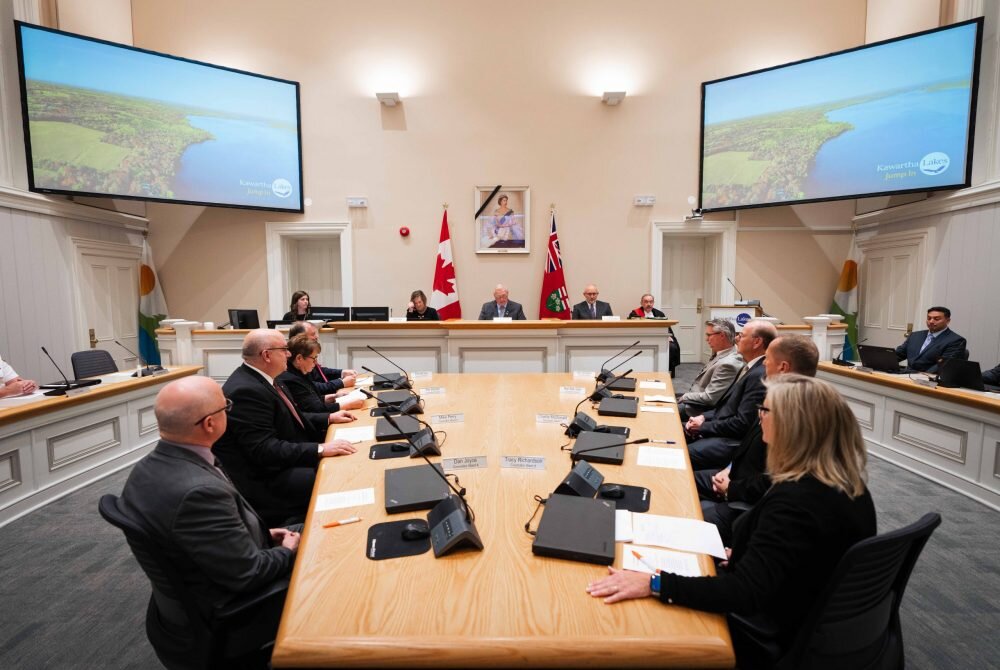
Kawartha Lakes’ newly sworn-in council came together at only their second official meeting to unanimously show their concern and frustration with Bill 23, the More Homes Built Faster Act, that is currently before a committee at Queen’s Park chaired by Haliburton – Kawartha Lakes – Brock MPP Laurie Scott.
Council put aside ideological differences and voted 8-0 to support the stand being taken by the Association of Municipalities of Ontario who are asking that the approval process for Bill 23 be slowed down, and that places like Kawartha Lakes get an opportunity to share their legitimate concerns before millions in potential development costs are downloaded to the municipalities from developers if the bill, as written, becomes law.
The More Homes Built Faster Act’s stated goals are to eliminate red tape and ensure that 1.5 million homes are constructed in Ontario in the next ten years. The province claims that the primary reasons for sky-rocketing housing costs are a lack of available building lots and too much red-tape and associated costs before a shovel ever goes into the ground.
The province advocates that by opening up parts of the Greenbelt and the Oak Ridges Moraine, more land can be found. The bill also proposes to limit the input of citizens, conservation authorities, counties and municipal governments in the approval process for new sub-divisions and other residential building projects with an eye to fast tracking as many new builds as they can.
Kawartha Lakes council sees the bill in a much more negative light, with speaker after speaker expressing concerns about a shift of development costs from builders to municipalities, a loss of local democracy to make the decisions of what is best based on local knowledge, and concern over the haste in which the province is trying to promulgate this legislation.
Ward Two councillor Pat Warren began the discussion at council suggesting that it would be beneficial for the town to formally throw its support behind the AMO which is looking to slow down the approval of Bill 23 so more groups can become involved in the discussion around the bill’s many far-reaching provisions.
Warren also suggested that staff be requested, by January 1, 2023, to prepare a report “that will review Bill 23 and associated legislation and provide information and recommendations to council including resulted impacts to city policies, by-laws, processes and funding and that this resolution by forwarded to both Laurie Scott and the AMO.”
“This is a far-reaching bill.” Warren said. “I do not believe there has been a bill like this ever in planning history that changes the whole planning structure in Ontario.”
“This bill will affect all sorts of things,” Warren said. “One of the main effects will be on the environment. We will not be allowed to reach out to Kawartha Conservation or other conservation authorities to comment on certain policies. We will have to have other reporting agencies do that for us. Bill 23 will be awful for conservation authorities across Ontario as they have power taken away from them for the second time in the last two years.”
“For municipalities,” Warren continued, “a freeze on development charges or parkland will not be beneficial. This development will not be just in the Greenbelt, but it could be in the Moraine which is in our municipality. The bill asks conservation authorities to open up some of their land for development. This bill is going to aid the development community and not boost housing for those who really need it.”
“To be a sustainable municipality,” Warren concluded, “we need all levels of housing, not just bigger homes. We need rent geared to income housing and all different kinds of housing stock.”

Ward Five councillor Eric Smeaton, who seconded Warren’s call of support for the AMO, had other concerns regarding Bill 23.
“This bill (and its expected development) will reduce the amount of prime agricultural land available,” Smeaton said.
Smeaton was very concerned about the impact of the bill on conservation authorities and reminded all those in attendance of their important role in ensuring safe development in Ontario.
“Conservation authorities help ensure we have clean water, proper drainage and help mitigate flood damage,” Smeaton said.
Smeaton also expressed concerns for reduced local democracy and the affect Bill 23 will have on municipal planning.
“Bill 23 will take away constituents’ rights to have public meetings where they speak their concerns to developers. This also greatly inhibits our ability to plan for infrastructure projects.”
Smeaton was also troubled by the timing of the bill, suggesting that with some councils not even sworn in, and others only “beginning their journeys as councillors that is this really the right time to introduce a bill like Bill 23?”
Ward One councillor Emmett Yeo, who is in the building trades himself, came out strongly in support of the stand taken by the AMO and councillors Warren and Smeaton.
“I totally agree with the two previous speakers,” Yeo said. “I want to know how this will affect the city? My biggest concern is that the commenting period on this bill runs out next week so getting a report from staff in January is fine…but are we going to comment at all or just piggyback on the request by the AMO?”
Mayor Doug Elmslie initially responded that the city was looking to piggyback on the AMO requests. Elmslie wondered if Yeo would like to make a follow-up resolution about the city sending a brief note to the committee looking into Bill 23 before the window closes for public consultation on the chance that the city could make a comment at a later date.
Yeo thought that might be beneficial and presented the motion at the end of the discussion period that was also supported 8-0.
Ward Three councillor Mike Perry focused on the loss of local decision-making regarding development that might occur if Bill 23 is passed.
“All politics are local,” Perry said. “We want more input from local people making decisions at the local level. Bill 23 takes an incredible amount of power away from the municipal level of government to make local decisions for the people who live right here in Kawartha Lakes.”
Perry presented a number of items that the bill removes from municipal purview if passed. His points included capping affordable housing available in a new sub-division build to 5 per cent even if the municipality wants more, the removal of the carry over that states if an affordable rental property is redeveloped it must be replaced, and asked what would municipalities do to replace the income currently generated by development charges.
“Bill 23 changes how development charges are levied,” Perry said, “and takes numerous development charges away from the municipalities without any plan on how to replace those lost funds except through the taxpayer who would have to make up the difference. This bill takes control away from the municipality and puts the burden on the taxpayer. Development is supposed to pay for itself.”
Deputy-mayor Tracy Richardson was in total agreement with her fellow councillors.
“I echo every other speaker,” Richardson said. “This is a complex policy change we are looking at. The real question will be how much this costs municipalities? How much is growth going to cost us?”

Ward six councillor Ron Ashmore drilled down on the issue of local democracy that Bill 23 appears to undermine.
“We need to support the AMO,” Ashmore said. “This issue goes beyond any political stripe that anyone has. If this bill passes, municipalities will have less say. This has already happened with the advent of ministerial zoning orders. We are starting to lose the power the municipal representatives have always had.”
“Things are going the wrong direction,” Ashmore said. “This bill will circumvent our official plan that took years to get into place. It might even make that plan redundant. Municipalities will be on the hook for a lot of costs.”
Ashmore returned to a point made earlier by councillor Smeaton regarding the timing of the bill and its introduction in parliament.
“The bill was introduced on Oct. 25, one day after the municipal elections. There has not been nearly enough say on this bill. Let us send a clear message to the province that we want our power back locally.”
Ward Four councillor Dan Joyce acknowledged the housing crisis, especially for the younger generation. "We do have to build. The key is the ‘where and the how’ we build. We need local control over development.”
Joyce said his concerns with the bill revolve around the issue of development charges, percentage of parkland made available by each development, rent geared to income housing and the “where and how” of development.
“Yes, we need to build,” Joyce said, “but we need to build it properly.”
Before councillor Ashmore was prepared to vote, he asked senior staff what they see as the impacts of Bill 23 on the official plan for the city.
Richard Holy, director of development services responded.
“We don’t have a clear idea yet. It (Bill 23) will impact the city financially and from a process perspective. There could be less parkland. The bill could impact us on the environmental protection piece too. I will provide a full review in January.”



11 Comments