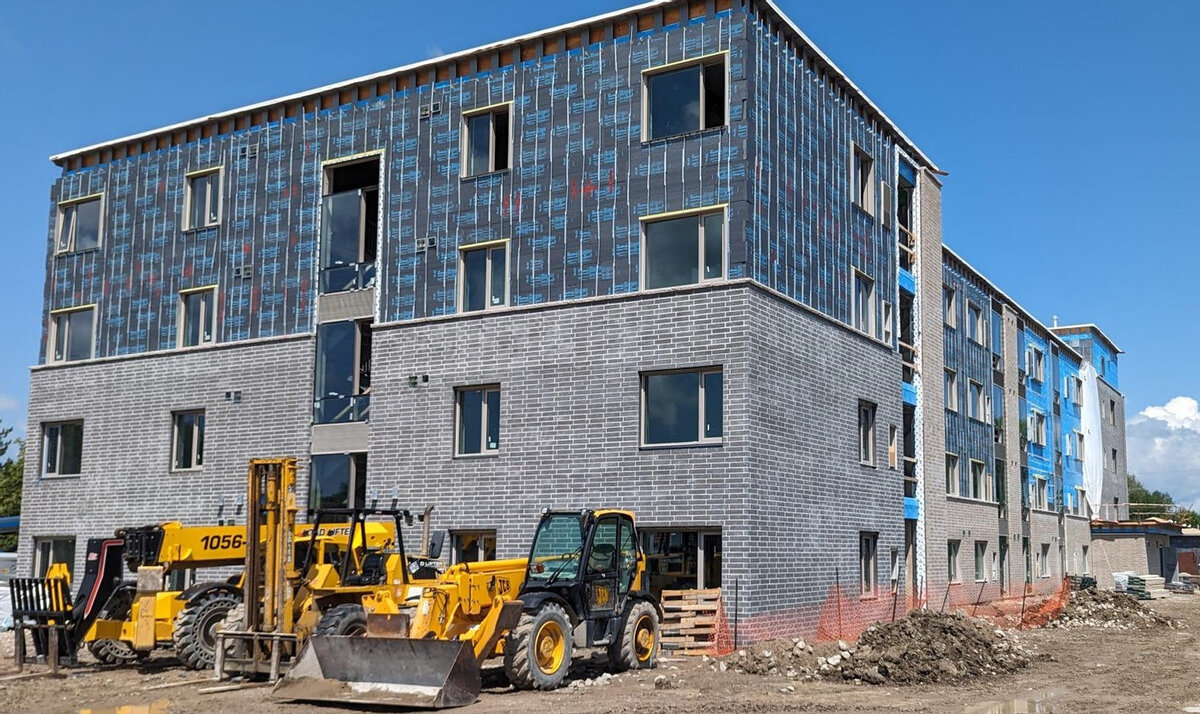
At the July 25 regular council meeting, Michelle Corley, human services manager for housing, presented an update on the affordable housing targets. This is one of the 60+ objectives outlined in the 10-year Housing and Homelessness Plan. A corresponding report was provided to Council, which gave an update on the remainder of the objectives outlined in the plan.
The City of Kawartha Lakes is responsible for administering and funding housing and homelessness programs in the City of Kawartha Lakes and County of Haliburton. Outlined by the Housing Service Act, the municipality is required to have a 10-year Housing and Homelessness Plan. This plan has over 60 objectives, covering eight policy areas, one of which establishes affordable housing targets.
The affordable housing target, initially established in 2019, set out a goal of 1,280 additional affordable rental units in Kawartha Lakes. These new units would come from a combination of KLH Housing Corp., private developers, and applying affordable housing subsidies to existing market rent units. A rough estimate found a total investment of $483 million would be needed to achieve this target, which could include funding from partners and upper levels of government.
“I think council can all agree that this is a critical topic for discussion coming into the 2024 budget. We must explore opportunities to further support affordable housing. Tackling this urgent issue will take collaboration and hard work between staff, council, community partners, private developers, and upper levels of government,” commented Mayor Doug Elmslie.
Factors that have impacted the municipality’s ability to reach these targets include:
- fewer first-time home buyers leaving the rental market
- housing as an investment such as through short term rentals
- loss of private development partnerships
- rising inflation
- increasing rental rates
- increasing demand for supportive housing
These factors have contributed to average market rent increases in the last five years between 31% to 65%, depending on the size of the unit. Some households are waiting up to 14 years for an affordable housing opportunity.
Affordable Housing will be an important topic for discussion in 2024 budget
Historically, Kawartha Lakes has encouraged affordable housing by waiving development fees. Due to increased costs to construct new developments, these incentives are not enough to make a significant impact, representing only 3-6% of total costs for an affordable housing unit.
Property tax exemptions, land donation, rent subsidies, and capital funding are just a few ways the municipality can financially support development of affordable housing. Other opportunities include purchasing and converting rental properties to affordable units and supporting innovative building systems. The municipality can reserve servicing capacity for affordable housing, streamline planning processes, implement costs and fees for vacant or underdeveloped land and buildings, and advocate upper levels of government for support.
For the first time, the 2024 budget will include an affordable housing reserve, allowing the municipality to make meaningful investments in affordable housing.
The presentation was concluded with a list of priority action items to bring us closer to achieving the plan’s targets. For more information, please visit the municipality's YouTube Channel for the full presentation, or read the 2022 Housing and Homelessness Plan (HHP) Annual Progress Report on its website.
2 Comments