
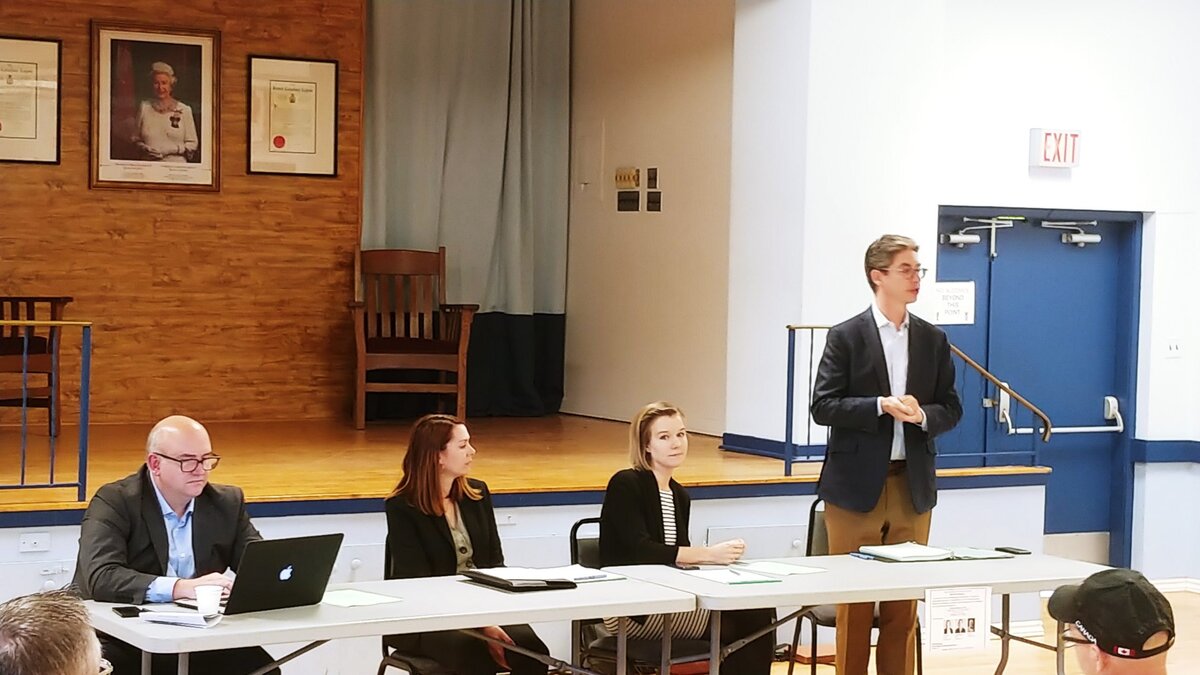
A class action lawsuit initiated by four people from Lindsay who were once on the Ontario Basic Income Pilot moves one step further along this week. The court will decide over June 24-25 in Lindsay if there is “legitimate claim” for such a lawsuit to proceed.
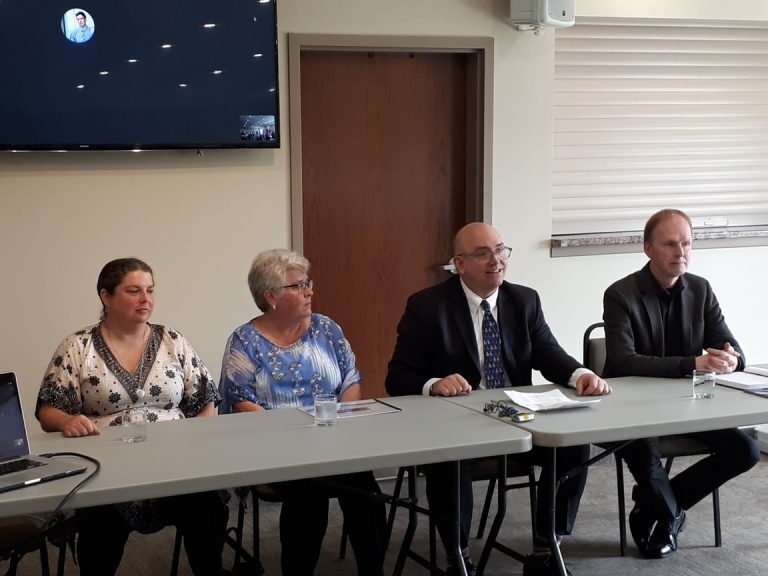
Mike Perry, a local lawyer and social worker, initially took on the task of launching the class action lawsuit on behalf of Dana Bowman, Grace Marie Doyle Hillion, Susan Lindsay, and Tracey Mechefske. The Toronto law firm of Cavalluzzo LLP soon took over and has been spearheading the suit.
The Ontario Basic Income Pilot was initiated by the Province in 2017 in three areas – Hamilton region, Thunder Bay area, and Lindsay. Four thousand people were involved, with nearly 2,000 of them in Lindsay. It was set to run for three years. When the PC government was elected in the summer of 2018, it cancelled the program despite a campaign promise to allow it to continue, announcing that payments would run only until March of 2019.
The two key lawyers at the firm responsible for the class action lawsuit, Stephen Moreau and Kaley Duff, wrote last week to all the people involved in the lawsuit, explaining how things might – and might not – unfold in court this week. It’s there where the court will hear the “certification motion.” In other words, the court will decide if there is a “legitimate claim here legally and if the plaintiffs can advance such claims on behalf of a whole group.”
The hearing will be broadcast via Youtube for participants.
“A certification motion is the first step in litigating a class action. The only question the judge is deciding right now is whether or not it is appropriate to hear this kind of matter as a class action,” the letter from Moreau and Duff states.
The lawyers state that in the “best case scenario, we win the certification motion.”
“This means that the court has officially decided that this action can proceed as a class action. However, this does not mean the fight is over…For example, a key issue in this case is whether or not there was a contract between the government and the pilot participants.”
However, only a trial judge will ultimately decide at a later date whether or not there was in fact a legally binding contract, according to the letter.
“In our worst case scenario, we are unsuccessful at the certification motion, and the class action is ended,” states the letter.
There are also a number of “in between” scenarios, write the lawyers, “where we are successful in some but not all respects.”
“For example, the court might certify our ‘contracts’ question, but refuse to certify questions regarding other claims we have made. If that happens, then the class action will still proceed, but we will no longer be able to make all of the arguments we might have wanted to make.”
The lawyers also acknowledge how long the process takes.
“Despite our best efforts to keep things moving, class actions proceed very slowly. Once the judge has heard our arguments on June 24 and 25, he will need a few months to release his decision. As soon as we get his decision, we will alert you to it.”
While class actions are a lengthy process, Moreau and Duff point out parties often settle class actions rather than litigating them all the way to the end.
“In theory, a class action can be settled at any time. Again, we will keep you informed if there is a possibility of settlement, and class members will be given the opportunity to voice their support for or disagreement with any proposed settlement.”
Pilot results showed great potential
A survey report, Signposts to Success, documented the experiences of recipients in the Ontario Basic Income Pilot (OBIP).
Responses from more than 400 recipients show that the pilot was enabling women and men to get and keep jobs, start businesses, pursue education and training, overcome barriers and improve health and well-being for themselves and their families.
“The Signposts to Success report is good news that has powerful significance for all Canadians,”says Basic Income Canada Network Chair Sheila Regehr, who co-wrote the report along with the Advocate’s Joli Scheidler-Benns.
“It clearly shows that when people have some basic security and genuine options, they make the best of them," said Regehr when the report was released.
"Canada has delivered forms of basic income for seniors and children for years, benefiting our society and economy. OBIP results show the potential it offers. BICN urges federal, provincial and territorial governments to invest our money where it will get the most return — and a basic income is that kind of investment.”
Signs of success:
- 88% of respondents reported less stress and anxiety and 73% had less depression (the baseline survey reported that at the start of the pilot 81% of participants were suffering from moderate to severe psychological stress);
- 58% improved their housing situation;
- 34% found the basic income supported employment by affording transportation to work, child care or ability to start or expand a business;
- 32% of respondents were able to go back to school or upgrade skills (note that a majority of employed participants in the government baseline survey – recipients and control group – said they were in dead-end jobs);
- 74% were able to make healthy food choices and 28% stopped using food banks;
- 46% were able to pay off debt;
- 52% were able to see friends and family more often, 55% were physically more able to do activities, and 45% reported fewer health problems;
- Many respondents talked about working hard their whole lives, often at multiple jobs, but never really having a life, until basic income made that possible.
When cancellation was announced, the picture changed:
- Almost 83% of people felt worried about the future, 80% felt previous problems returning and 61% had to cancel or change future plans.
- Comments showed some recipients were supporting others, including ‘those who feel scared or suicidal’. Others had to leave school, move back to unsafe neighbourhoods or even face homelessness. Some, based on the contract they signed with the government, entered into leases and contracts that they will be obligated to pay long after March when the government claims its obligation to them ends.




Leave a Comment
Your email address will not be published. Comments are moderated.