

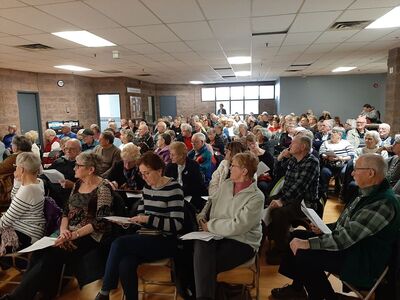
A small bowl of soup. A piece of white bread. A single cookie. These were the three food items given to us recently for our dinner. As we stared down at them, just a few tables away at a long, more lavishly decorated table, the people there were being served pork roast dinners. The Lindsay Advocate was invited to the 2018 Homeless Awareness Dinner known as “An Experiential Dining Event,” held at St. Andrew’s Presbyterian Church in Lindsay. It was put on by A Place Called Home, Lindsay’s homeless shelter.
The social experiment involved in this dining experience was exceptional. Those invited were divided into three categories. The ‘safety zone’ participants represented those from our community who do not have any food insecurity issues. They typically have savings, plenty of money to pay their bills, and have access to disposable income for extras such as vacations and special household purchases.
The Zones
The ‘warning zone’ participants represented those from our community who are considered 'at risk.' These people get by month by month meeting their basic needs. Should an emergency arise, such as illness, job loss, car breakdowns, or other out of the norm bills, though, they are in trouble. They typically have stress and worry over their precarious situation and sacrifice eating healthy items for food that is cheap.
The ‘danger zone’ participants, where we sat, included people from our community that pay 50 per cent of their income toward rent and includes approximately 25 per cent of our local population. They are usually near homeless or homeless, live paycheque to paycheque, and find it impossible to meet their personal needs or their family’s needs. Sickness such as colds or having the flu are common among this group, as well as anxiety and depression.
The safety zone participants were fed first. They received special treatment and special china to eat from. They were given juice and salad to start their meal. They were also allowed to have coffee, tea or water. Next they were brought a wonderful pork roast dinner with all the trimmings, fresh vegetables, and dessert. Their seating was designed to look at those less fortunate who were finally fed.
The warning zone participants received spaghetti (with no meat) and salad with canned fruit cocktail for desert and options for tea, coffee, or water.
We in the danger zone were allowed to have a bowl of soup (typical to a soup kitchen experience), a white bun and a single cookie. Although the soup was delicious, it was not enough food for a dinner. We were also allowed coffee, tea or water.
Guilt
I went around to each section and asked them about their dining experience. The safety zone participants admitted to feeling a bit guilty -- but not guilty enough to share. The warning zone participants said that their meal was fine and they were full, but they wouldn't want it again tomorrow. The danger zone participants felt jealousy toward the other groups. People began discussing these messages and it became a wonderful social experiment representing the various members of our community and how they would feel each day when they sat down to eat dinner.
Local historian and Advocate columnist, Ian McKechnie, spoke on ways that the community came together in 1932 to make sure that even the transients were fed and cared for over the winter through a grassroots-led initiative called the Citizen’s Relief Association.
In the end, we were all given a pork dinner, too, if we wanted one. The meal ended with all of us able to have cake and ice cream, something that wouldn't have happened if we were truly homeless or near homeless.
A Place Called Home fills a dire need in our community. By providing shelter, food and safety to 19 people nearly each day they are meeting Maslow's basic needs for some. But with the cancellation of the Ontario Basic Income Pilot and a very low occupancy rate for affordable housing in our community, they can't meet the growing demand for accommodation.
Eating a healthy dinner is something many of us take for granted. Scraping leftover scraps of food from our plate in to the trash is considered normal. Being reminded that there are fellow community members who don’t get enough food on their plates in the first place is heart-breaking.
Staring at my empty bowl of soup was eye opening for me and I was anxious that my daughter had enough to eat, before we realized that more food was coming in what, in the end, was simply an experiment after all. I am sure this is a common feeling for parents who struggle to feed their children enough food, let alone healthy food.
We need to find more ways to come together as a community to offer more and to do more. The winter is coming -- this will be tragic for some -- those who will now worry about affording to pay for heat along with growing food prices and are already struggling.
In the meantime, let’s give what we can to A Place Called Home or our local food bank to reach those in the most need. What more can we do though for our fellow community members? Our social structures need to improve. The Citizen's Relief Association was created during a time of need and our community members took action to help. What actions can more of us take now to help those who may be staring at an empty bowl?
6 Comments